For this project, the initial plan was to sketch 5 to 7 times a week for about 30 weeks. So far, I have sketched for nearly 7 weeks and missed only three days.
I also wanted to carry out some research, that would include:
- Looking at the work of artists I like;
- Learning more about the theory of drawing (how to draw people, apply colours and shading,…).
Below is the research I have carried out so far.
Books
- 101 Sketching Tips (Bower, S. (2020). The urban sketching handbook : 101 sketching tips. Beverly: Quarry Books.)
I read this book a while ago and had wanted to have another look at the advice given by the author for a while. There were many valuable tips I had forgotten, including showing enough ground so that the viewer can have a sense of the place, applying some vibrant colours at eye level or creating thumbnails with values as it is easier to define values without details. I have made a list I intend to revisit to see if I have applied some of this advice.
- Sketch your World : essential techniques for drawing techniques on location (Hobbs, J. (2014). Sketch your world : essential techniques for drawing techniques on location. London: Apple.)
I am currently reading this book because I found it very helpful in the past to get some inspiration and find the motivation to sketch every day.
YouTube videos
I have watched a few videos online but the most valuable recently has been:
Stephen Travers Art: www.youtube.com/watch?v=jgDYlmRwXF8
I bookmarked this video a while ago and wanted to watch it properly. I like sketching details especially on buildings, and had already noticed how the general pattern of details can matter more that the details themselves. Stephen Travers’ drawings are incredibly rich in details and it is interesting to watch how he does it. He concentrates more on the regularity, the flow and repetition of the details but does not worry so much about the accuracy of small elements. In fact, when we zoom in on his drawings, we can see that some of the details are only squiggles.
I intend to watch other videos from Stephen Travers where he talks about contrast, as one of the interesting aspects of his drawings is the strong contrast between the different elements of the buildings.
Artists
I have started looking at the work of artists such as Suhita Shirodkar, George Butler or Virginia Hein but I would like to spend more time on each artist to analyse and try to understand their techniques, what I like about their work and how it could benefit my own practice.
I have selected some of the sketches I have created in the last 7 weeks. This selection represents about a third of the sketches I have done. The sketchbooks I use while commuting are in A6, the others are in A5.
Drawing on location
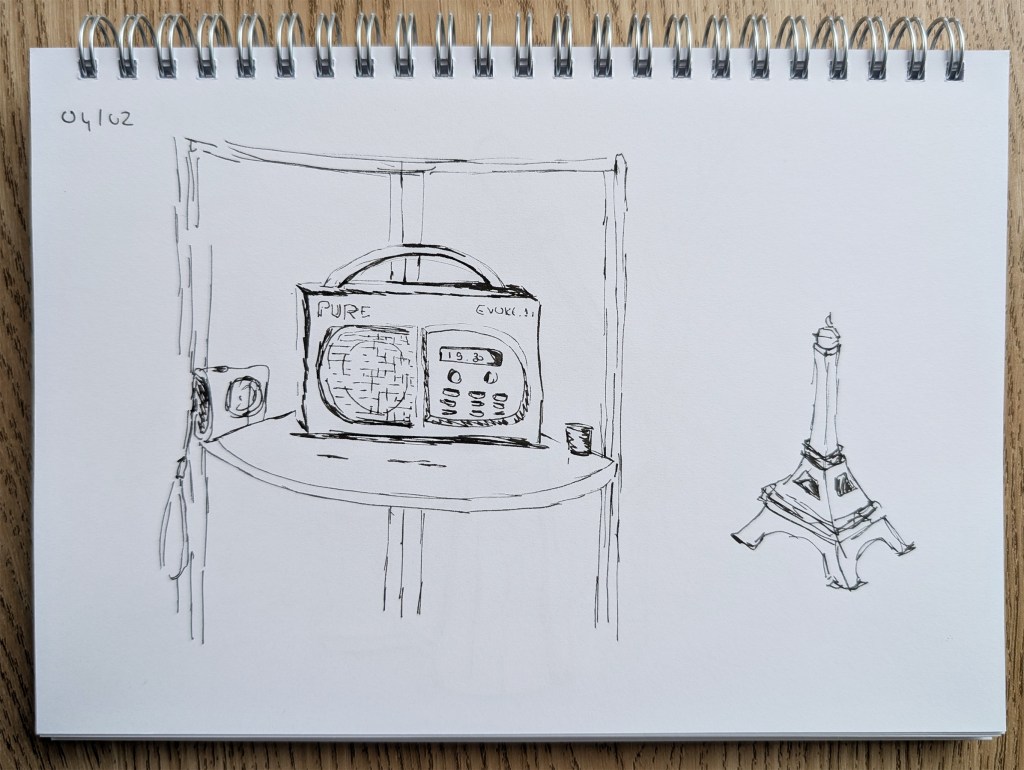

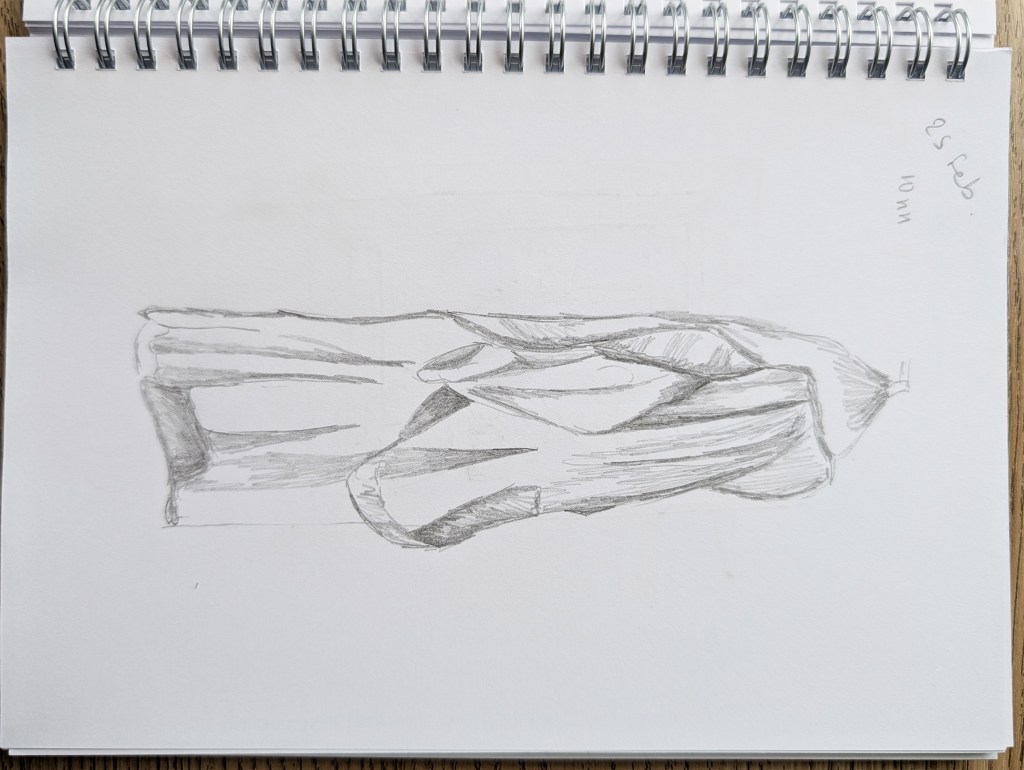
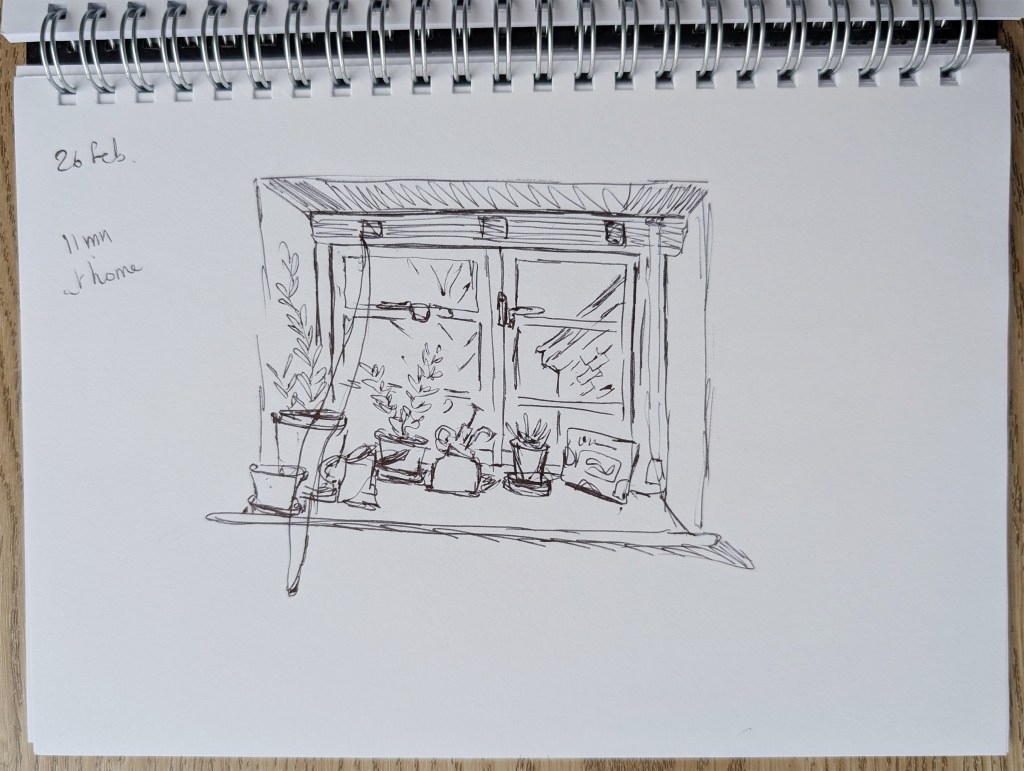

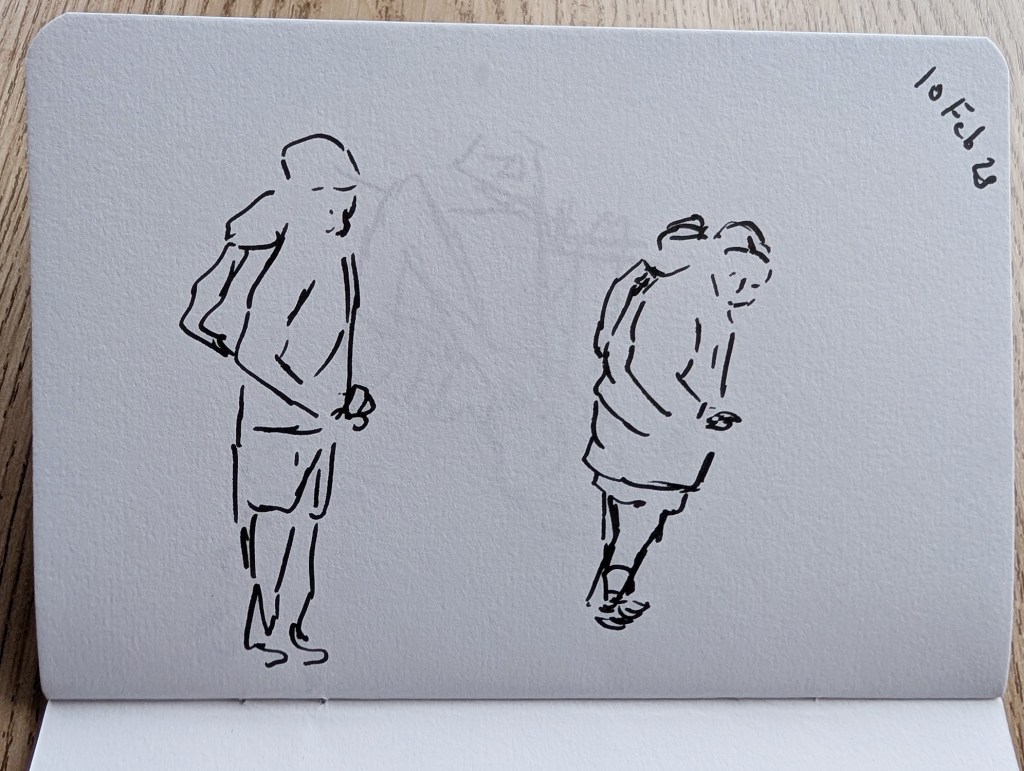
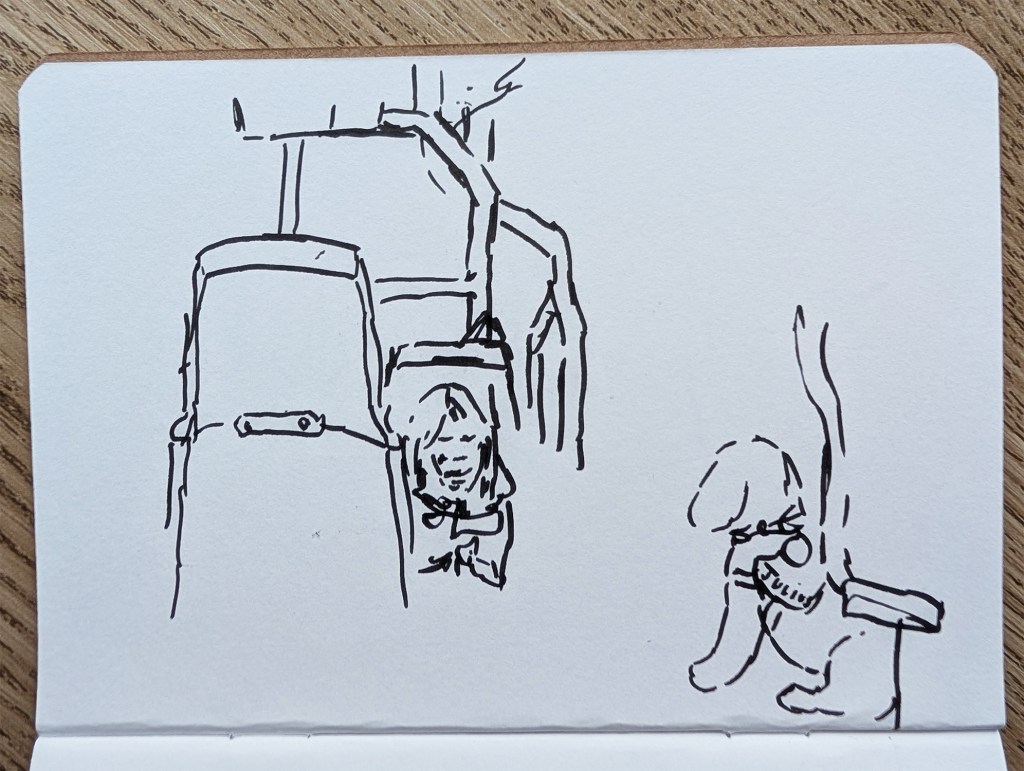
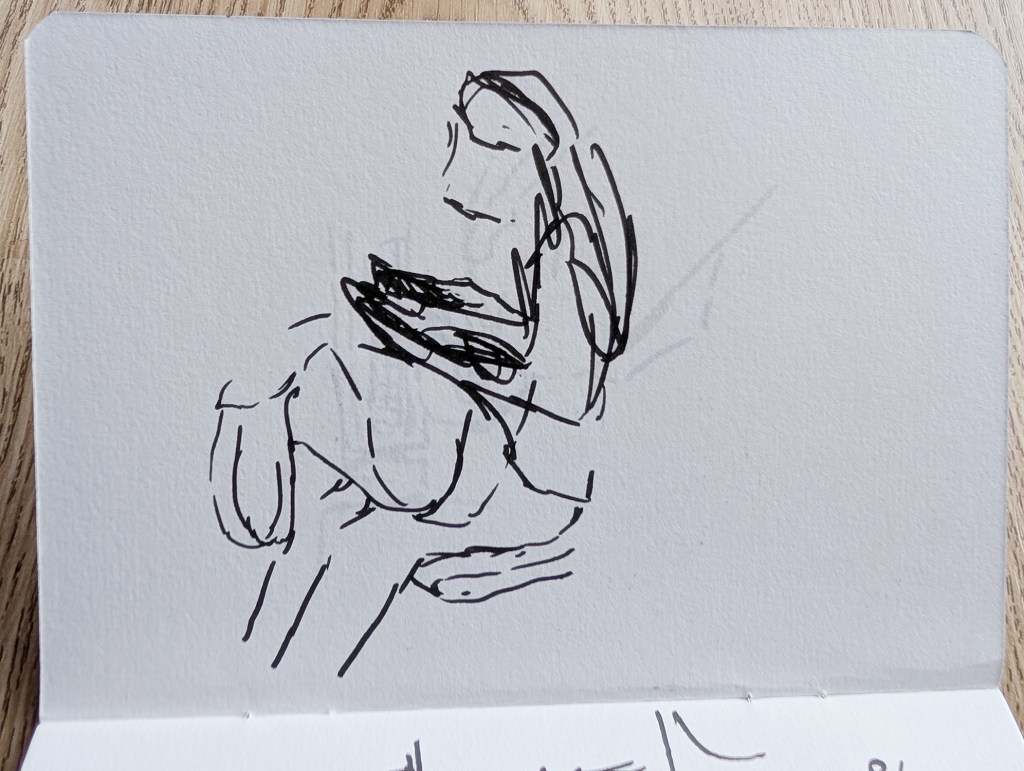
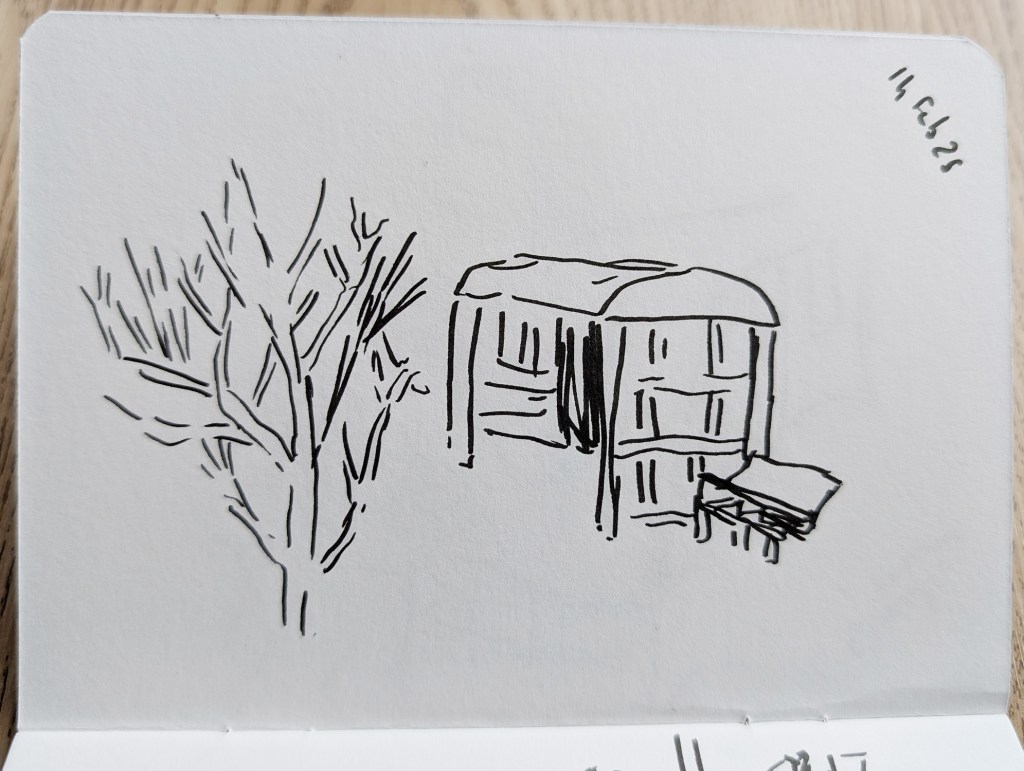
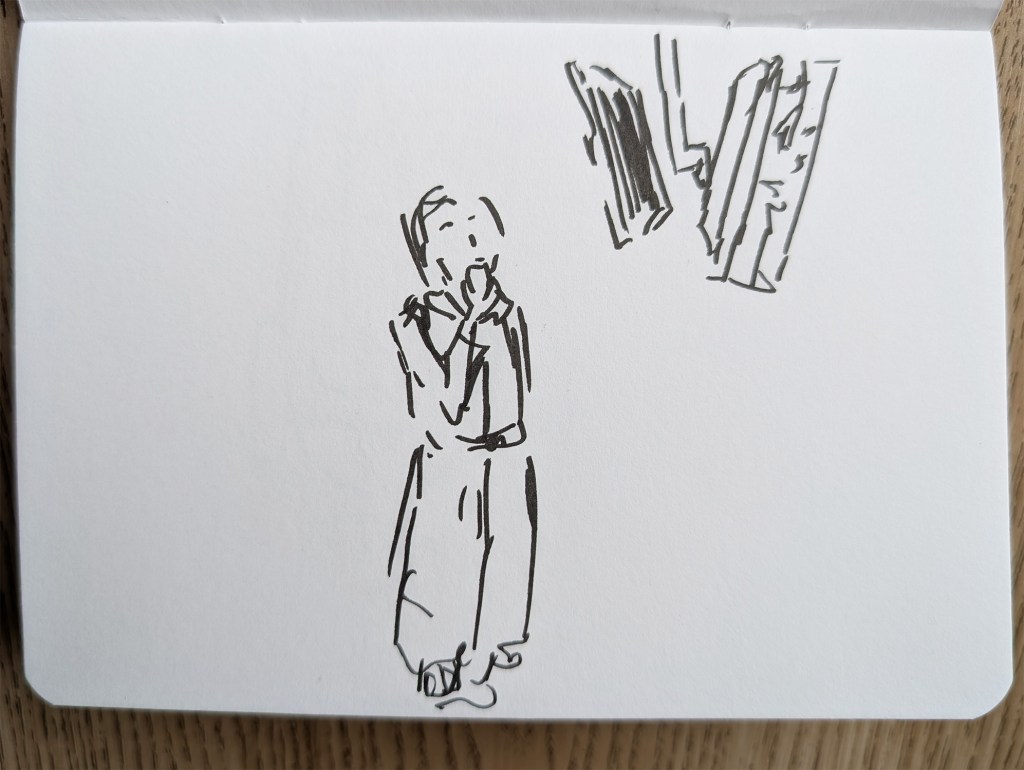


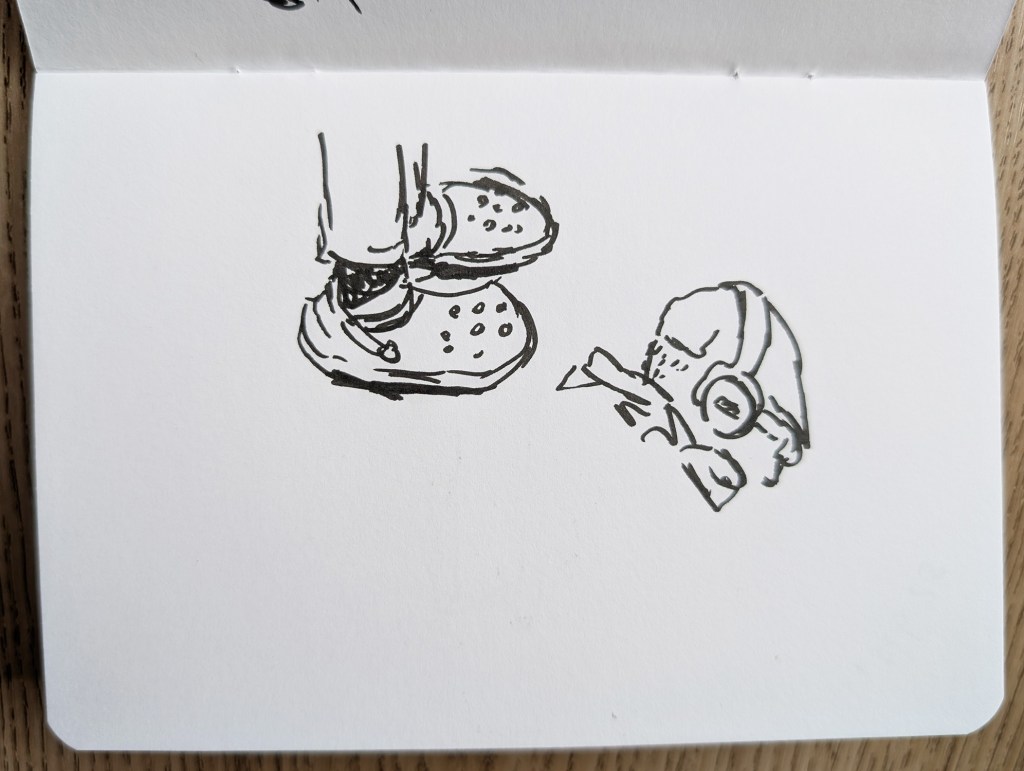

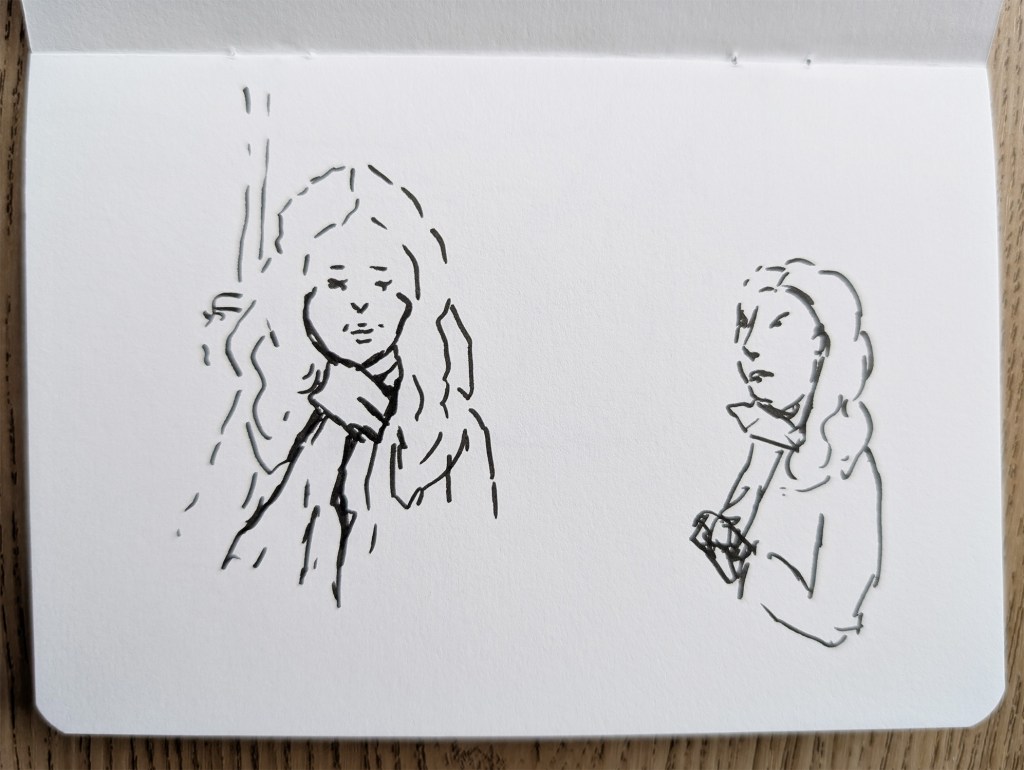
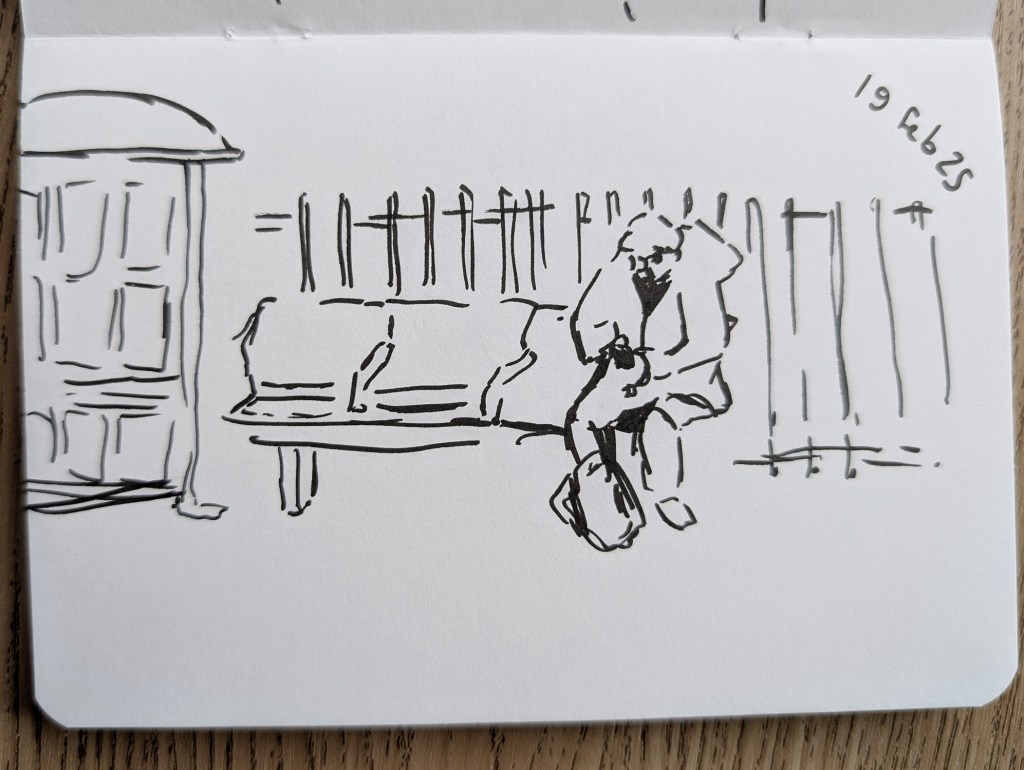
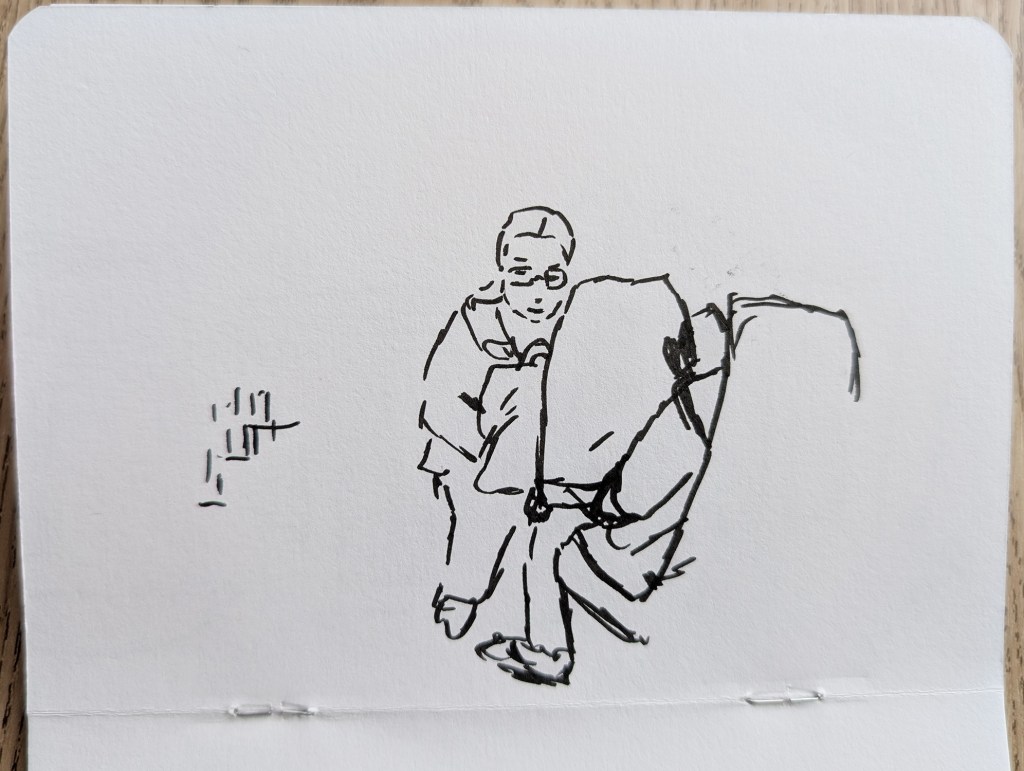
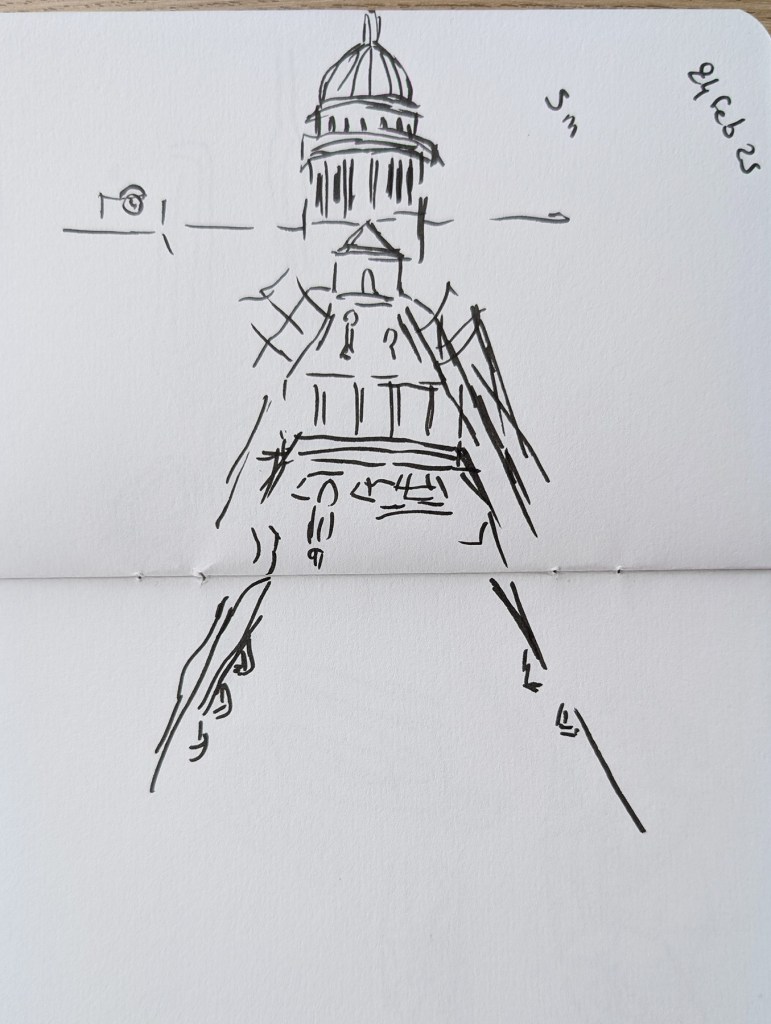
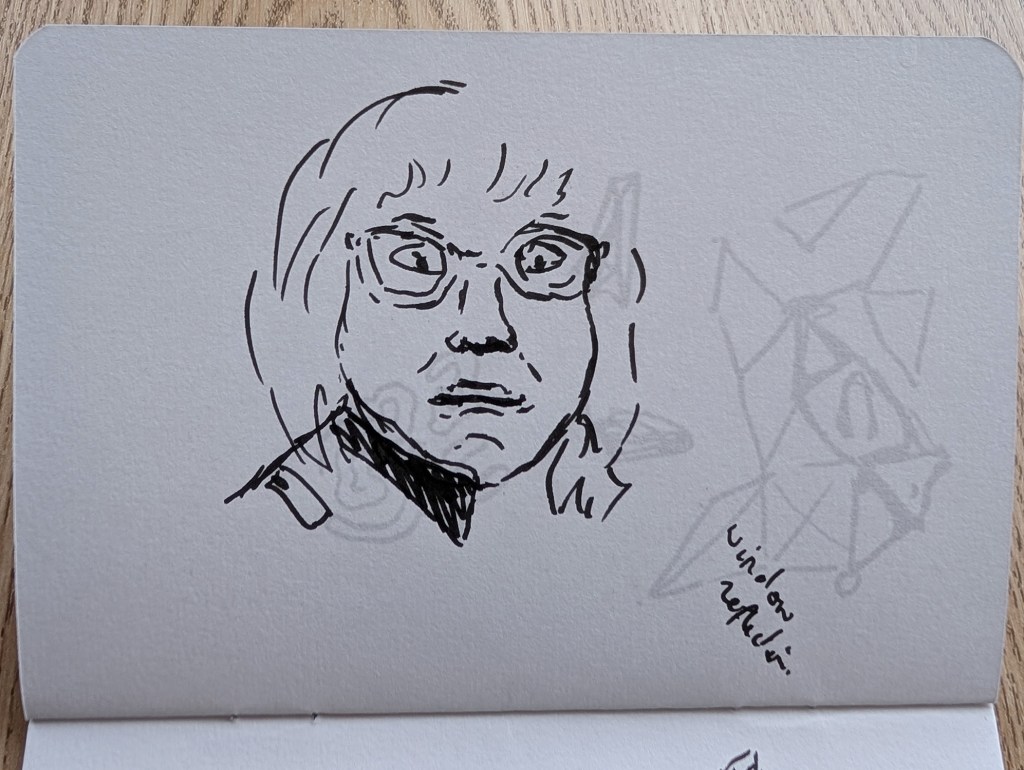

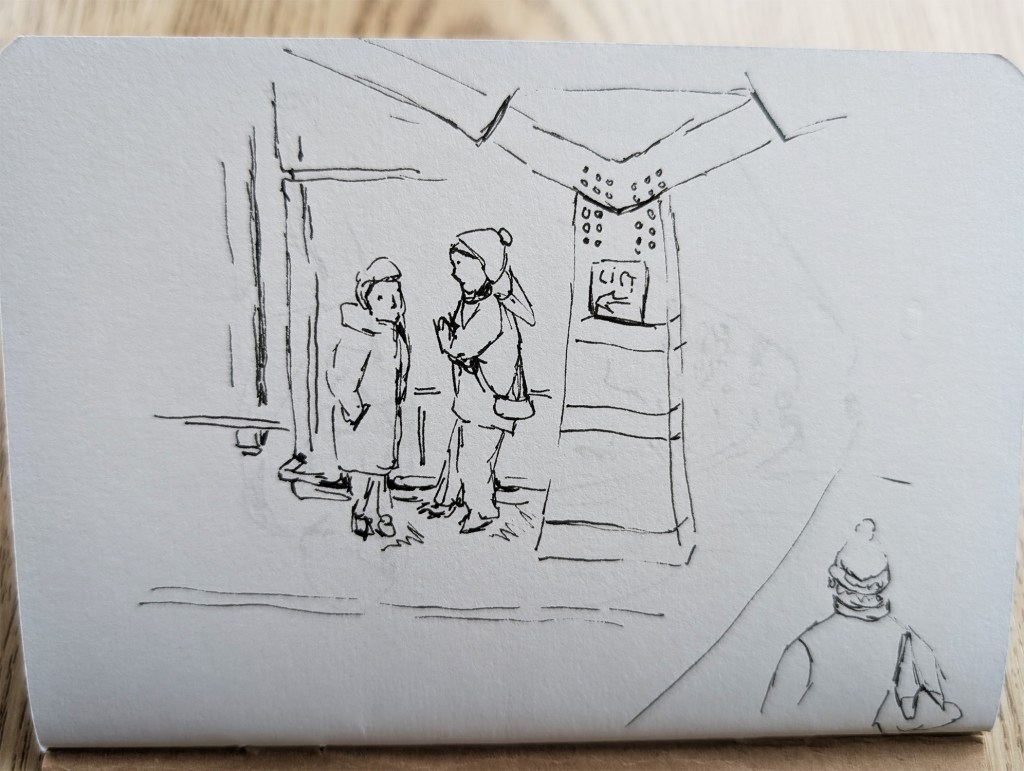
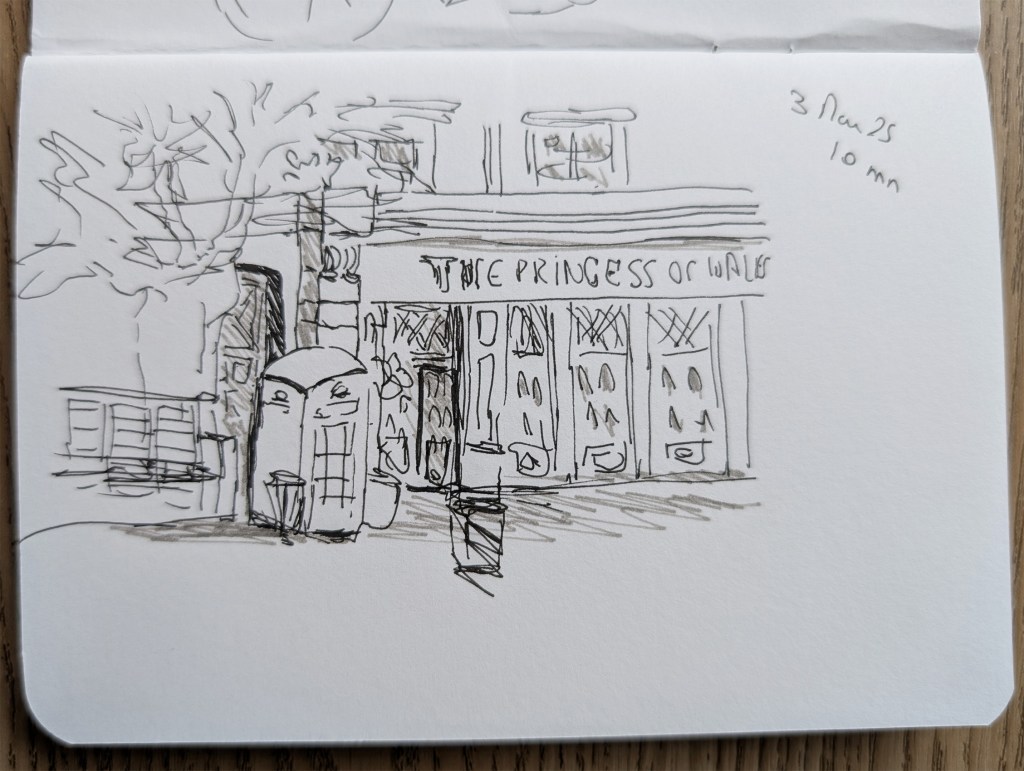
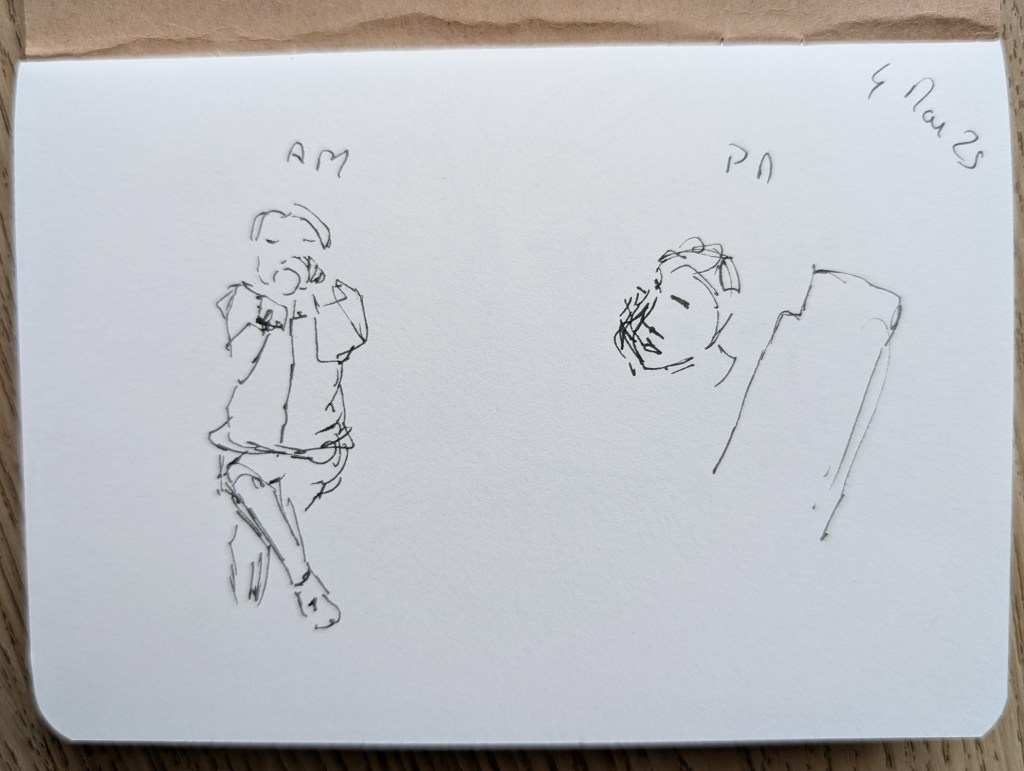


I sketched a lot while commuting. However, I sometimes drew at home or on a walk at the weekend. When commuting, I often have very little time as my commute is fairly short. It means that I am regularly interrupted. Also people keep moving so I have to capture their silhouette very fast. It has been interesting to look at the sketches in retrospect. I find that they often contain more details that I thought they did initially. I sometimes find it easier to capture the movement of a person when I have to draw very fast, maybe because I do not get lost in minor details. As the weather improves, I intend to spend more time sketching before catching the train. I have drawn a few scenes where I took longer and would like to do this more often.
Anatomy of humans and animals
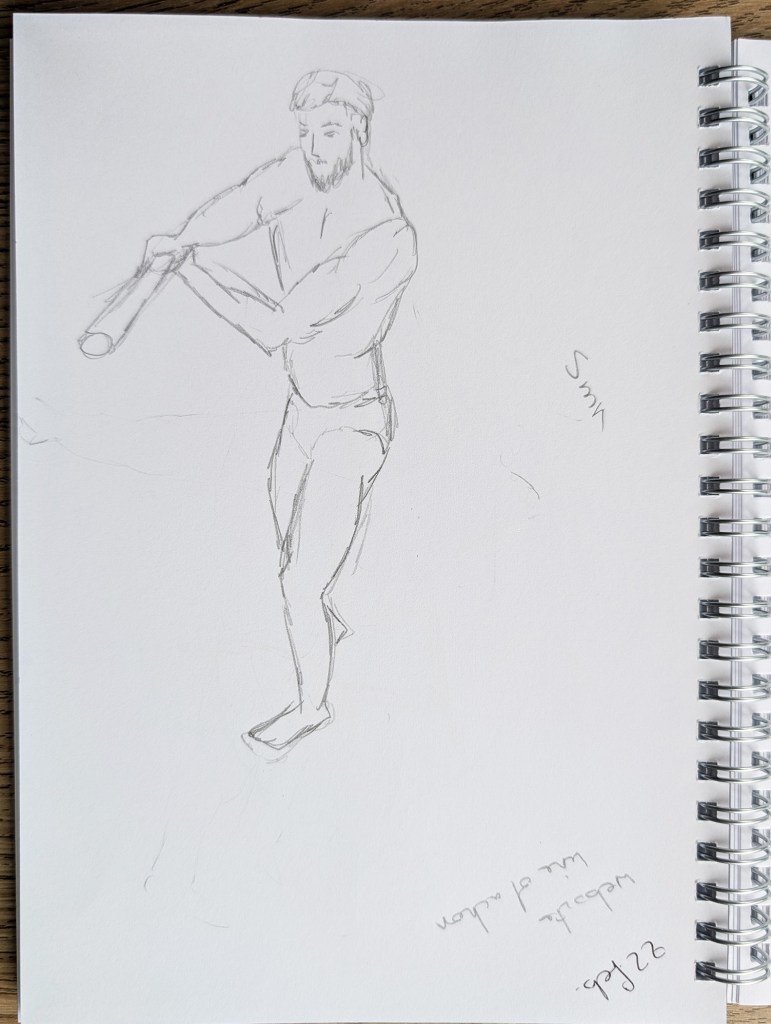
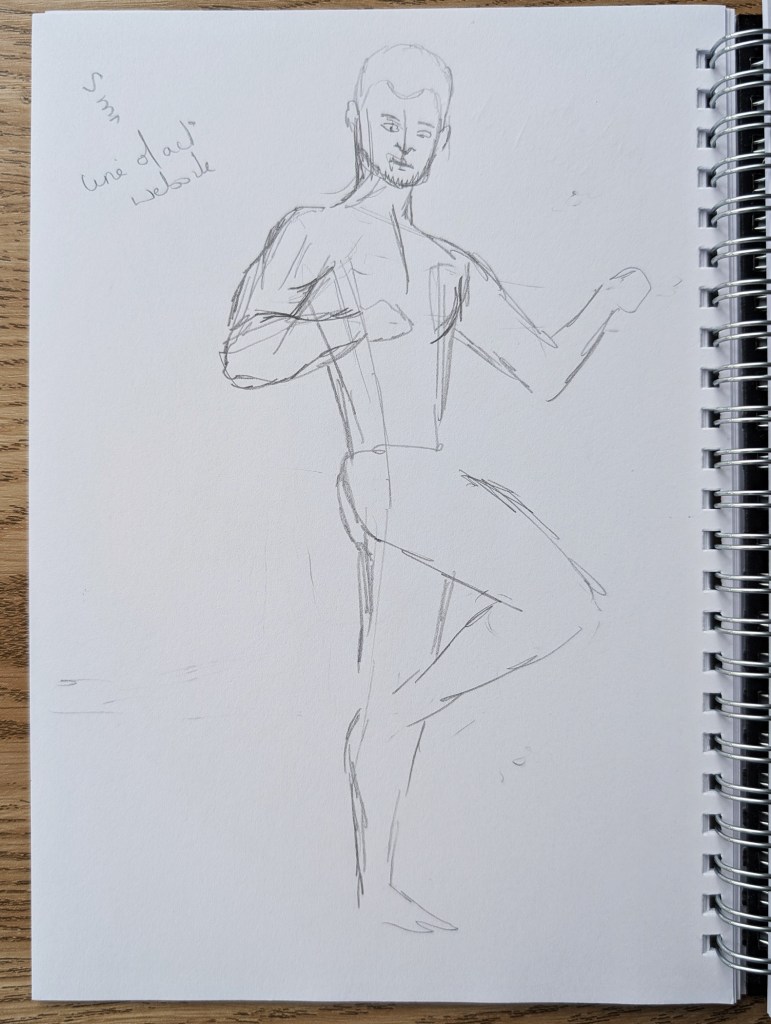
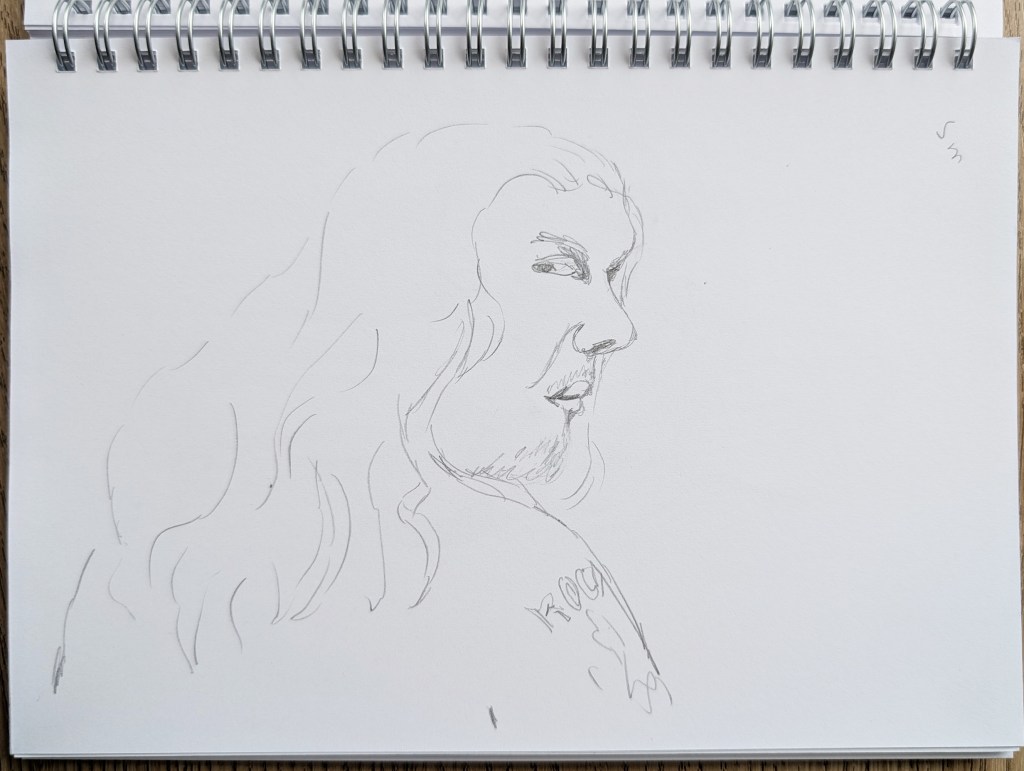
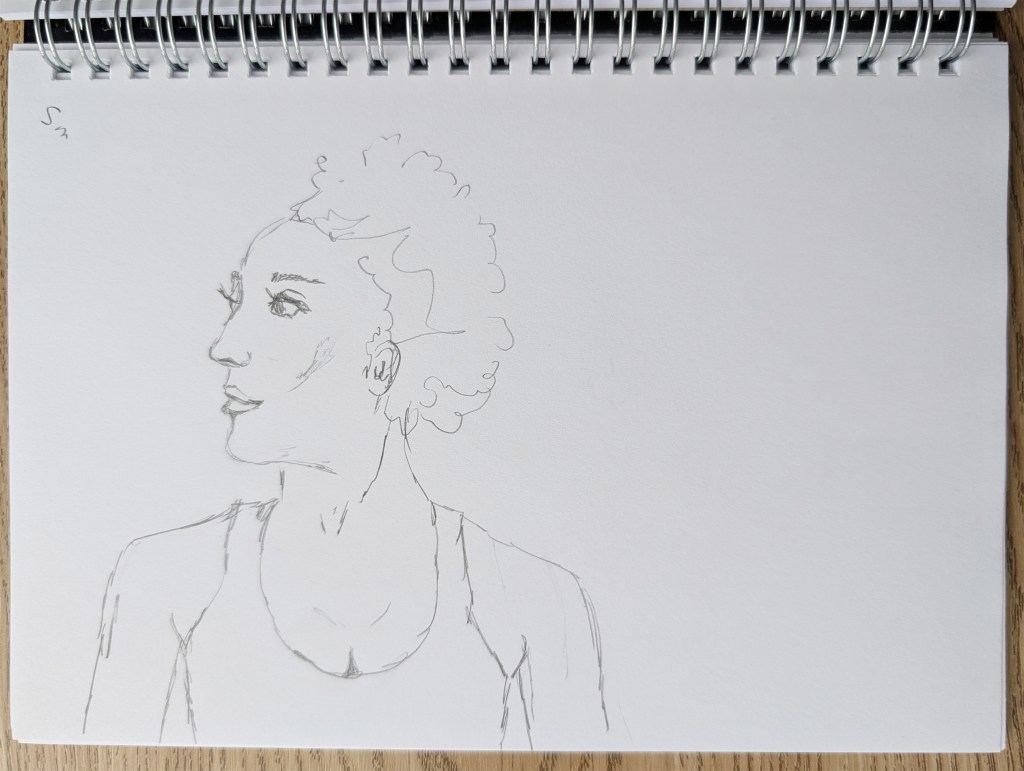
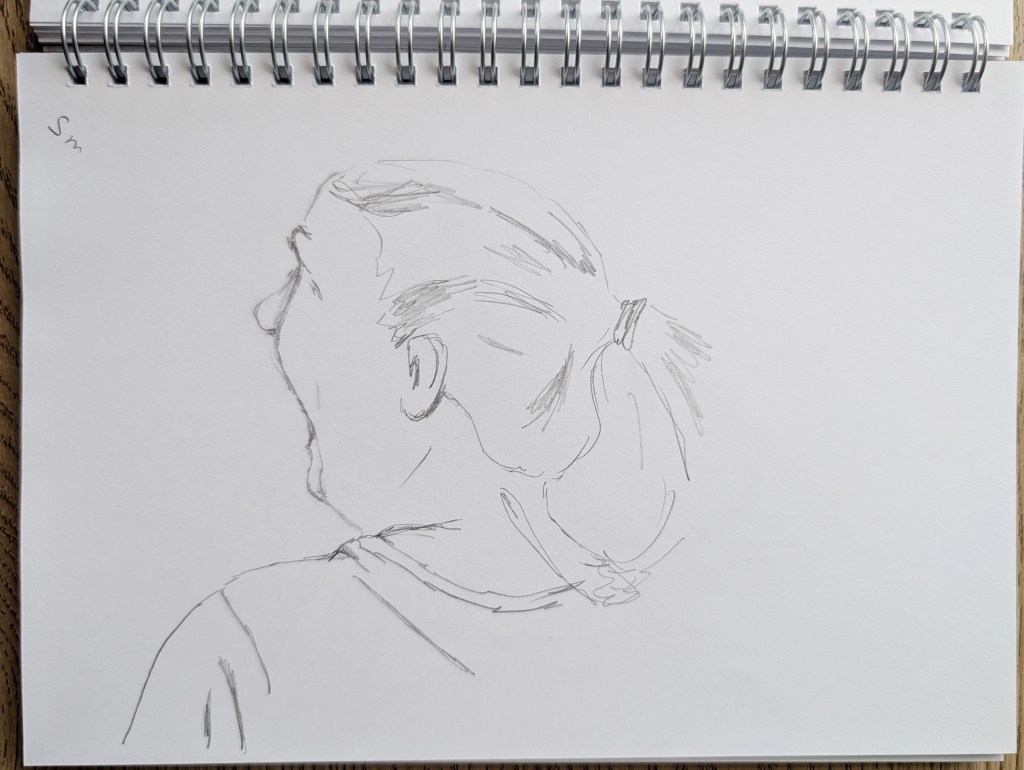
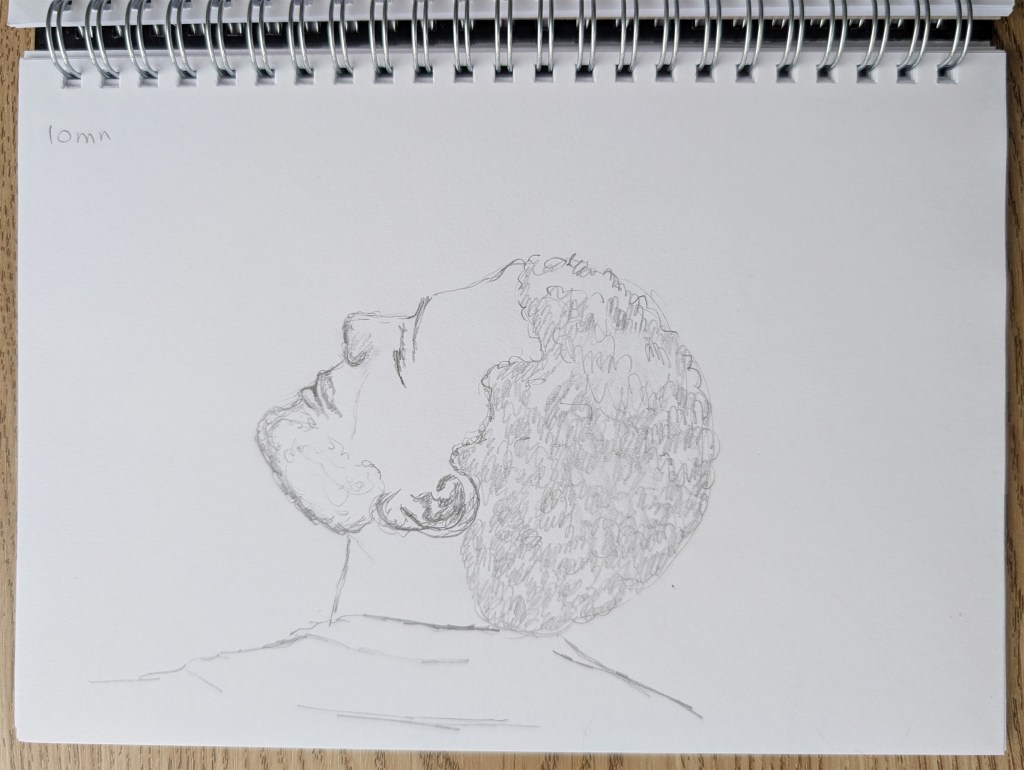
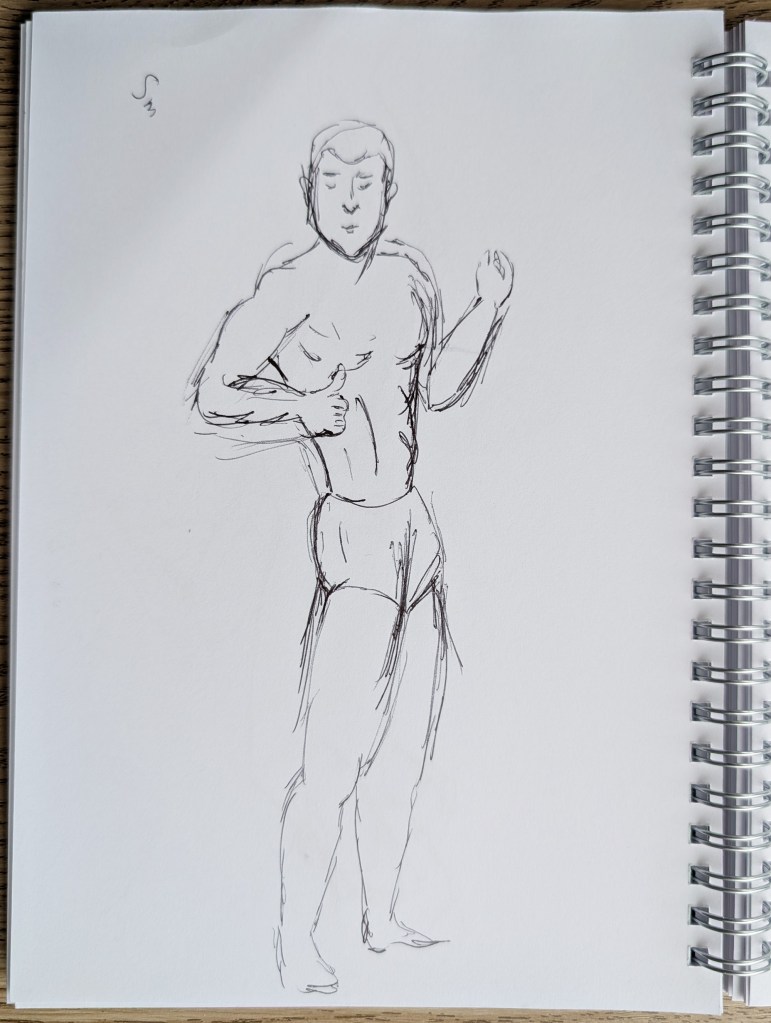
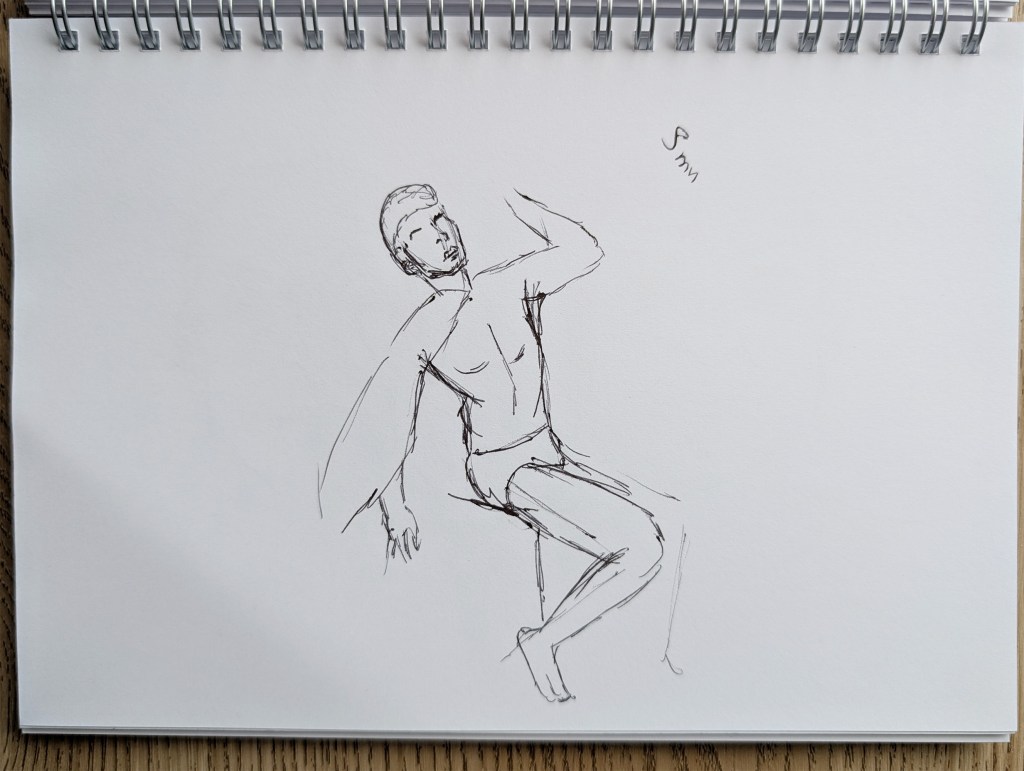
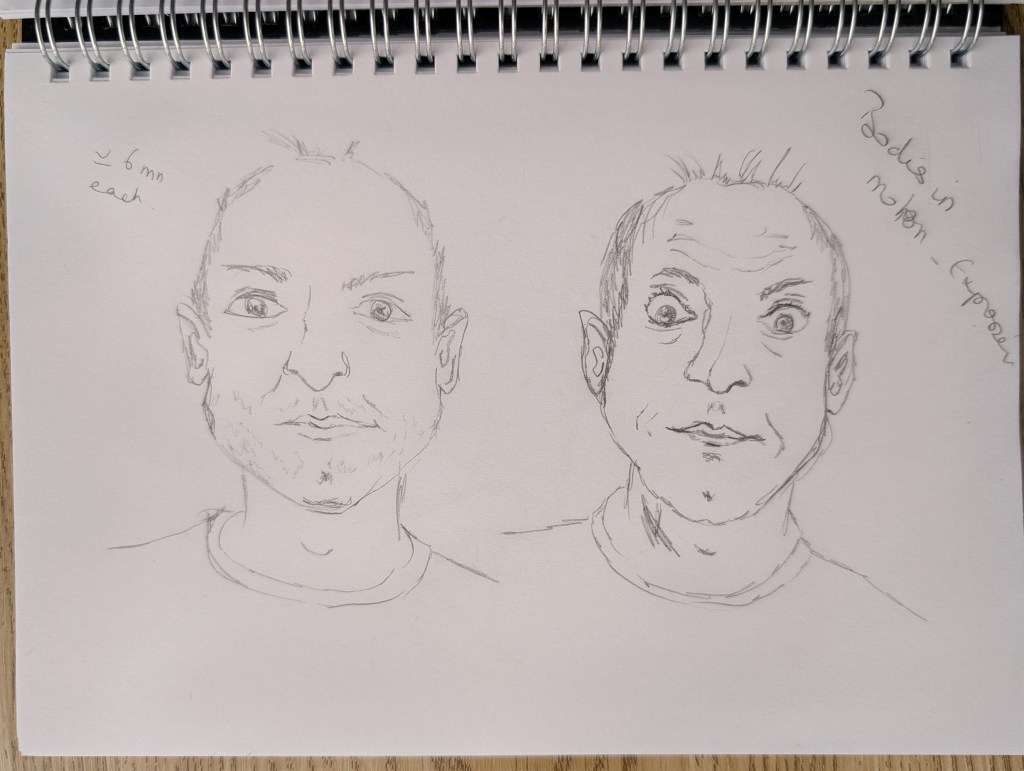
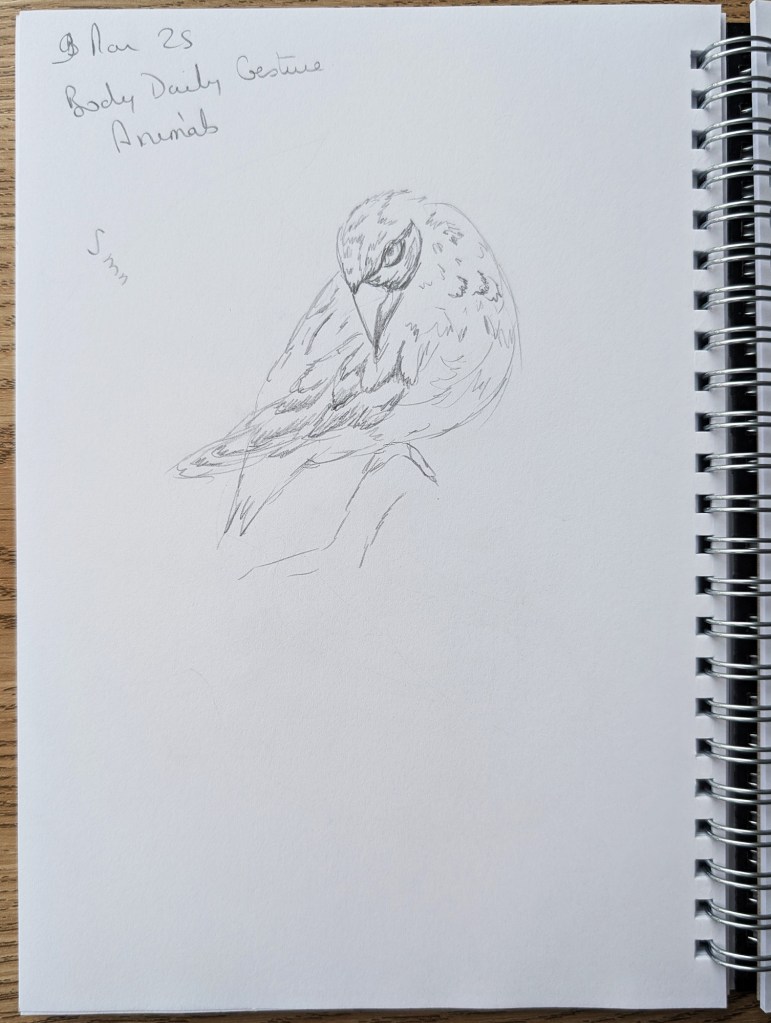
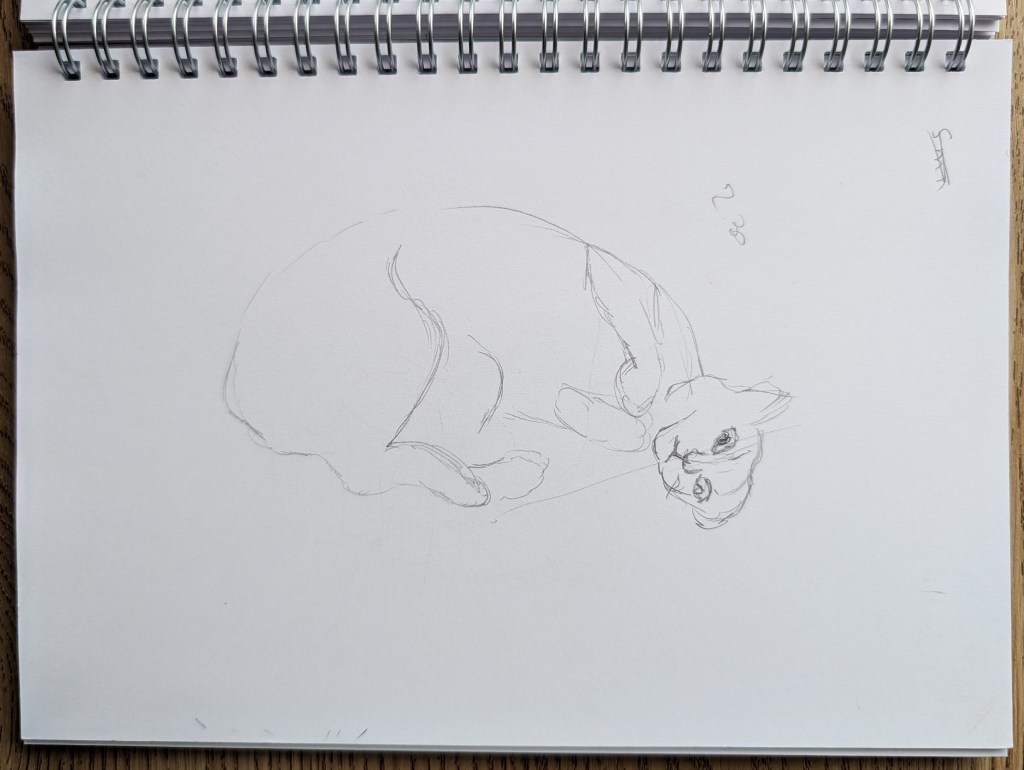

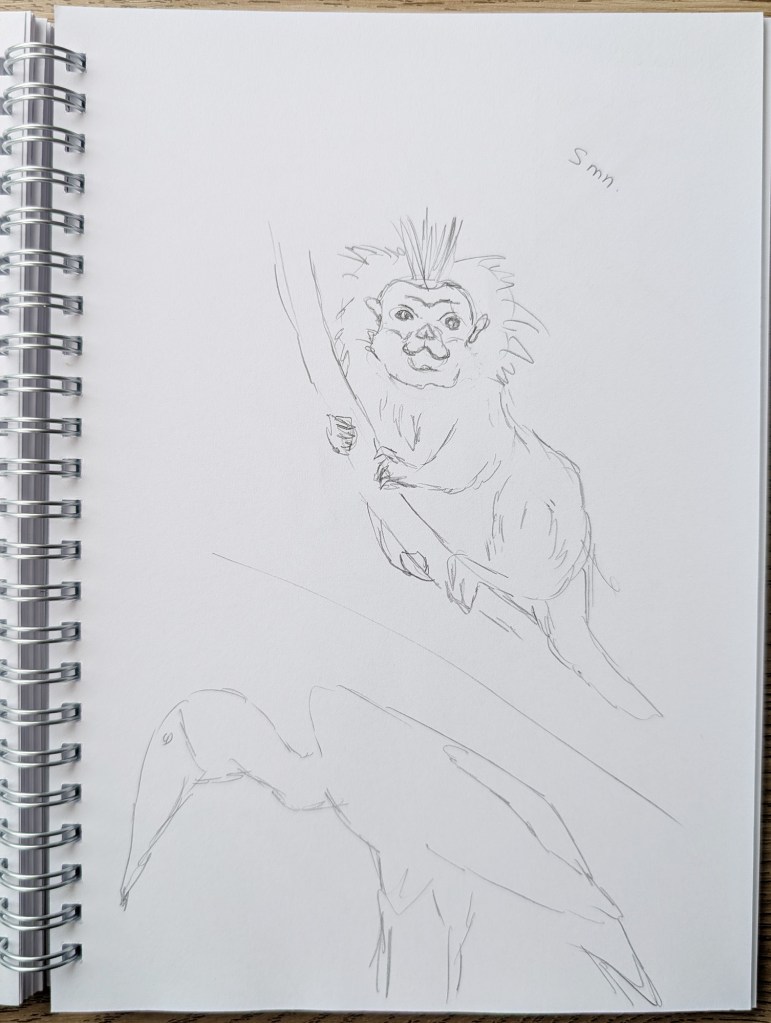
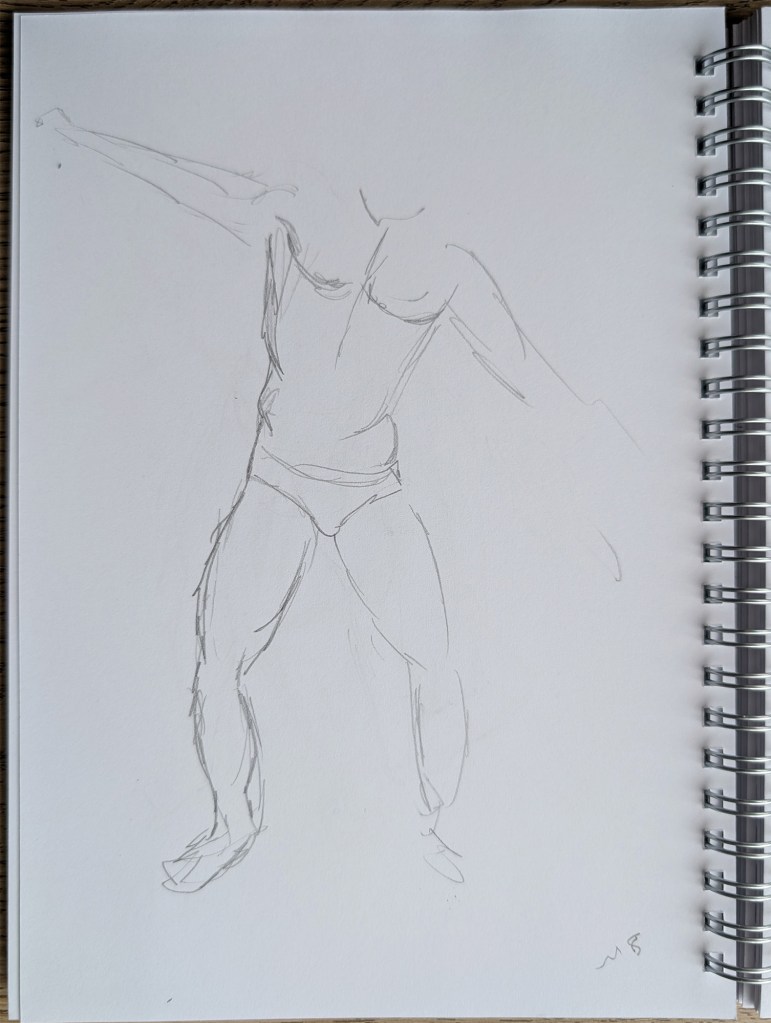

For these sketches, I have used websites that make it possible to draw a person or an animal in a given time (https://www.sketchdaily.net/ and https://line-of-action.com/practice-tools/figure-drawing#). I struggle to capture the dynamism and movement when I draw people and animals in more details. I am considering focussing on this aspect every day for a week or two to see if this helps me to relax and draw more fluid poses. This kind of drawings could help me to become more familiar with the anatomy and give me more confidence when I try to capture people’s movements on location.
Colours and tones
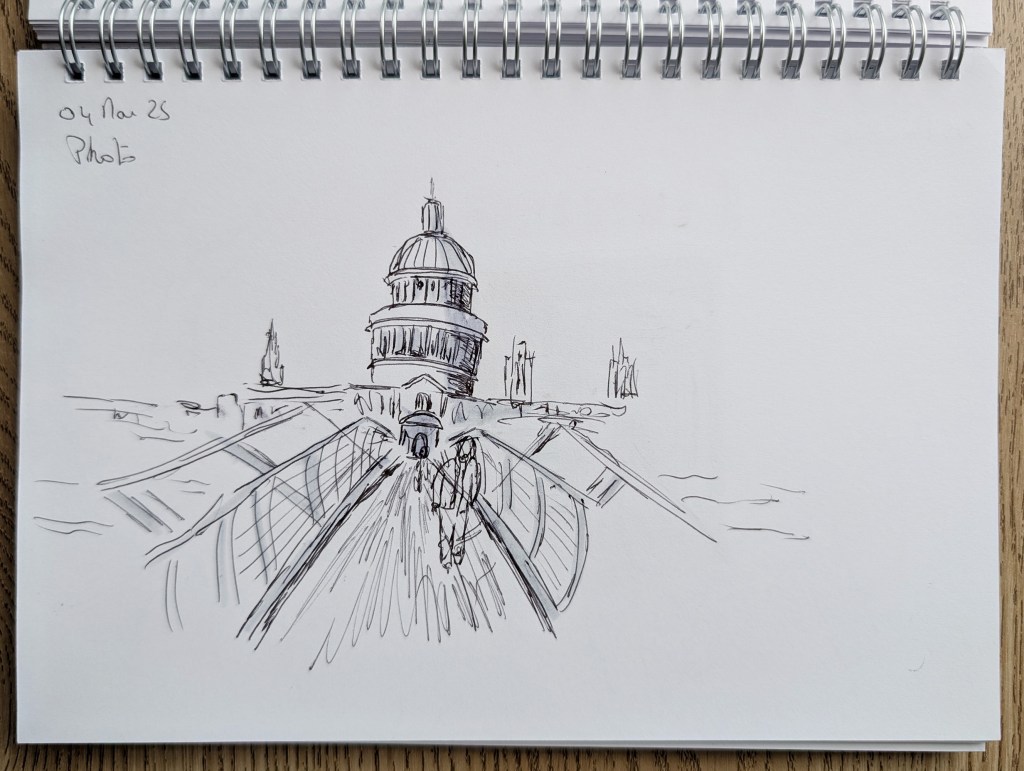
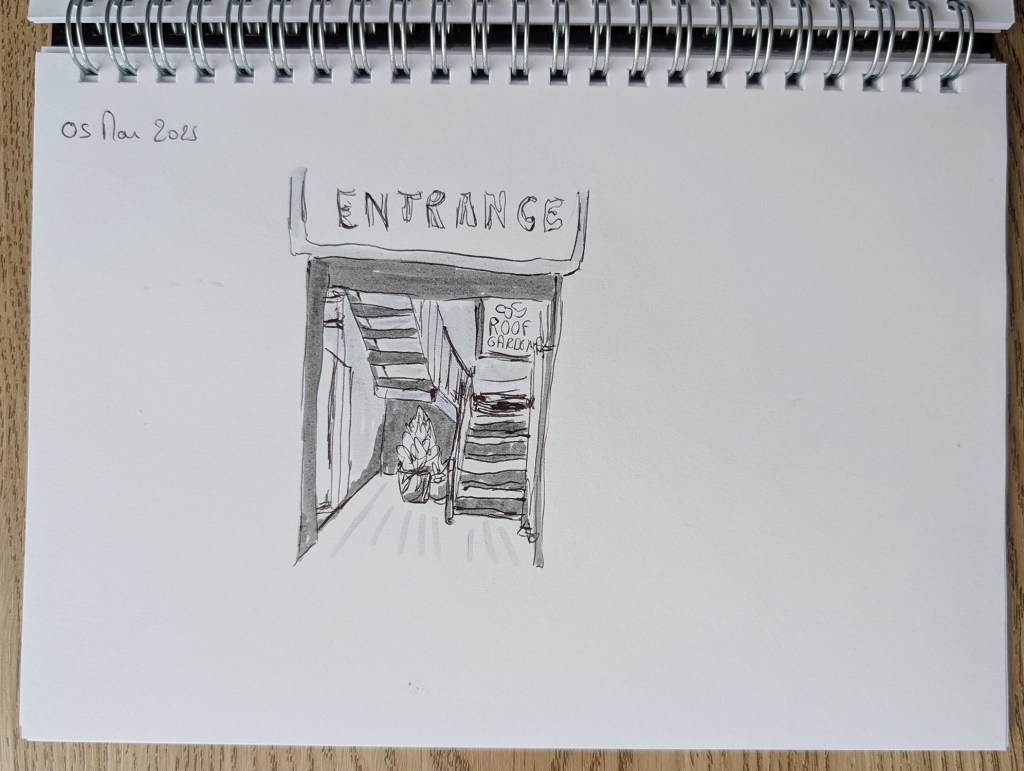
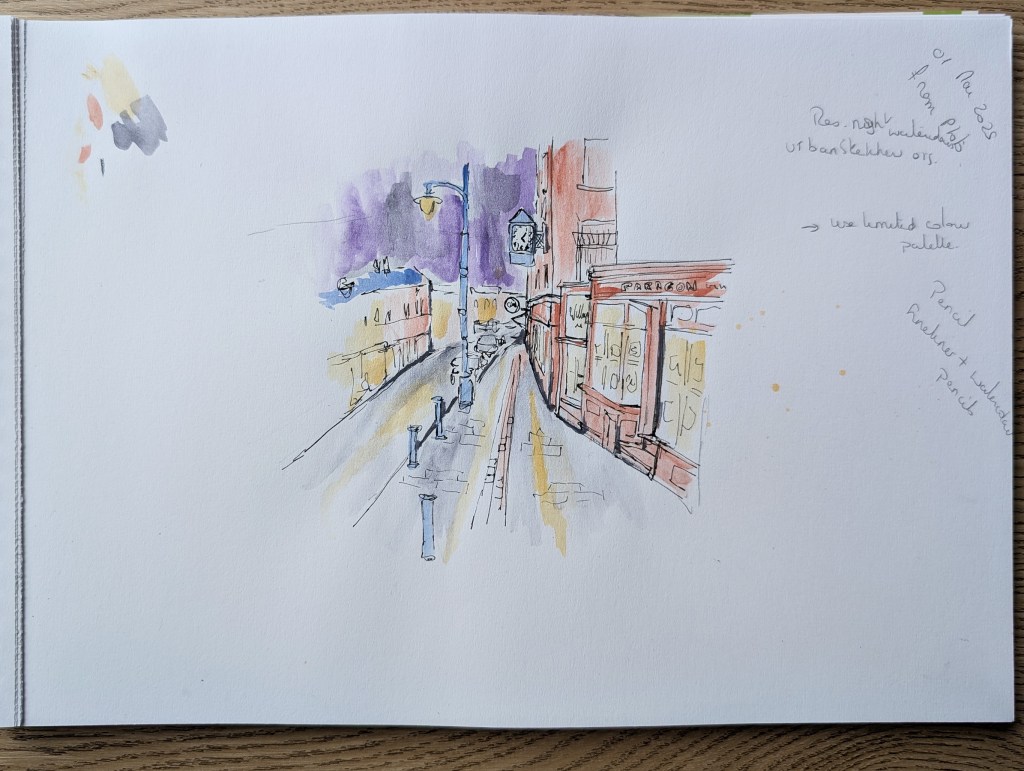
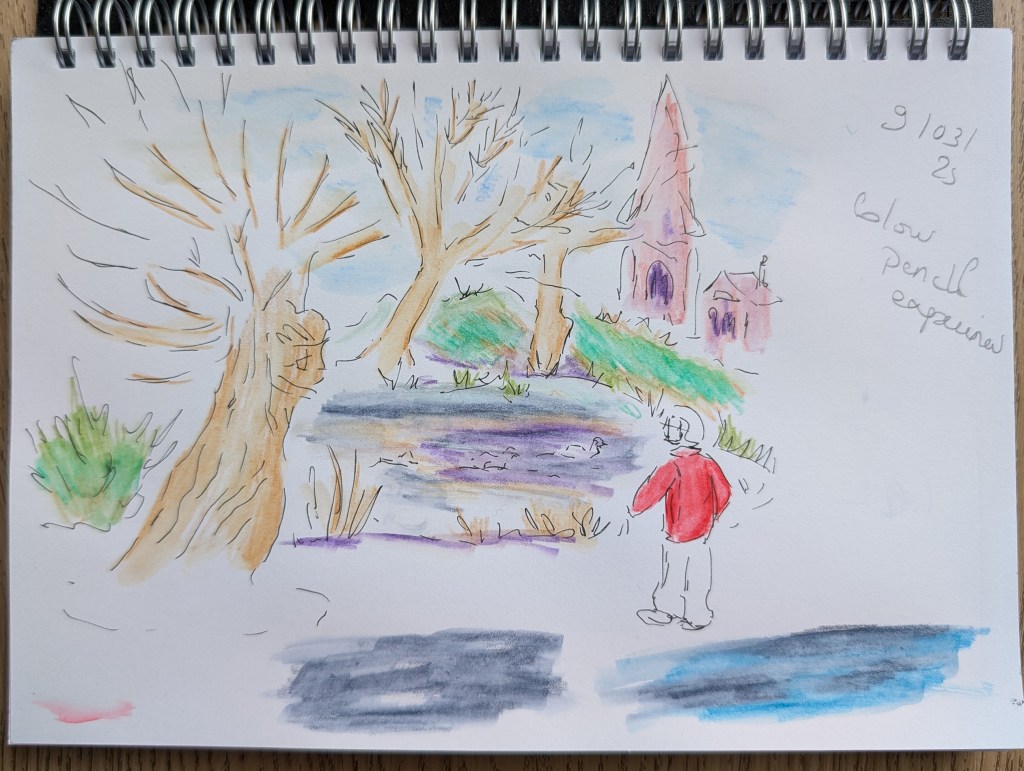
At first, I decided to use only black fineliners and wait to feel more confident to introduce colours and tones. I now would like to work more with watercolour and grey fineliners to create some contrast. As I intend to explore colours and tones in a parallel projects, this will be an opportunity to play with various media while sketching.
Sketching from photos

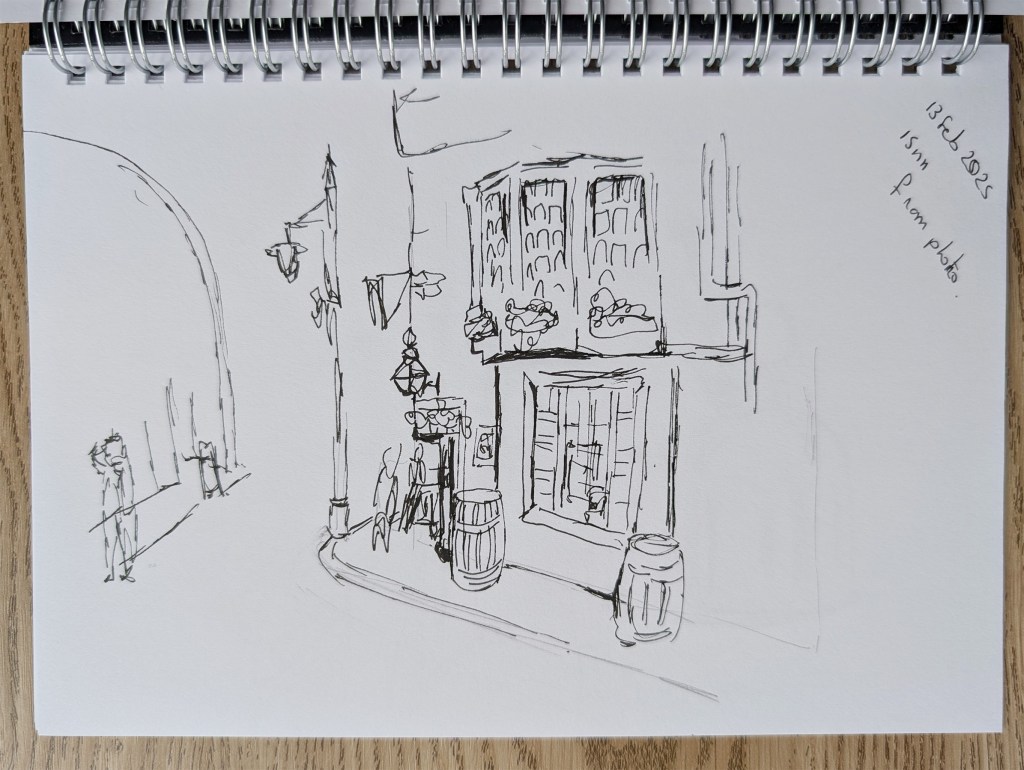
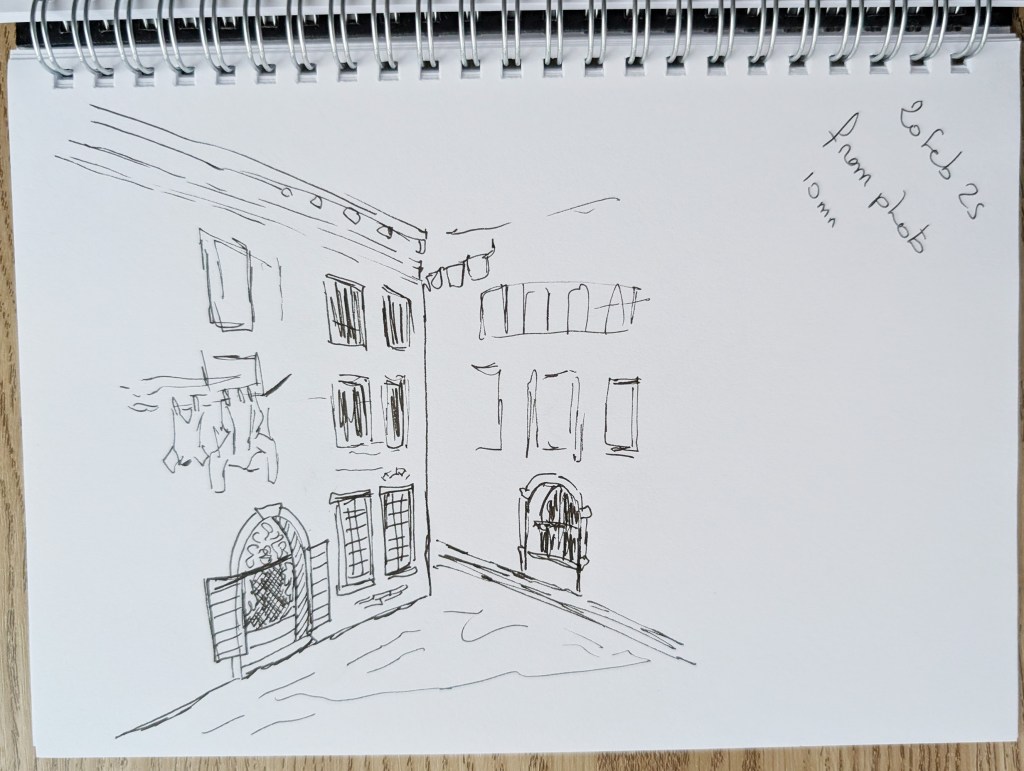
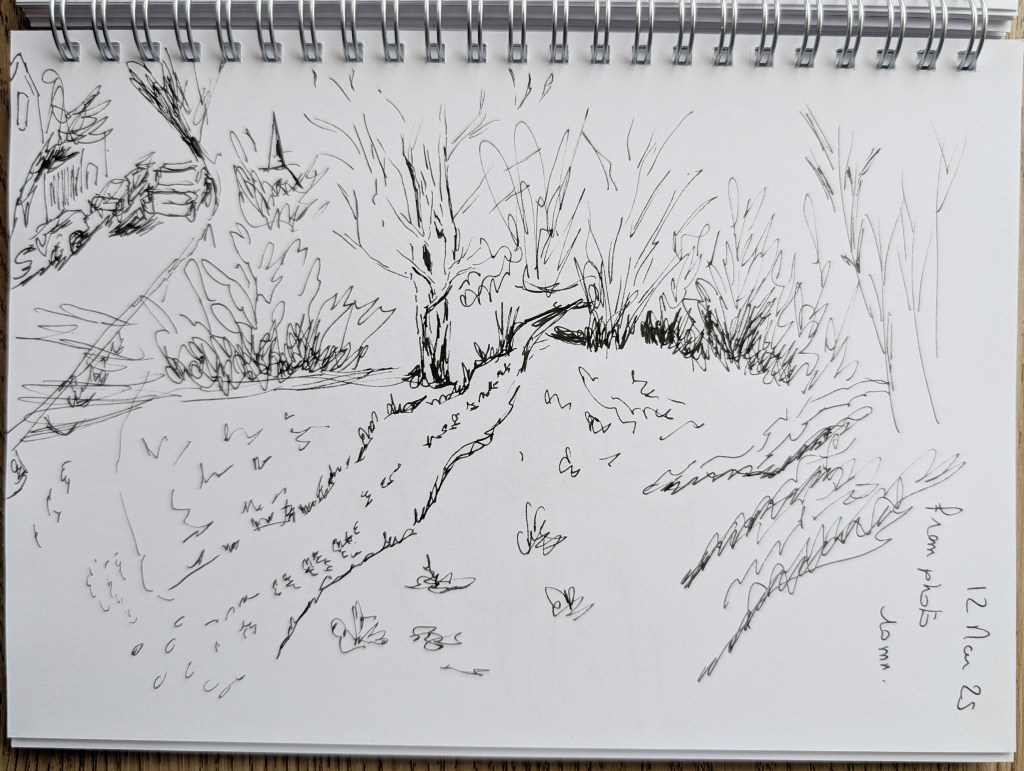

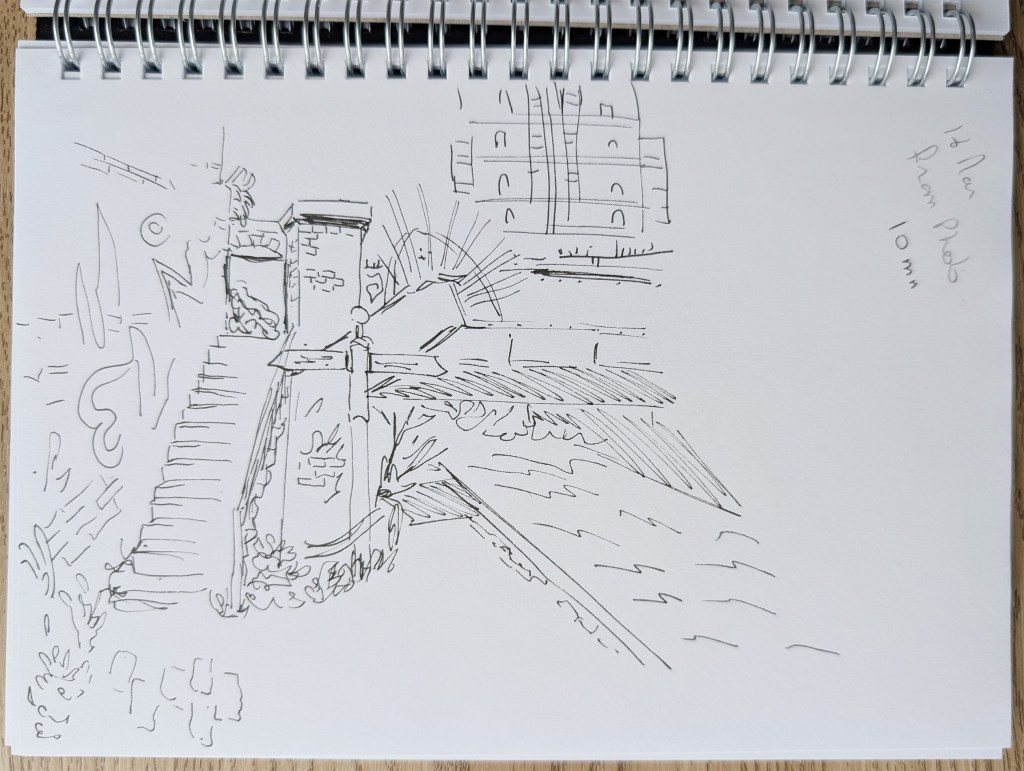
I enjoy sketching complex architecture and scenes from photos. I notice how my sketches improve when I draw regularly on location at the same time. The lines become more fluid and dynamic.
Sketching complex shapes
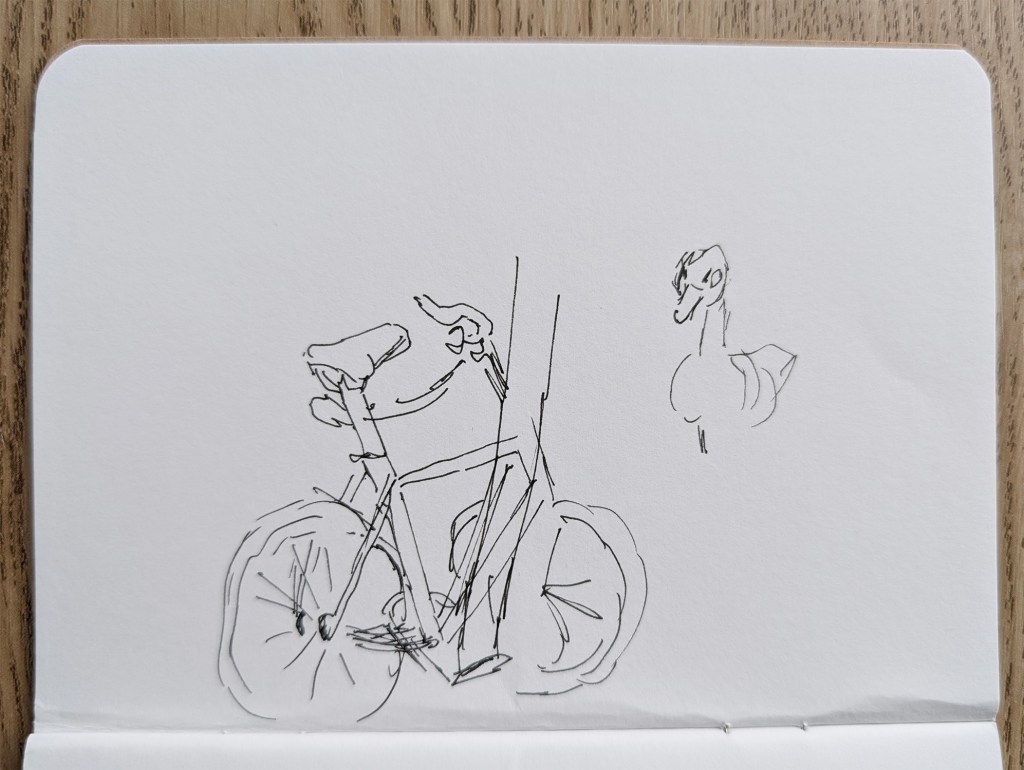
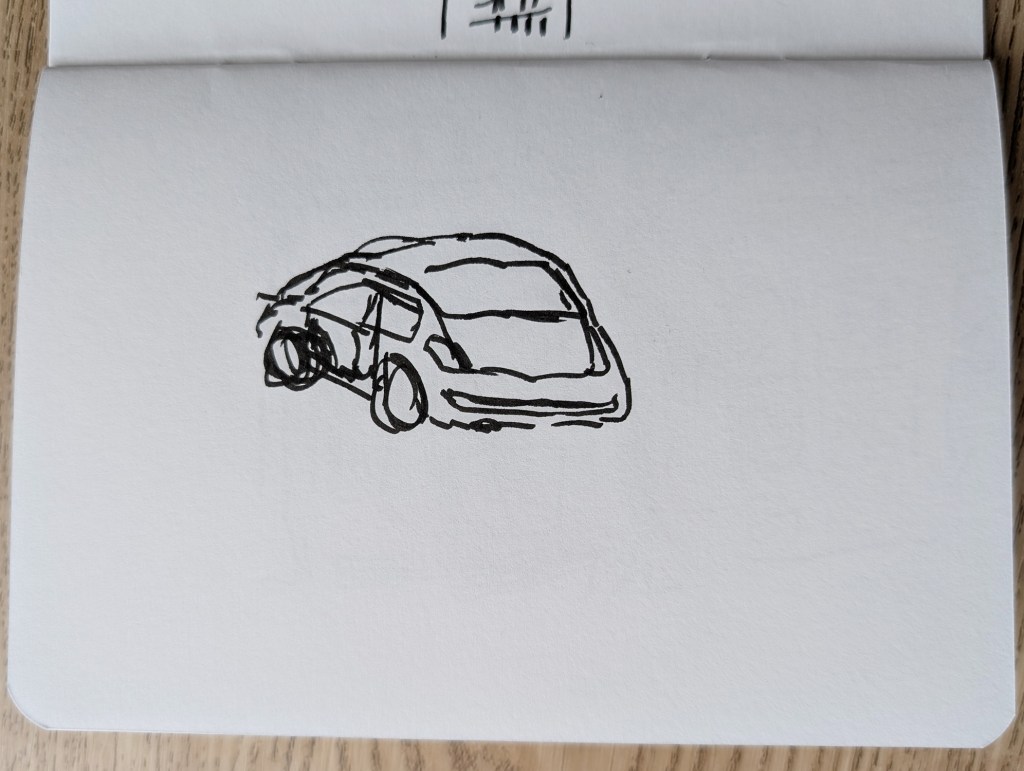
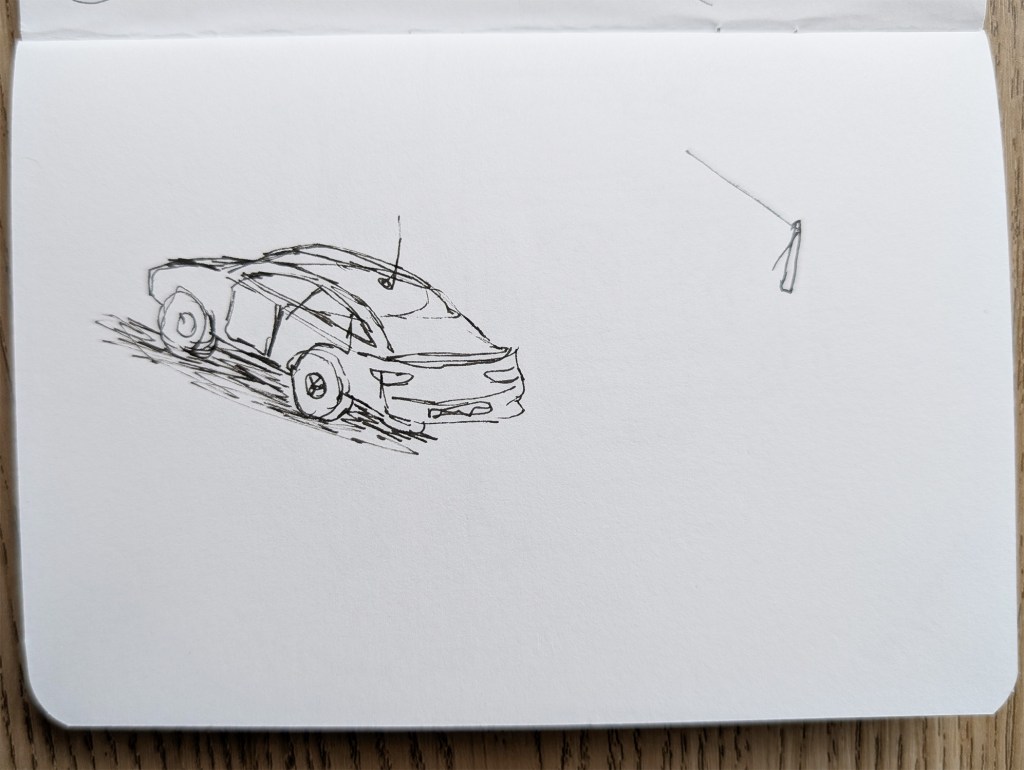
I do not like sketching cars or complex shapes and objects as the outcome is often disappointing. I have decided that it is probably a reason to draw complex items. If I can master sketching difficult elements, it will give me the confidence to sketch anything.
What I have learned from this exercise so far:
My confidence has improved. I have always noticed this when I sketch regularly but I have not yet found the opportunity to do this over a long period, and after a while, I lose momentum. I hope that this project will help me to develop my sketching habits in a more sustainable way.
Challenges
At first, it was challenging to sketch every day. I felt that I lacked inspiration and that I had nothing interesting around me to sketch. I also felt self conscious when I drew in public. It is getting easier to find inspiration and not to worry too much about what people might think.
Next steps
The next steps will include using more colours, focussing on the anatomy of people and animals for a while and drawing for longer periods several times a week.
I have also realised that I should not fear repetition as it is not a problem if I draw the same scene or a similar one several times. It could even be an opportunity to compare the different sketches after a while.
 Catherine Roux Degree in Illustration