The instructions for this exercise reminded me of a YouTube video I watched about continuous line urban sketching (TobySketchLoose): www.youtube.com/watch?v=3je9c0w8QWI. I watched this video again to better understand how the artist draws a urban landscape in one continuous line.
I watched another YouTube video I particularly like. It is about loose sketching of people (Sketching Scottie – www.youtube.com/watch?v=zwjI8Q2D0uQ&t=606s). Although it is not about continuous drawing, I had noticed that one of the artist’s techniques consists in lifting his pen from the page as little as possible, so it is semi-continuous and this contributes to the fluidity of his drawings.
I viewed many more videos and images and they were a great source of inspiration for this exercise. Every artist finds their way of using this technique with different results.
Some artists will use continuous line drawing to create minimalist drawings like Le Moineau by Picasso while others create more busy sketches. Jack Devereux demonstrates his technique on YouTube (www.youtube.com/watch?v=qO5HvE7aaMo) with the sketch of a fairly detailed portrait of a man in one continuous line.
I also enjoyed looking at the work of DFT (https://www.dft.art/), especially his sketch of a trainer superimposed with the original shoe as it helped me to understand how he simplified the object of his drawing.
Other links I found interesting are:
www.digitalsynopsis.com/design/quibe-one-line-minimal-illustrations/#google_vignette
www.mymodernmet.com/tyler-foust-continuous-line-drawings/
https://theinspirationgrid.com/one-line-drawings-by-pierre-emmanuel-godet/
I then started creating sketches. I selected a few programmes on BBC and Channel 4. I used a timer and paused the programme for 2.30 to 2.45 minutes each time. I created these sketches in about 4 sessions. I wanted to see what happened if I repeated the exercise.
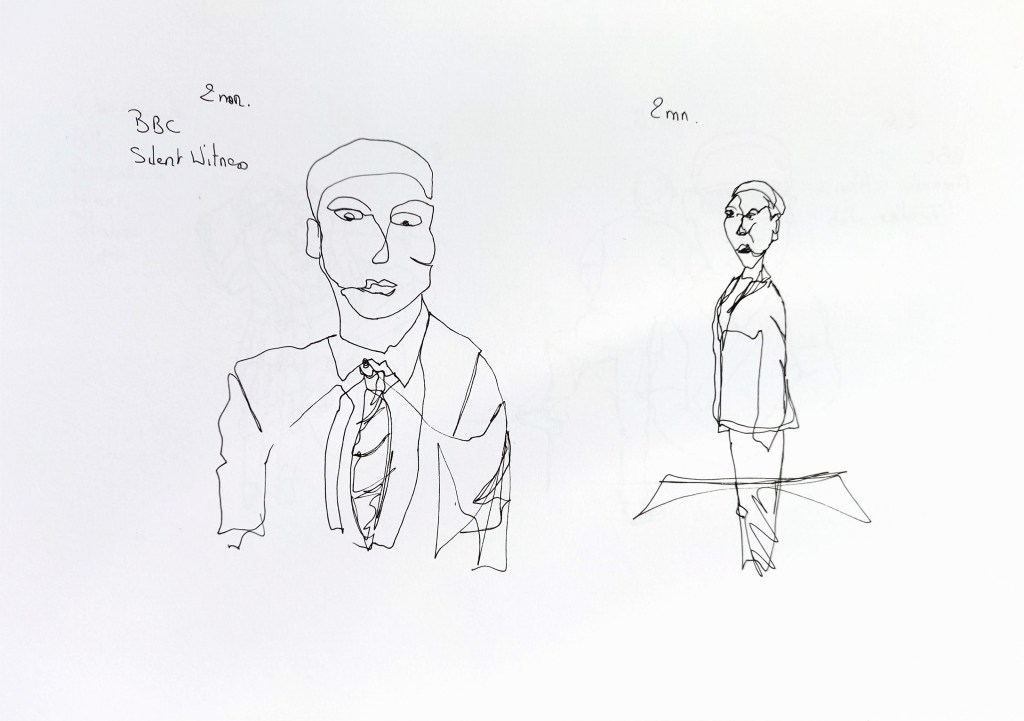


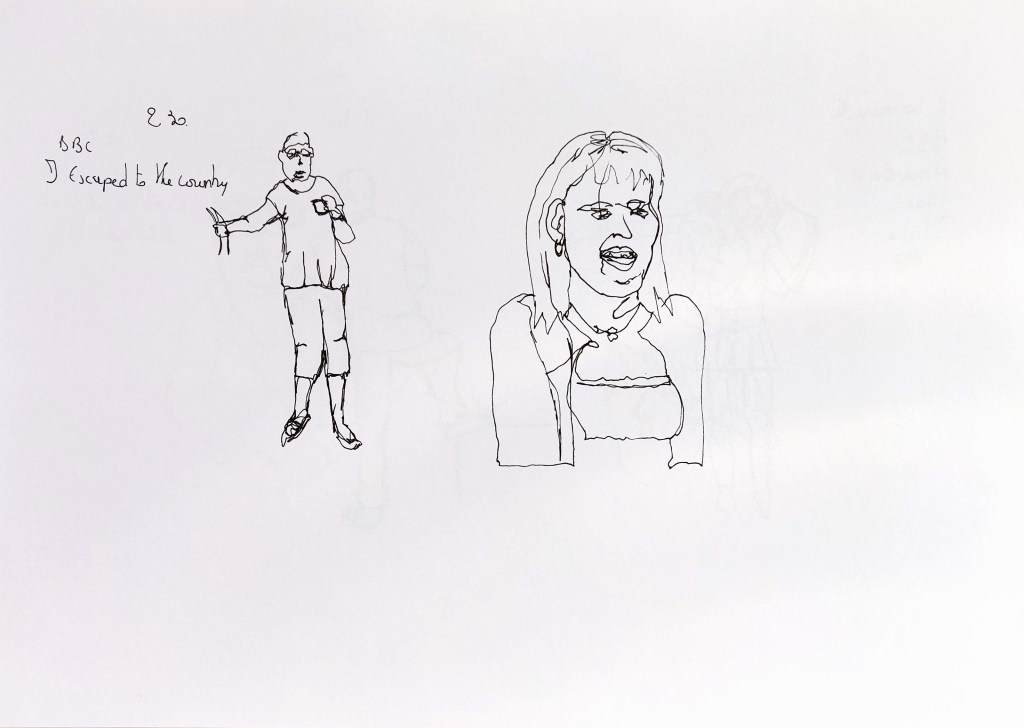
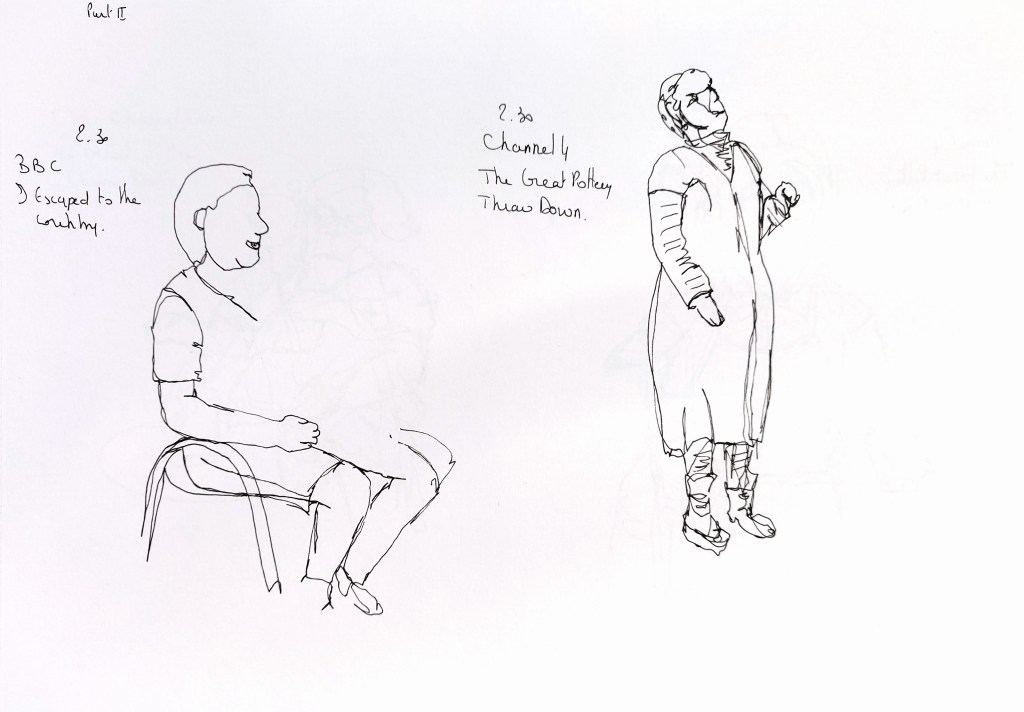
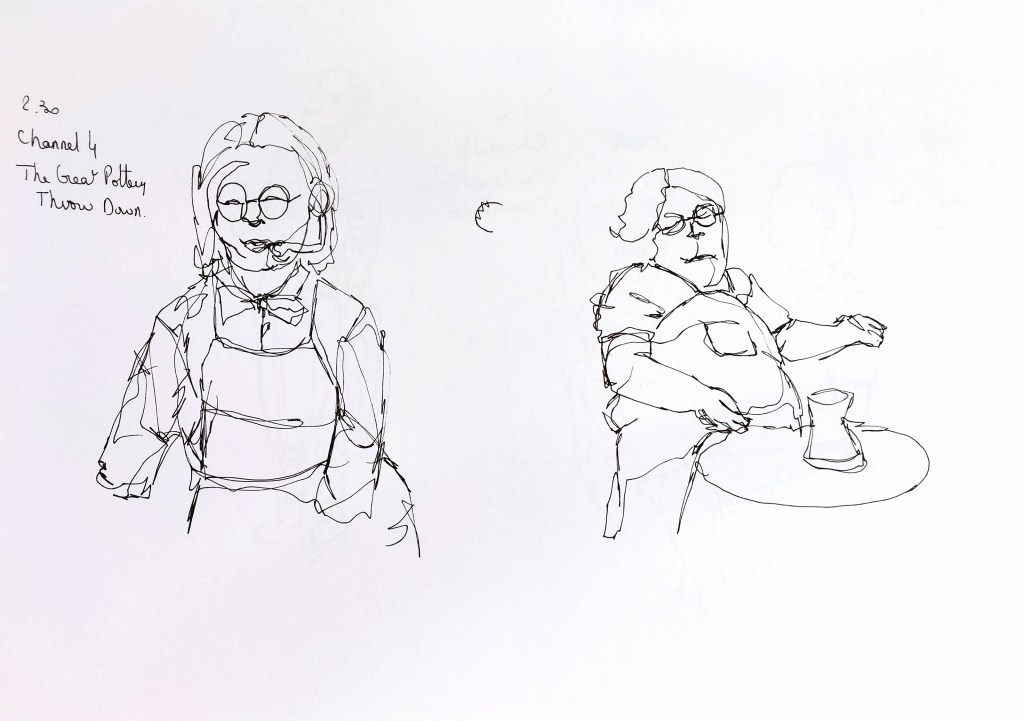


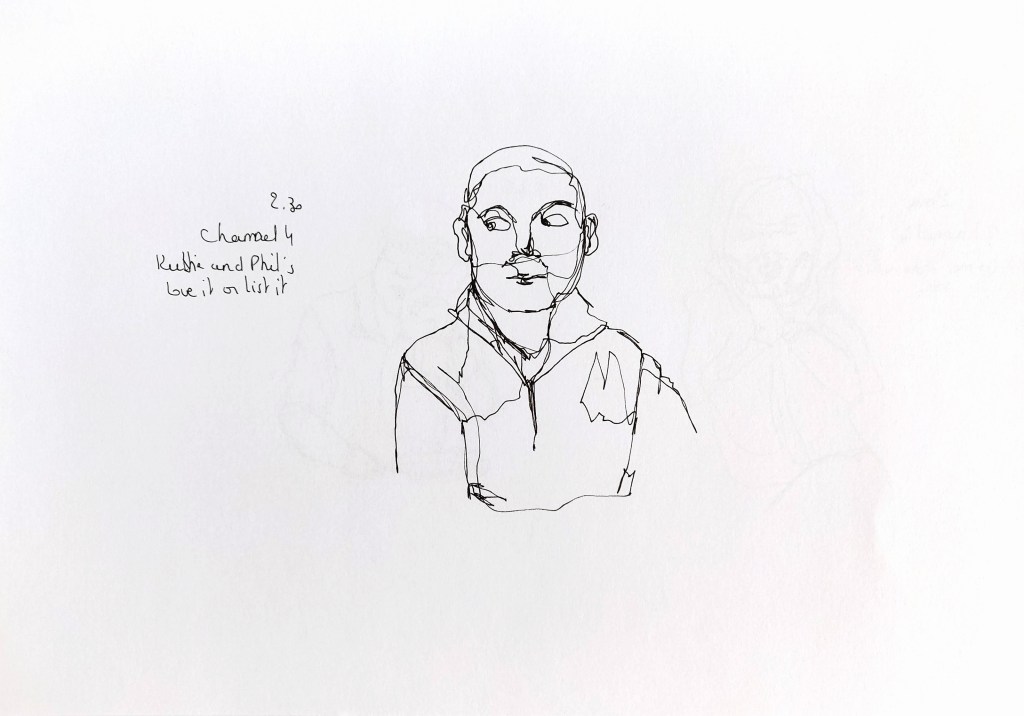
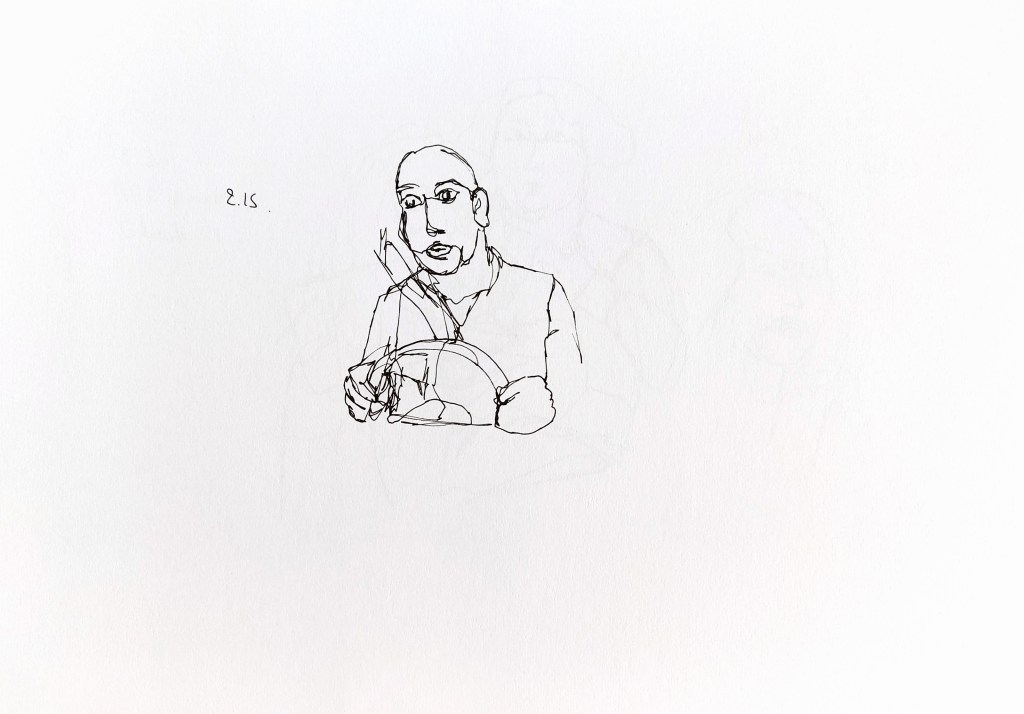
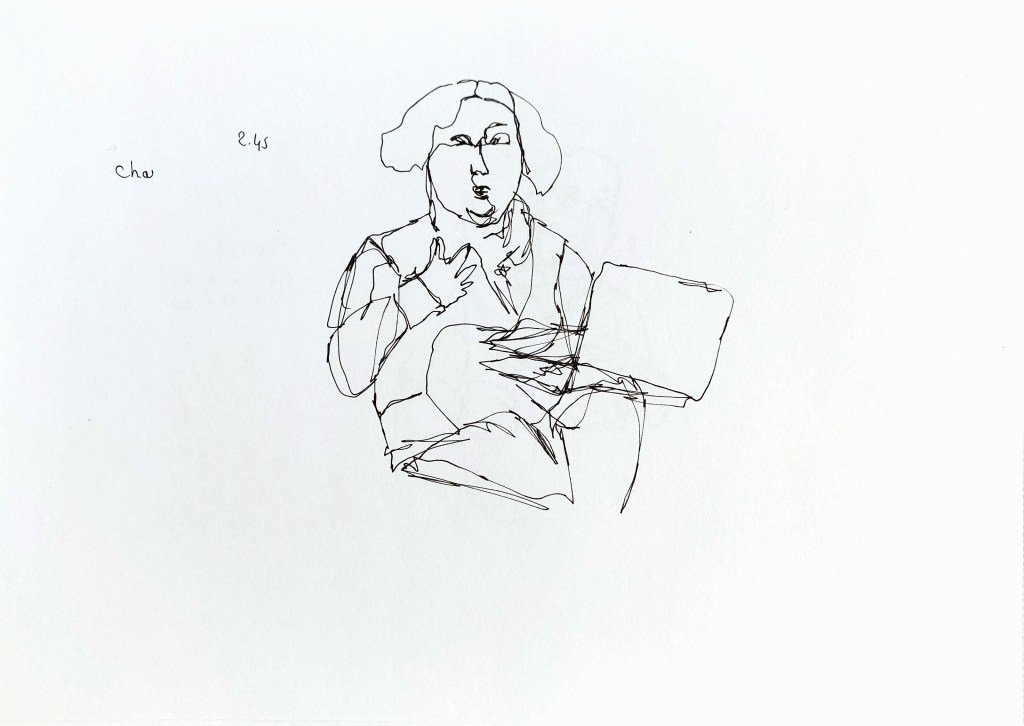
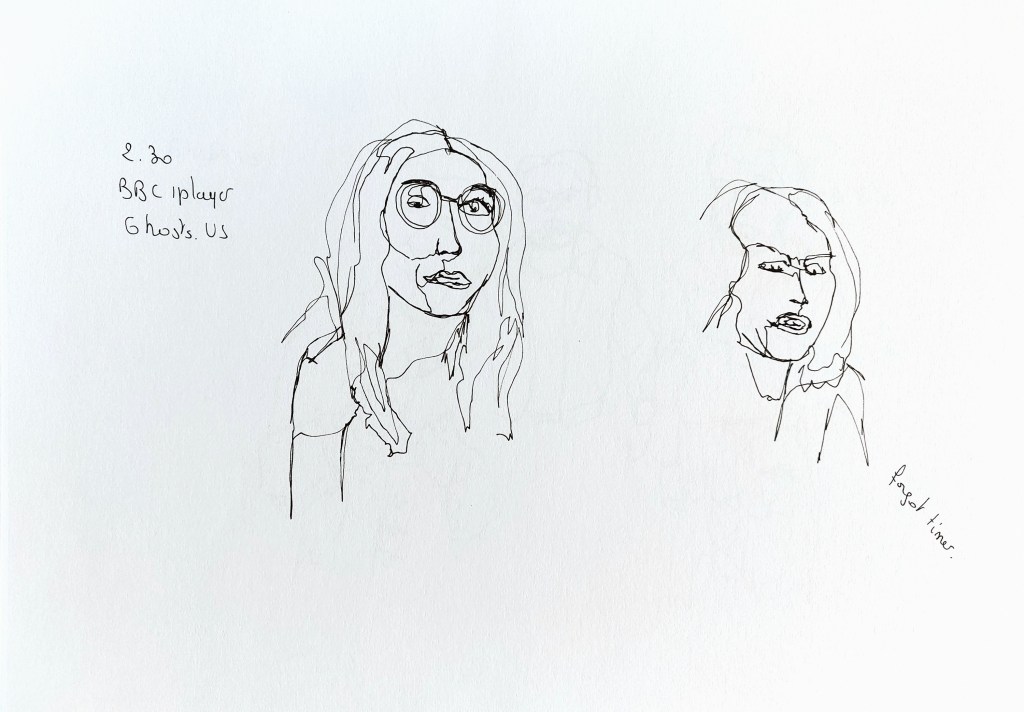

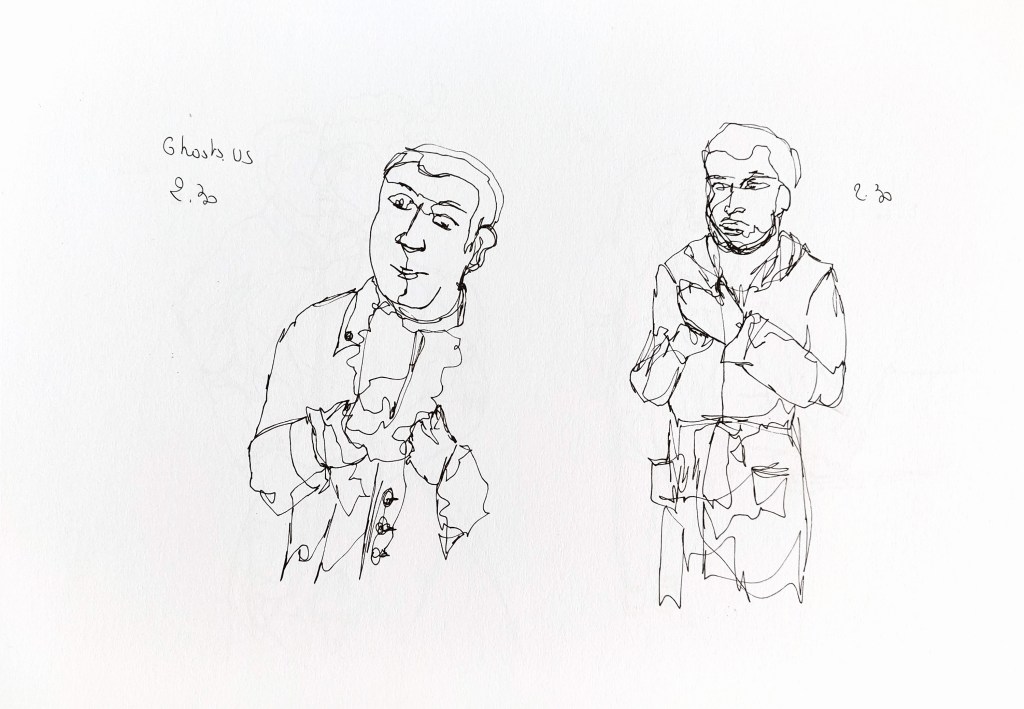
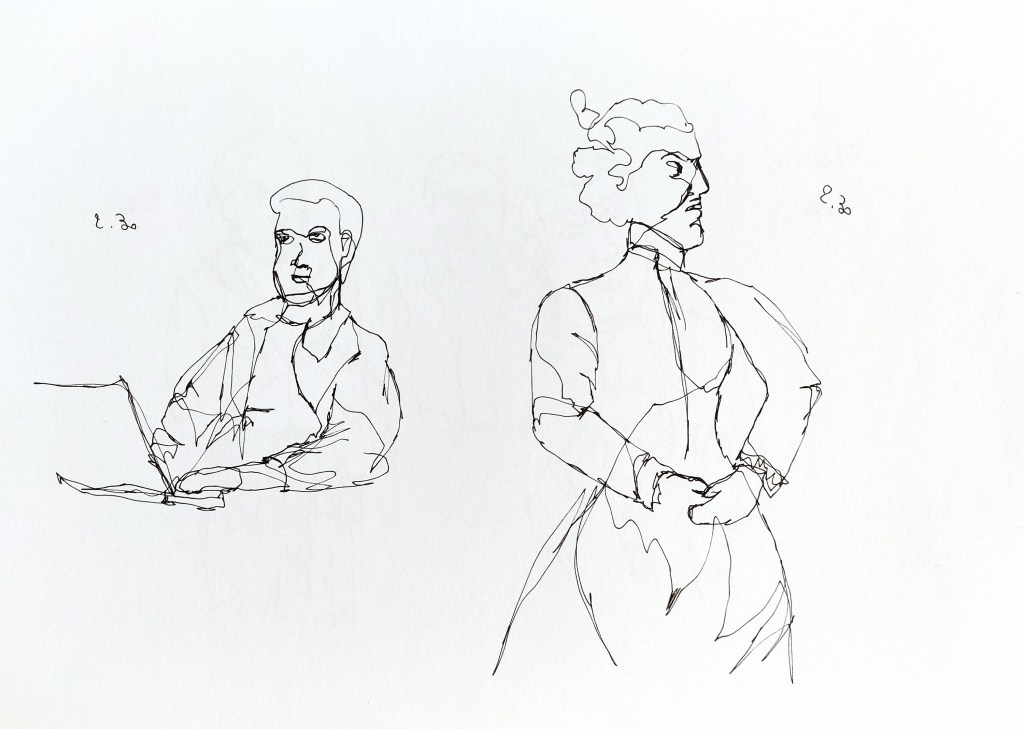
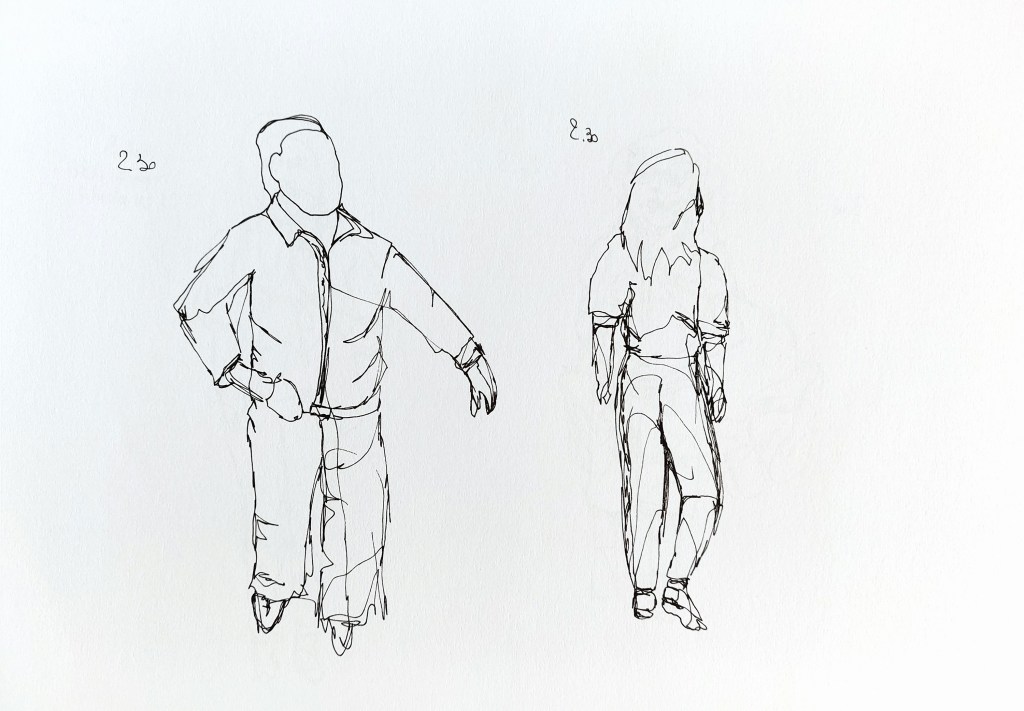
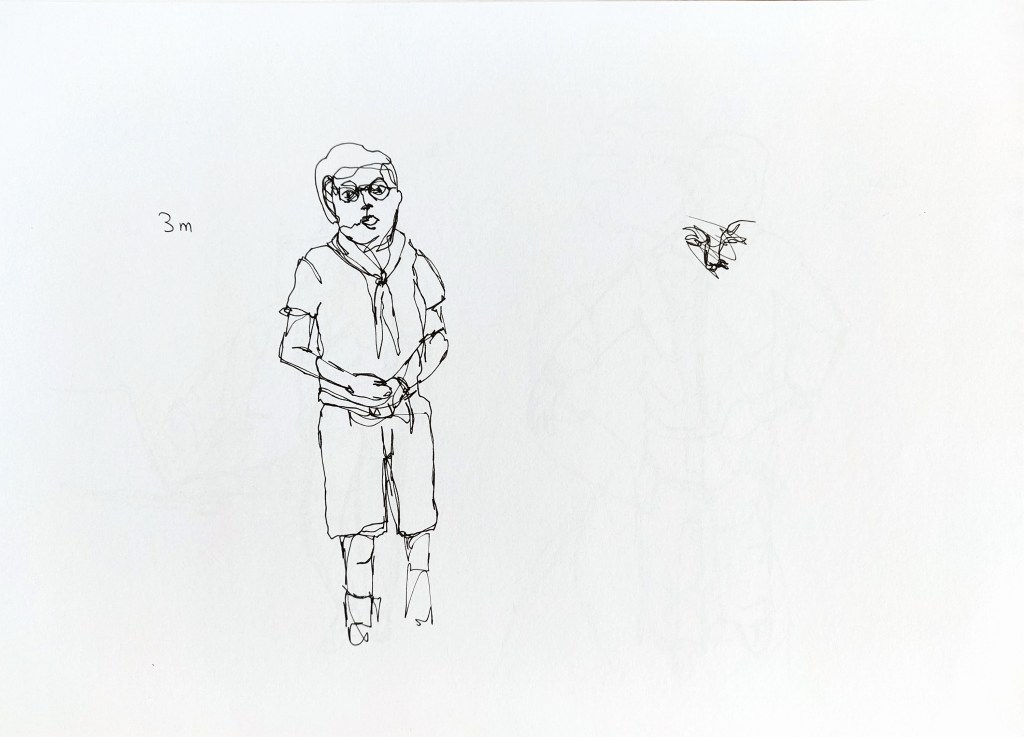
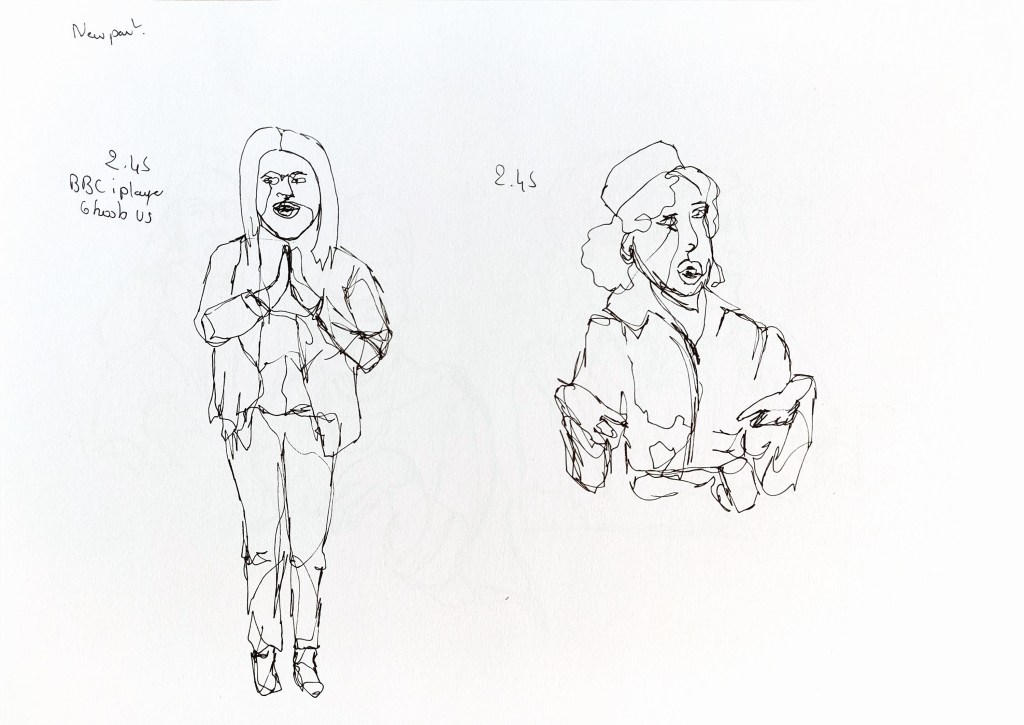
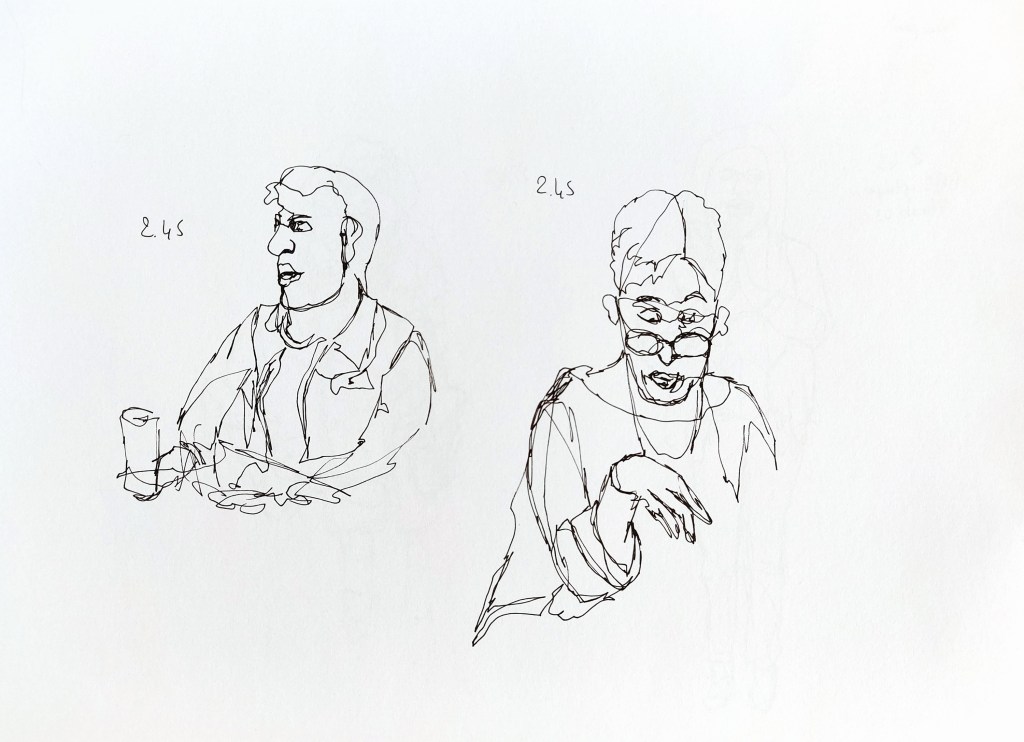

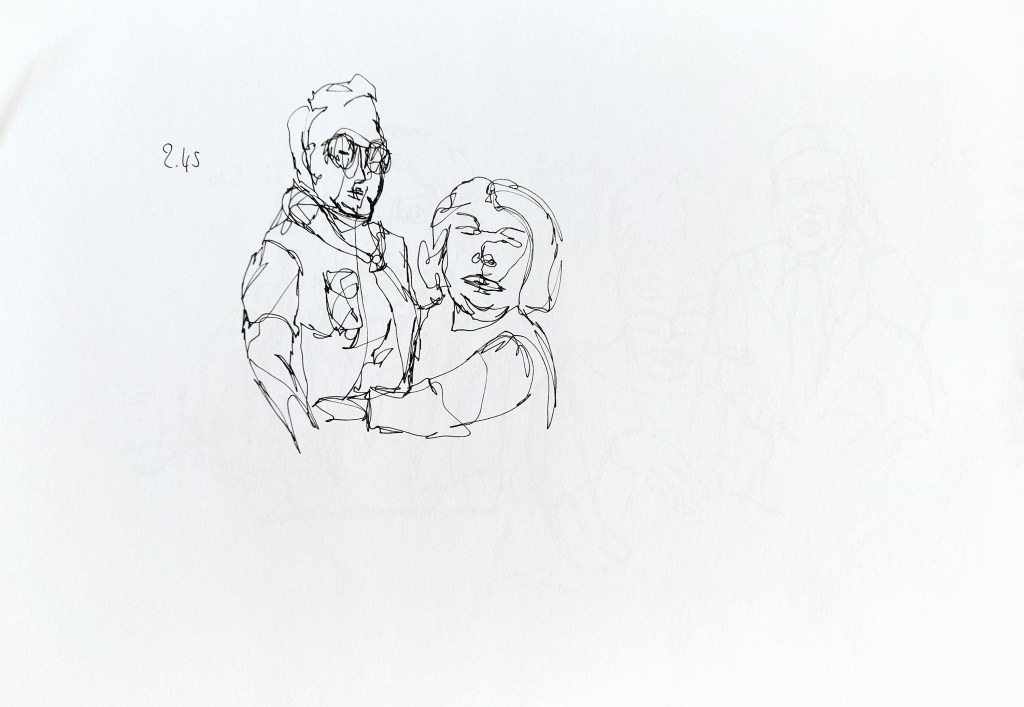
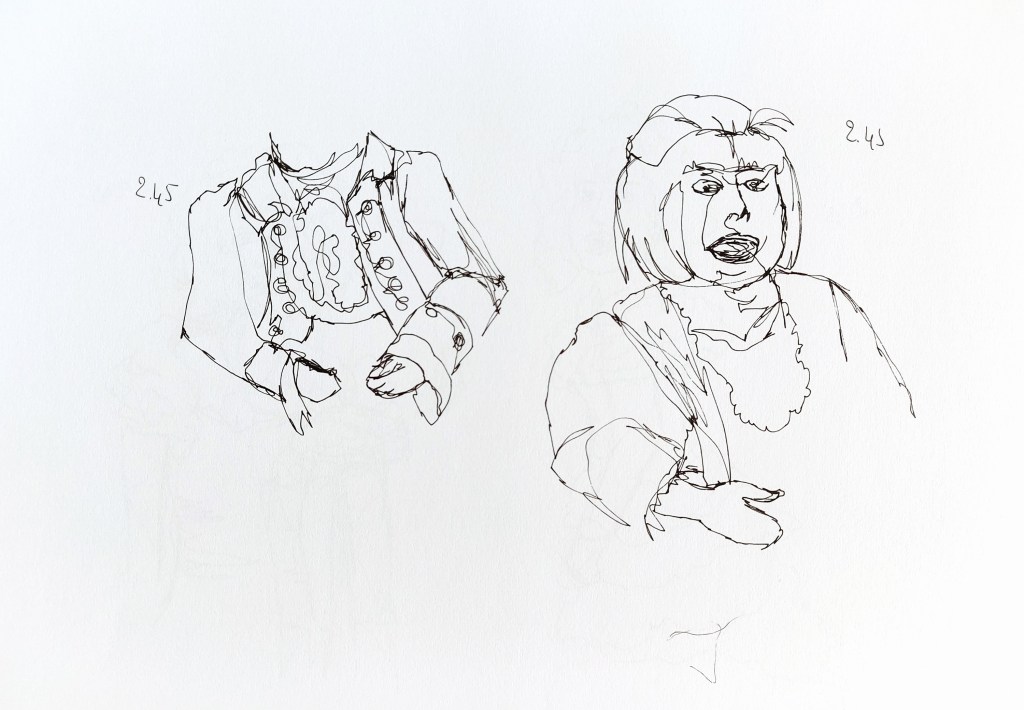
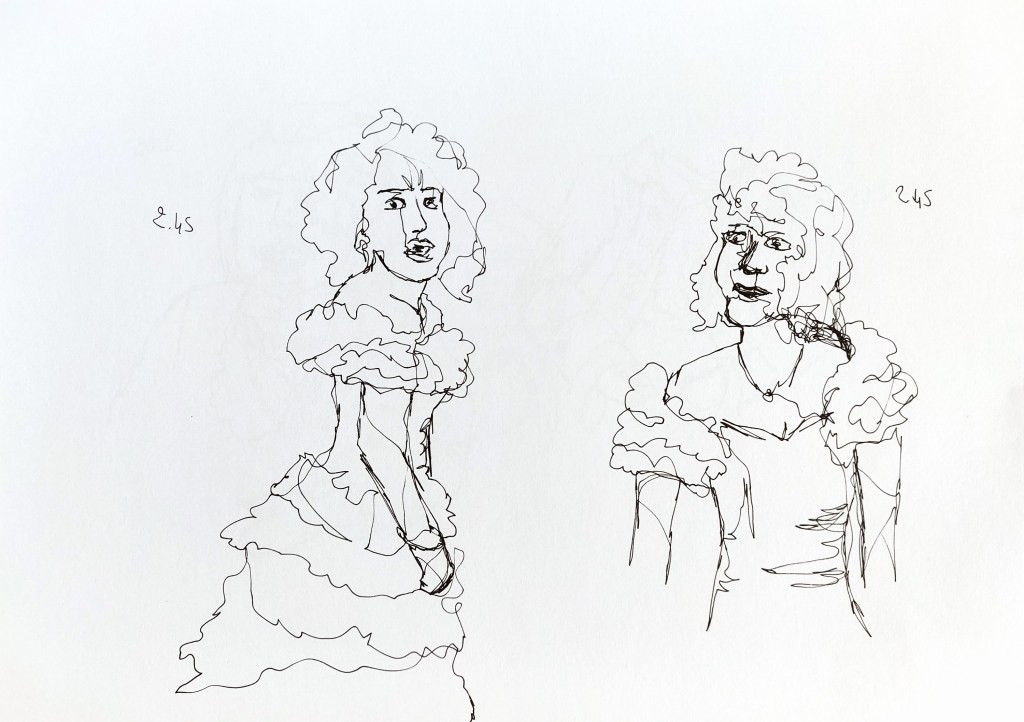
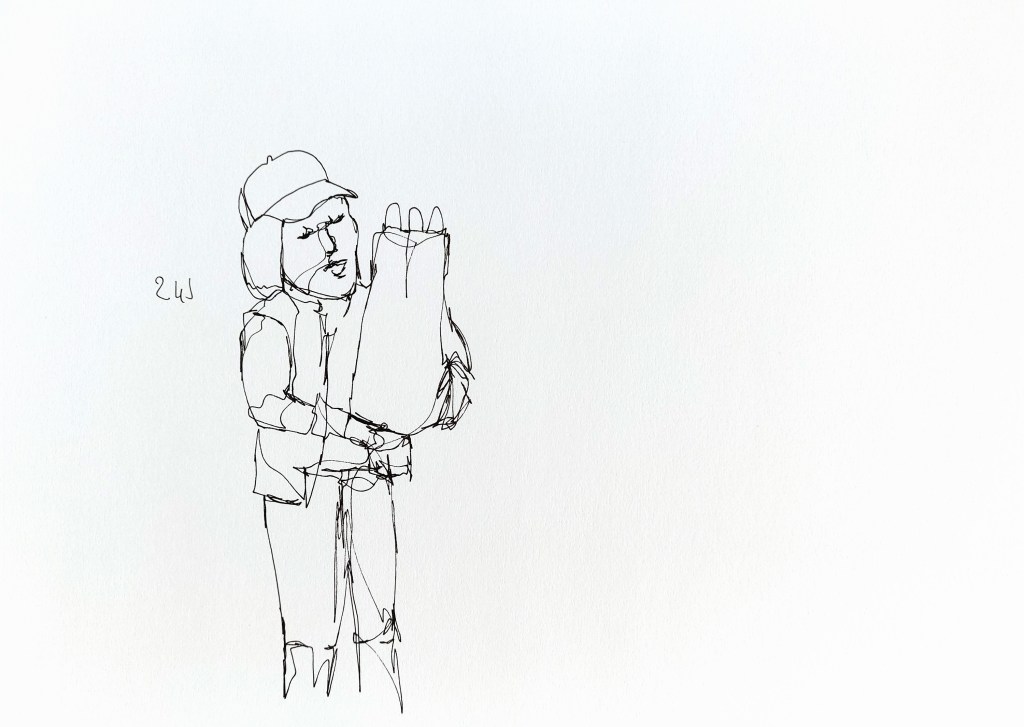
As mentioned at the beginning, I had used this technique before as well as similar “fast” techniques such as using only a few lines or creating a sketch in a few minutes with a timer.
I found the first sketches challenging but I soon started enjoying the exercise. It was quite liberating not to worry about making mistakes. Some sketches ended up being incomplete, while in others, all the proportions were wrong. But it did not matter. And as a result, I kept going and saw some interesting results. My lines became more fluid and I developed more spontaneity in my sketches.
This technique is particularly helpful for me as my lines are very hesitant and by the time my drawing is complete, there is often a lack of energy and movement.
Drawing this way also meant that I had to focus on more important aspects of the drawing such as the general proportions, the main outline or the movement as I did not have enough time to spend on every detail.
I definitely want to incorporate continuous line drawing in my regular practice. At the start of a drawing session, it is a good way to relax into sketching. I also hope that this could help me to absorb some of this technique in my drawings in general, instead of considering every small line. I admire the work of illustrators such as Victoria Lawlor (https://www.studio1482.com/artist/veronica/category/documentary-reportage/) and Lucinda Rogers (https://lucindarogers.bigcartel.com/product/columbia-road-flower-market) and would like to inject more fluidity and dynamism in my work.
 Catherine Roux Degree in Illustration