For this assignment, I wondered how I could combine elements of the work I had produced in this part. I enjoyed creating characters for the exercise “Small” and liked the idea of making them part of a story. I decided to create an animation around the concept of movement. I had started an Udemy course to learn After Effects and thought it would be a good opportunity to experiment and create a little film (https://www.udemy.com/course/after-effects-cc-bootcamp/?couponCode=ST19MT60324).
I carried out some research on animations based on characters or elements made out of paper or clay. I wanted to create a short film for children that would remind viewers of vintage animations before the era of special effects. After looking at several examples of animations on YouTube (including www.youtube.com/watch?v=z1zxsk_wsGs,www.youtube.com/watch?v=Wo6-6ENTl7o and www.youtube.com/watch?v=lsnFGRfNQn8), I decided to do things a bit differently and to create elements that would imitate paper but would be created in Illustrator.
I did more research about paper cut out effects in Illustrator and tested a few techniques. Although I really liked some of the techniques (www.youtube.com/watch?v=DN-yY0-9sGg), I had to take into account that I would have to animate all the parts and this would have an impact on the methods I could use.
When I designed the characters in Illustrator, I also wanted to improve the outfits and did some research about Victorian patterns in Google images to have a feel of the type of patterns that would work. I then experimented in my sketchbook.
Before working out the different scenes, I revisited the exercise “Slow” and the research I had done about graphic novels and how to tell a story. Although the medium is different, I thought that there were similarities in the development of the story. I also looked at some previous work I had done on this subject (www.catherineillustrationblog.wordpress.com/illustration-sketchbooks/coursework/part-4/exercise-4-2-storyboarding/). This was a reminder of how I could use some techniques such as zooming in and out to create a more dynamic effect.
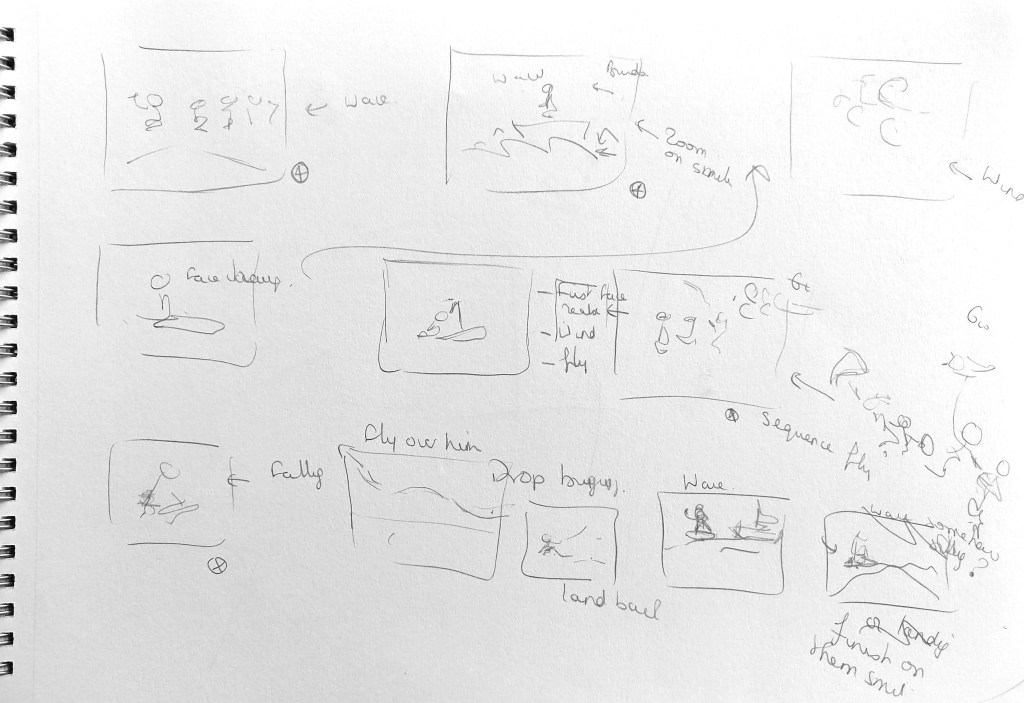
This is my sketchbook. As I created my characters in Illustrator, I regularly went back to it to reflect on how the characters would be built if they were made out of paper. I also made some changes to the scenes as the story took shape:

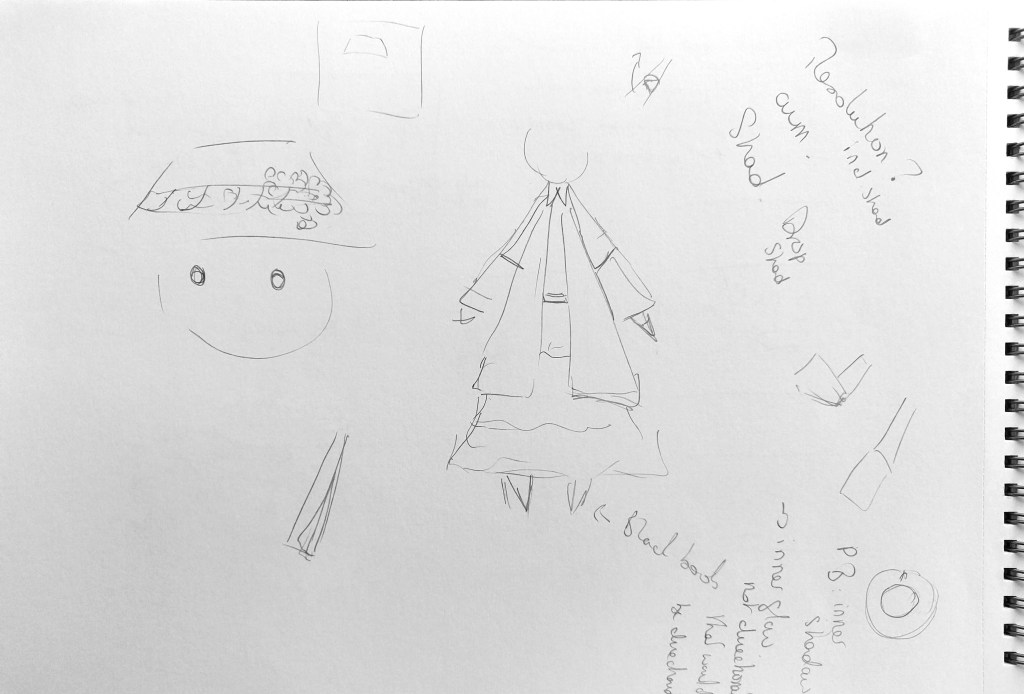


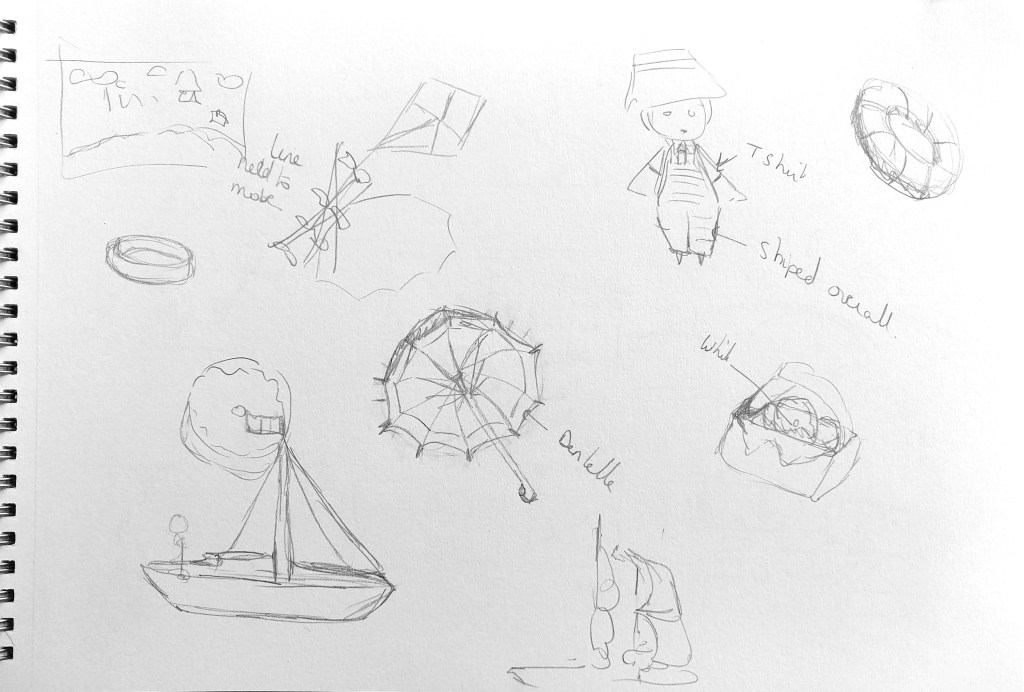
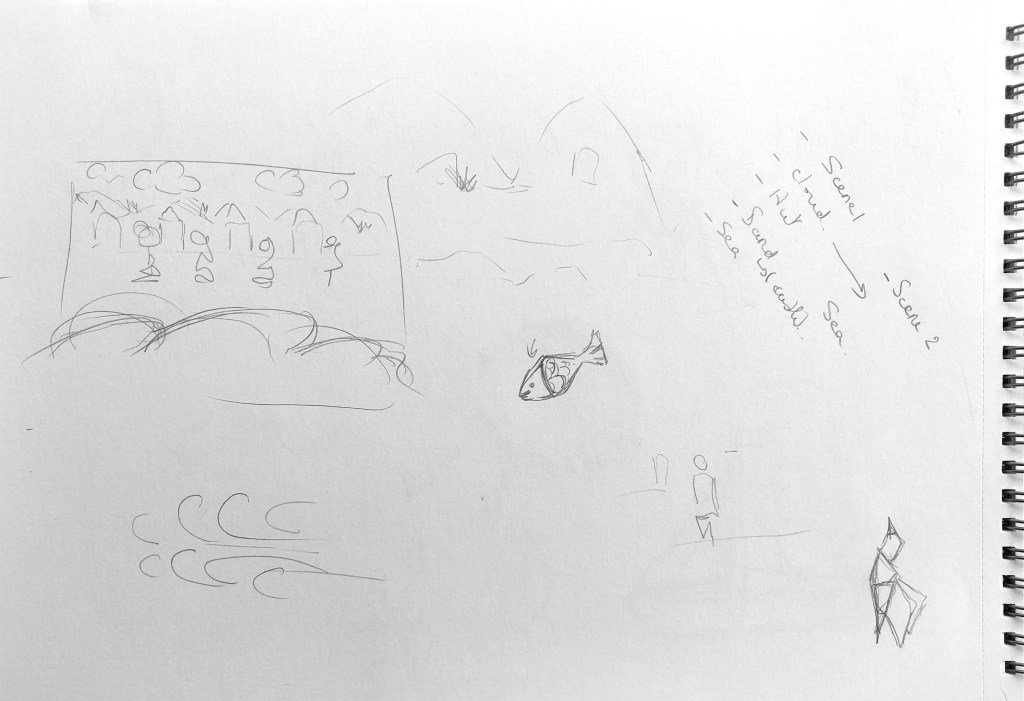
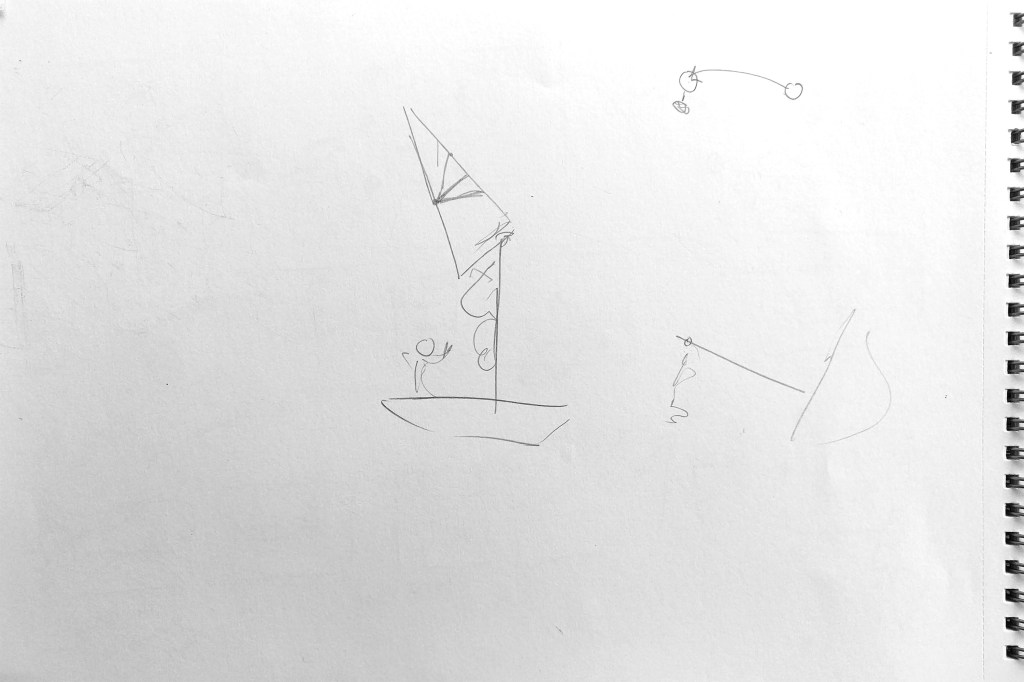
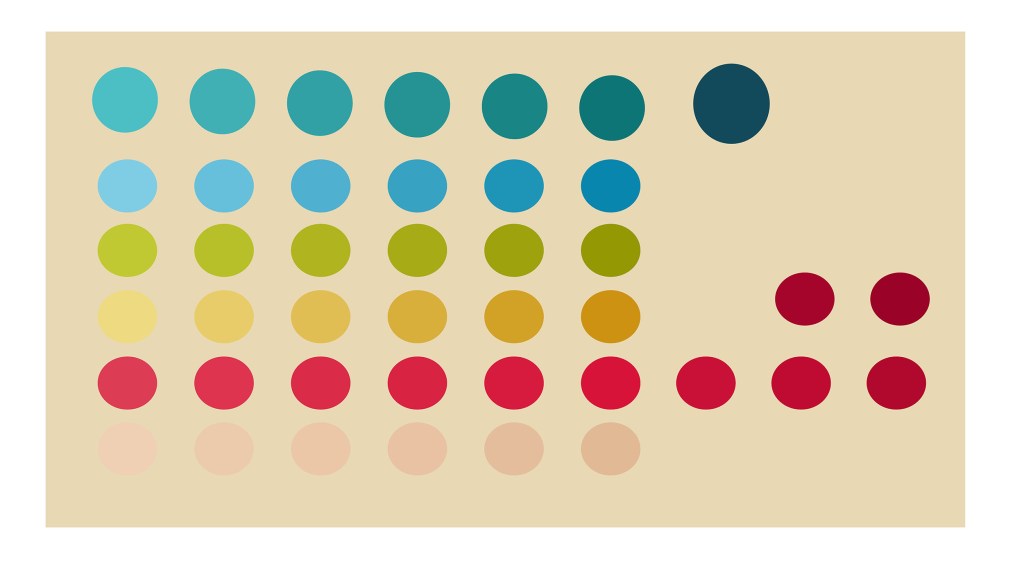
Before creating the various elements in Illustrator, I designed a colour palette.
I also googled “Victorian beach scenes” for inspiration as I wanted to add a few details such as beach huts.
I thought that a story around the wind and the rythm of the waves would be a good way to illustrate movement.
This is the work in progress in Illustrator with the various characters, the colour palette, the patterns and the main scenes.
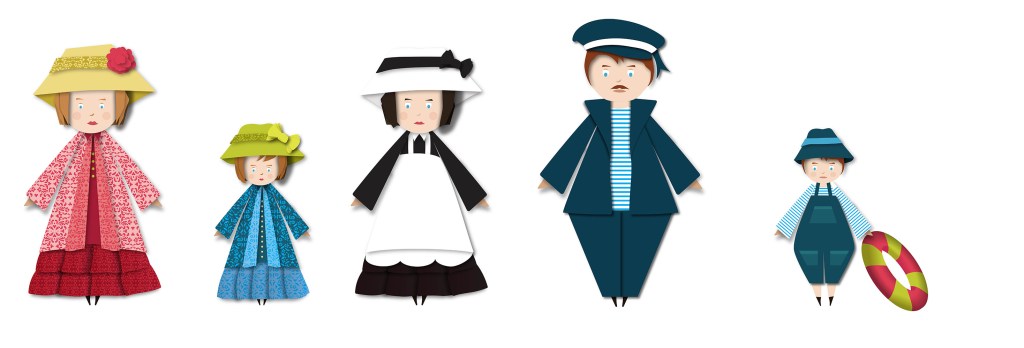
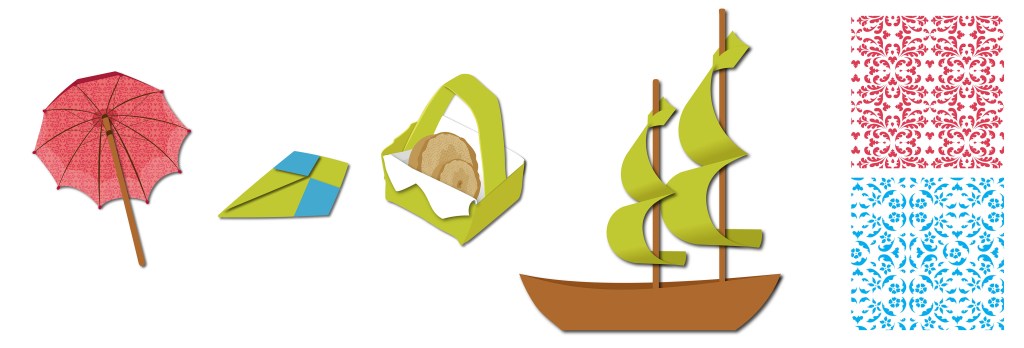

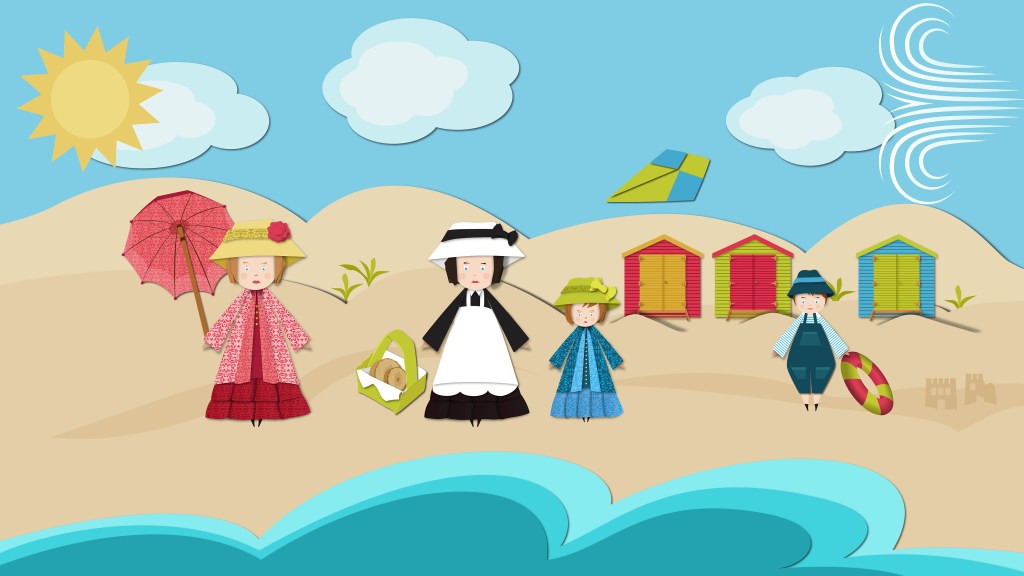
I learned a lot about After Effects while I worked on this animation as the practice is very different from the theory. I used both the Udemy course and YouTube when I struggled with the next step.
I included a Sound Effect from Pixabay called “Gentle ocean waves birdsong and gull”.
This is the final animation.
I am happy with the colour palette. I kept it quite simple and made sure that I stayed consistent throughout so as to create a sense of harmony.
I enjoyed using characters I had made out of paper to create digital ones, while improving the parts I did not like in the paper version.
I met with a few challenges when I created the animation. It was sometimes difficult to work with the timing due to my lack of experience in that field and the number of layers I was working with. As a result, the tempo is not always optimal.
When the weather changes, I would have liked something a bit more subtle and, in retrospect, I should probably have created a layer in Illustrator and import it.
The whole animation took longer than expected as I had to do many corrections (some birds would disappear in full flight or their wings stopped moving, I had to learn how to split layers,… ).
With more experience, I could have improved the way I framed the different scenes. I also thought afterwards that it could have been interesting to add some text or some short dialogues.
This is the second animation I have done with After Effects. I revisited the first animation I created for the unit “Responding to a Brief” (www.catherinerouxillustrationdegree.uk/illustration-year-2/responding-to-a-brief/coursework/part-3/exercise-flick-books-and-animated-gifs/) and realised that I had learned a lot since then.
I really enjoyed this assignment. Although I do not think I will specialise in animations, I like the idea of animating certain parts of an illustration as part of a portfolio for instance.
This part of the course was an opportunity to explore new tools and techniques. I had experimented before with some of these approaches, including fast drawing, animations or working with paper, but only to a certain extent. However, I had never created some artwork on a large scale.
Each new experience had its own challenges. When I created a drawing on a large scale, I realised that I had underestimated the time it would take to paint the whole image. I also struggled with the technique as painting a large area is very different from anything I had done before. To create an animation for Assignment Three, I had to learn more about After Effects and even then, I kept having to find solutions to obtain the effects I wanted. Trying to create some origamis meant that I had to think differently about shapes. Moreover, working with paper requires a lot of dexterity.
I learned a lot from my mistakes and the difficulties I encountered. I would choose different tools (a more opaque paint instead of watercolour for instance) to create some artwork on a large scale. I would use a different technique to create a complex animation to be able to adjust the timing better.
Some of these exercises took me out of my comfort zone, but they also gave me the opportunity to look at my practice from a different perspective. Creating characters out of paper and using the outcome to design illustrations for Assignment Three was an interesting process and the result was different from directly drawing characters.
Continuous drawing is very helpful to stop worrying about making mistakes. This is a technique I would like to use more regularly as it can enable me to draw more dynamic lines and sketch more freely. Creating a graphic novel for the exercise “Slow” enabled me to reflect on the rhythm in storytelling, a concept that is essential as every illustration tells a story.
The artists I researched for this part of the course were a source of inspiration. Adam Dant demonstrates with his artwork that it is possible to combine opposites, in his case small and big (https://spitalfieldslife.com/2021/02/24/adam-dants-london-squares/). His images are very big but there are composed of a multitude of small scenes and that is what make them so exciting to look at. Some artists might use the same materials or techniques but with a very different outcome. Seth (www.canadianartjunkie.com/2024/01/15/57-150-seth-is-a-graphic-novelist-celebrated-cartoonist/) created an entire city in 3D before setting his graphic novels in that city. In a sense, one can see how creating that city would have given him the opportunity to slow down and feel the atmosphere of the place he was creating, which would have given depth to his stories. I also like the work of Shin Tanaka (www.yatzer.com/Paper-toys-by–Shin-Tanaka) and his idea of creating paper characters to paint on them.
The work of these artists gives an idea of the infinite possibilities to combine techniques and media.
Revision
I wanted to improve the timing and the transition of some of the scenes in the animation. However, when I looked into it, I found that I had too many elements to change the whole timing at that stage.
I thought that I could at least improve the way I illustrated the bad weather as the gradient in the original was too dark and static.
I did some research on gradients and found a video particularly useful on YouTube (www.youtube.com/watch?v=O_qrbJgvPFE). I created a more subtle and dynamic gradient to render the stormy weather. However, the gradient did not render very well when I created the video even when I simplified it, possibly because my computer is not powerful enough. This is the revised version:
 Catherine Roux Degree in Illustration