When I did some research about the illustrations “Gin Lane” and “Beer Street” by William Hogarth for a previous exercise, I found a website with very detailed articles about William Hogarth, (1697-1764), James Gillray (1756-1815) and George Cruikshank (1792-1878) described as the “big three of 18th-century cartooning”: https://www.lambiek.net.
In a sense, the three illustrators covered the entire eighteenth century across several generations, influencing each other.
Their approach have in common a satire of society, often including and targeting people in power. Some of the subject matters would not apply today either for historic reasons (such as references to Napoleon) or because values have changed (such as the representation of prostitutes as sinful women who deserve terrible fates).
However, the satire of people in power in the political or financial world still exists today, and some themes such as corruption, injustice or abuse of power are still the essential elements in satirical illustrations.
I gathered a few examples of satirical illustrations from the eighteenth century that we can still relate to, at least in parts:
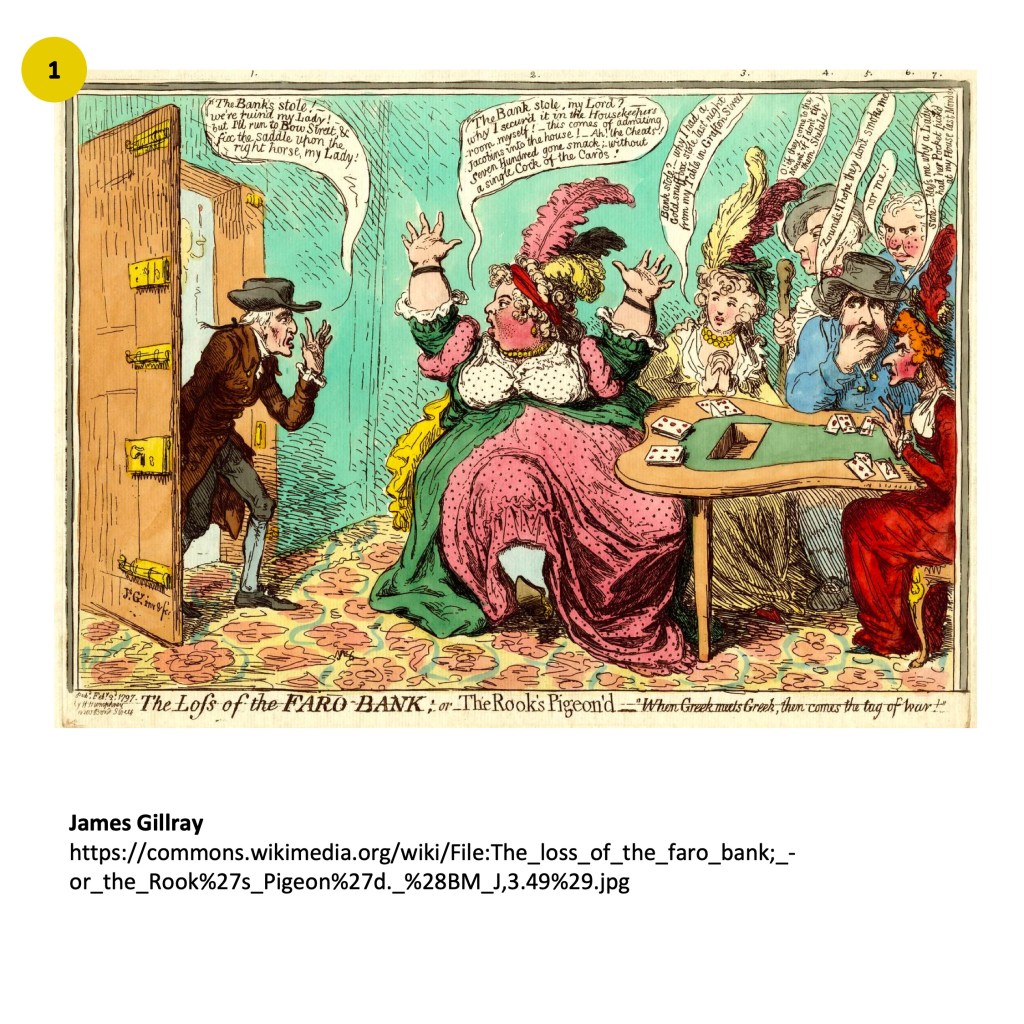


#1: As mentioned in the course material, the theme of corruption and scandal around money has always been there. This illustration could still be true. In fact, not much would need to be changed apart from the characters involved.
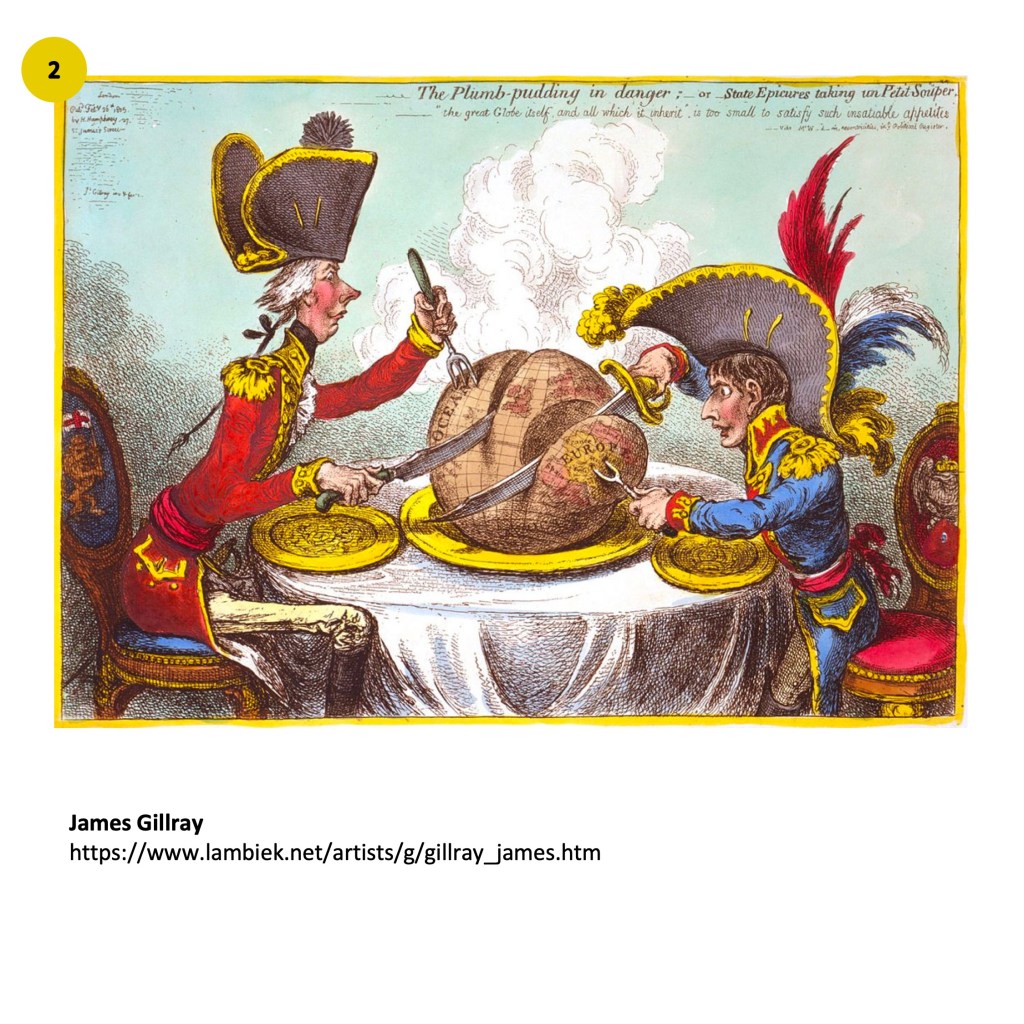
#2: In this illustration, “The Plumb-pudding In Danger”, William Pitt, the British Prime Minister at the time and Napoleon are dividing the world between themselves. The metaphor about the globe being a pudding is often used in various forms. It can be a pie for instance but the principle remains the same. We could replace the characters with more contemporary ones and it would work.
#3: There is still some debate about the fairness of taxes and today, big international companies are often the target of criticism. The dialogue between both men would still work. However, certain elements would be different such as the idea of being overweight being associated with being wealthy.
#4: Many aspects of Gin Lane and Beer Street would not work today (The pieces are very judgmental with regards to poor people and indicate that they are responsible for their demise). However, there is a sense of injustice in these illustrations where poor people suffer from ill health while more wealthy people are doing alright and even taking advantage of the situation (e.g. pawnbrokers) that we could find in a satire today.
#5: This series of illustrations is about election times and how candidates would do anything to be elected. Although the way elections are carried out today is very different, there is still this sense that a lot of promises are made before elections take place and this is often the subject of satire.
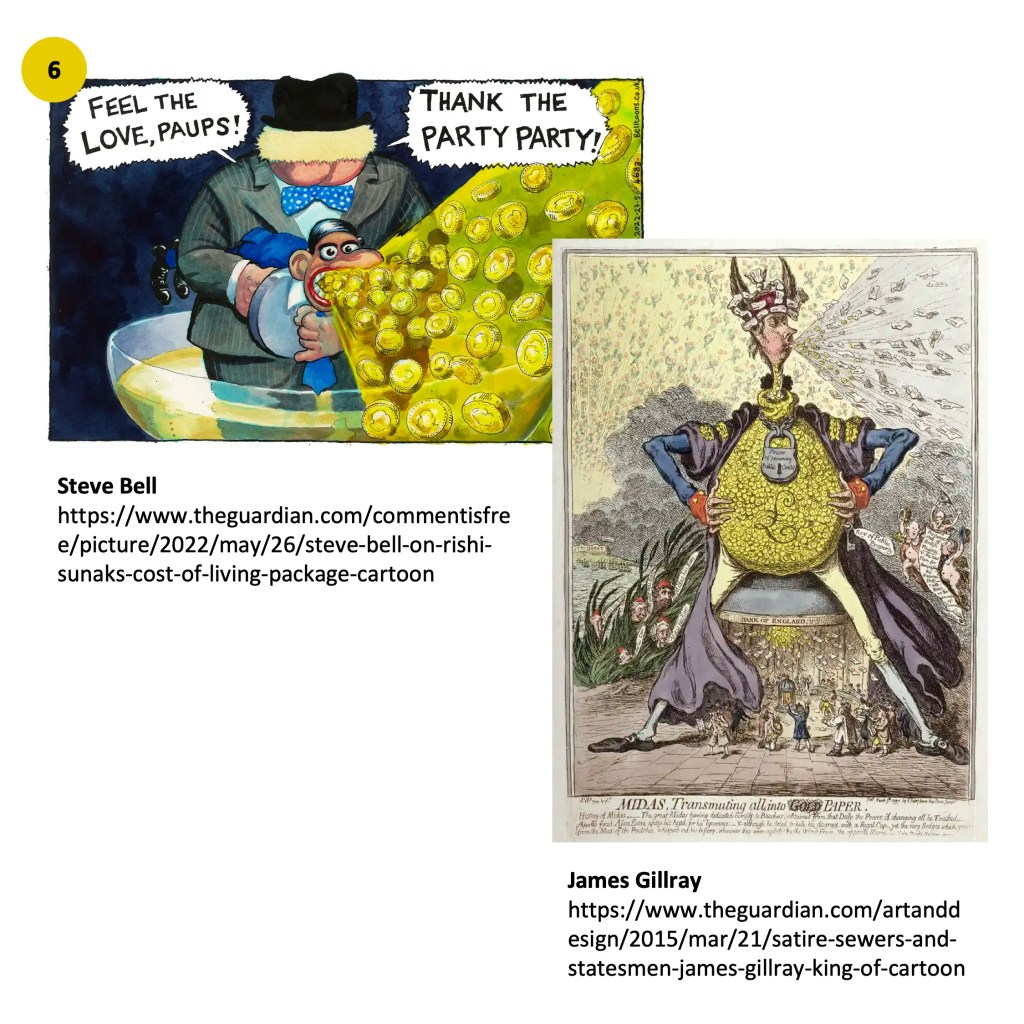
#6: While doing my research, I came across these two illustrations and found interesting that the main characters are spitting golden coins in both cases. One is from the eighteenth century while the other one is very recent.
In fact, Martin Rowson, a cartoonist that often features in the Guardian wrote an article about satirical illustrations and James Gillray in particular (https://www.theguardian.com/artanddesign/2015/mar/21/satire-sewers-and-statesmen-james-gillray-king-of-cartoon). He mentions how satirical illustrations from the past are still relevant: “Ours is a small profession, with an exaggerated reverence for its past masters, mostly because we’re always stealing from them”.
He also explains that satire is a response to injustice and, as a result, is still relevant today: “I believe satire is a survival mechanism to stop us all going mad at the horror and injustice of it all by inducing us to laugh instead of weep”.
Even though styles have evolved in satirical illustrations, certain things remain the same: an exaggeration of features, poses and proportions that helps to create a comic effect as well as the use of metaphors and symbols.
 Catherine Roux Degree in Illustration