I looked at the work I had done in previous exercises and wondered how I would use my illustrations and sketches in the context of street art.
I reflected on the examples of street art I had gathered and how the artists use the support they choose and their surroundings.
I did some more research about the type of medium used by artists to create street art. Spraying paint seems to be a very popular technique, whether with the help of stencils or sprayed straight on the surface. Artists also use all sorts of brushes depending on the scale.
When I researched how artists create street art on a larger scale (e.g. a wall), I learned that the main techniques are: freehand, using a grid (including doodle grids where doodles are used instead of lines to define the different parts of the working space) or projecting the art work on the surface (when possible) (www.youtube.com/watch?v=FzsNxjiTDWk).
I thought about using some botanical sketches I had created in the past or some cartoony characters as a source of inspiration. However, I decided that it would be better to first select a surface for the art work as it would have an impact on the design.
I chose a wall along a canal in East London.
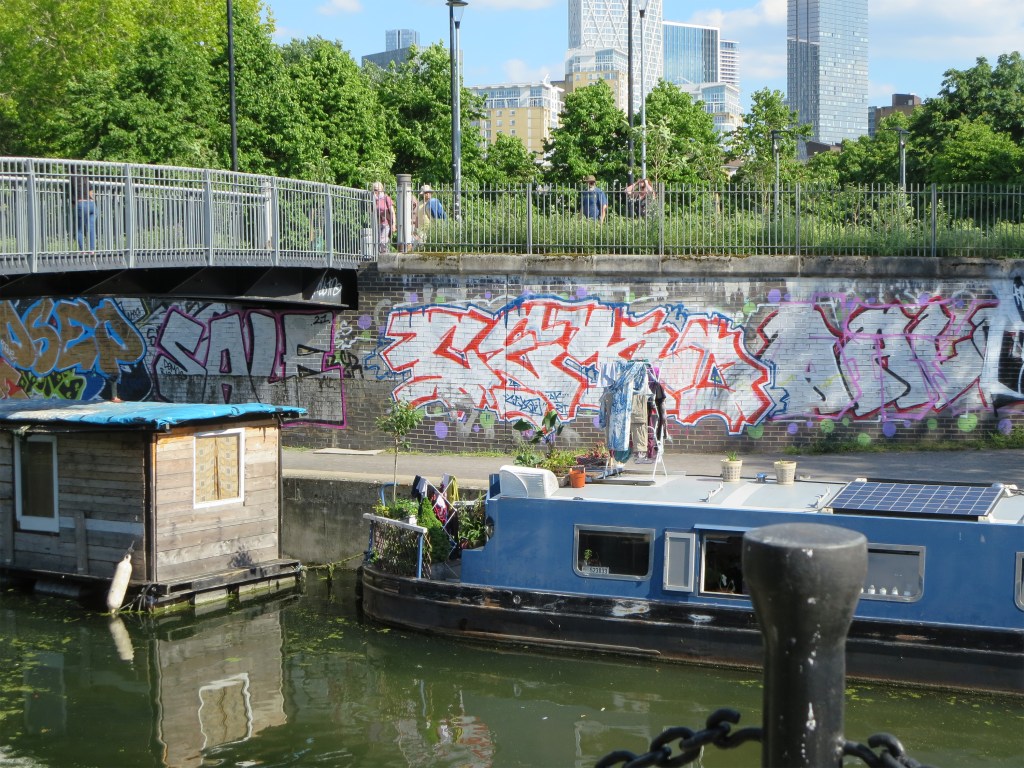
There are quite a few graffitis on the wall along the canal; some are elaborate and interesting but that is not always the case. Some street art relevant to the place could enhance the area. The wall is probably about 2 meter high and the illustration would be slightly wider than that.
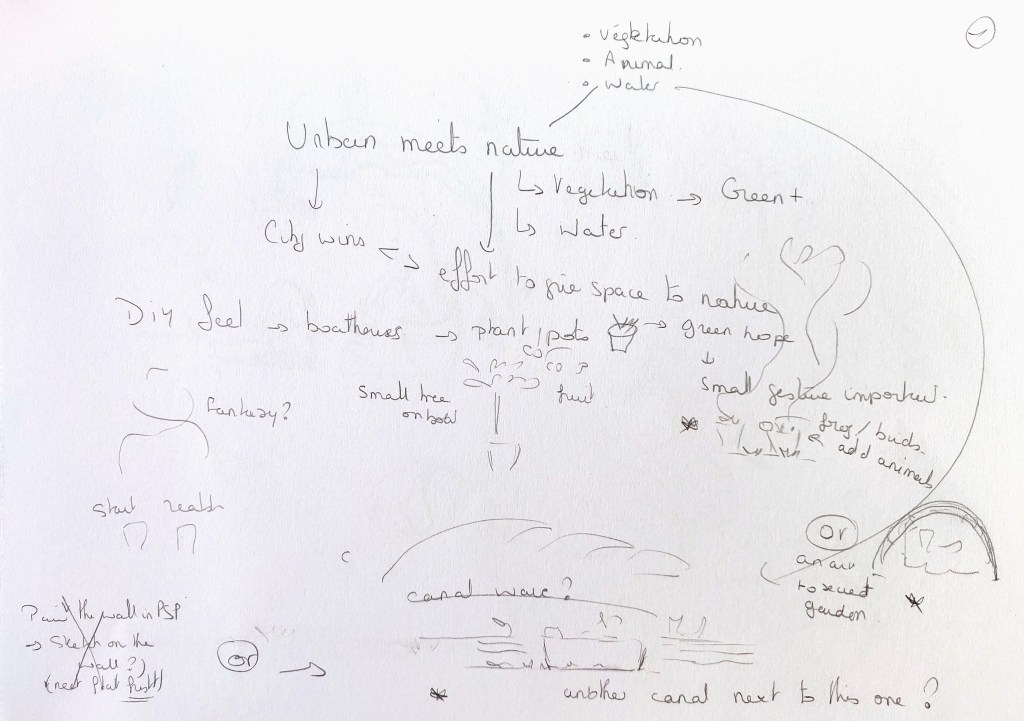
I worked on the idea of an illustration with a floral element based on some work I had done before (https://catherinerouxillustrationdegree.uk/illustration-year-2/responding-to-a-brief/coursework/part-2/exercise-a-rose-by-any-other-name/). I considered many alternatives and the idea evolved as I tried different sketches. In the end, inspired by garden gnomes, I developed a sketch where a small cartoony character waters a plant that grows out of control. It illustrates that small part of nature (the canal and parks around) surviving in urban surroundings. Beyond the wall, there is a view of Canary Wharf, offering some contrast to the area along the water.

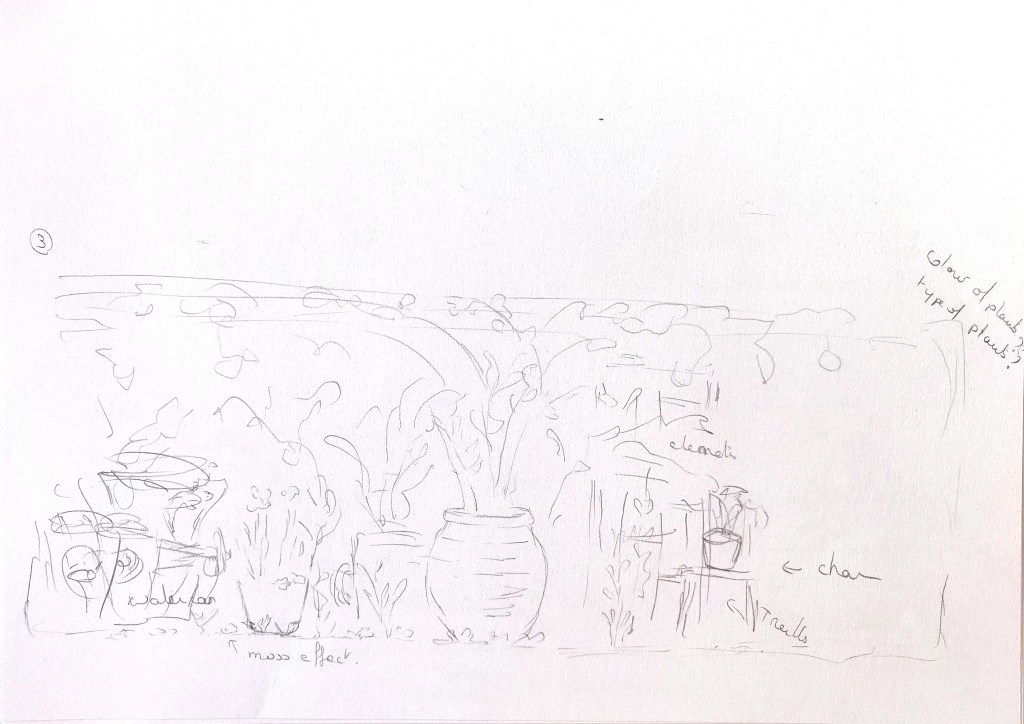
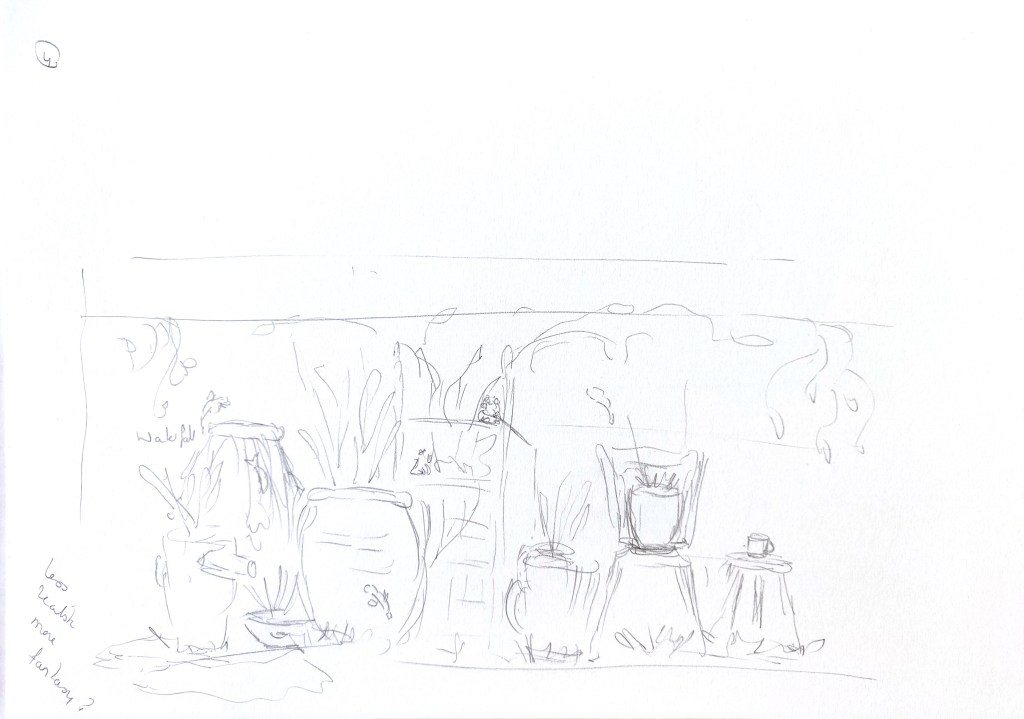
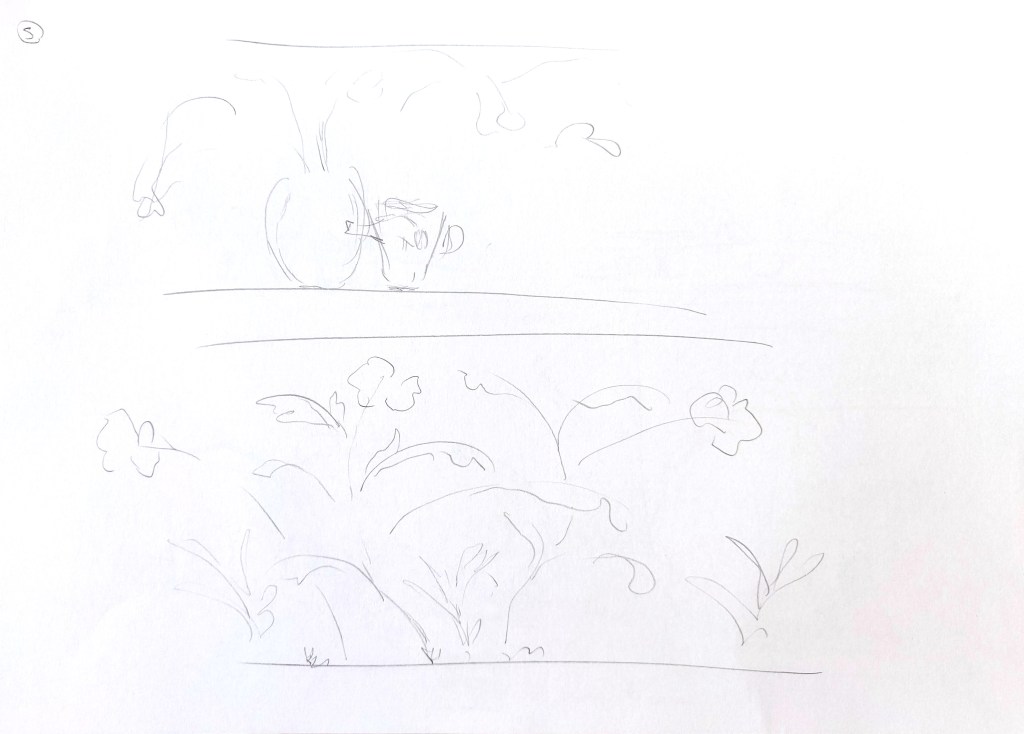

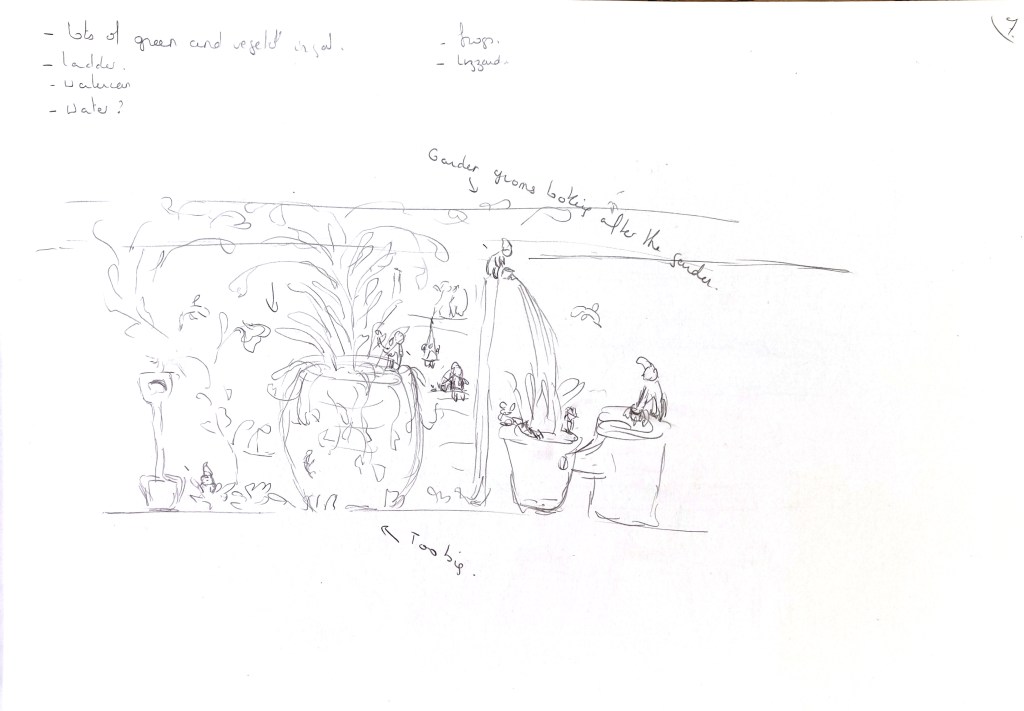

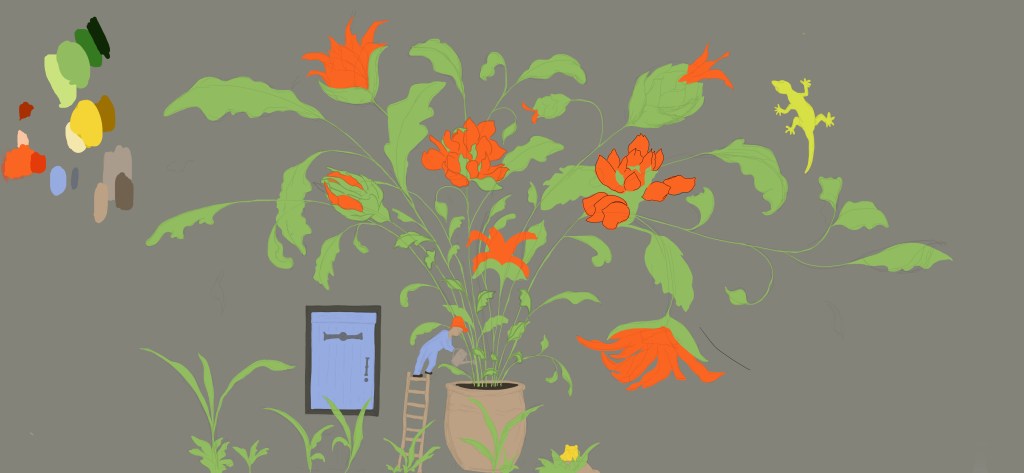
I created a more detailed version on the iPad Pro. I added elements of wild life (a lizard and a frog on the bottom right). I liked the idea of small elements hidden in a bigger illustrations.
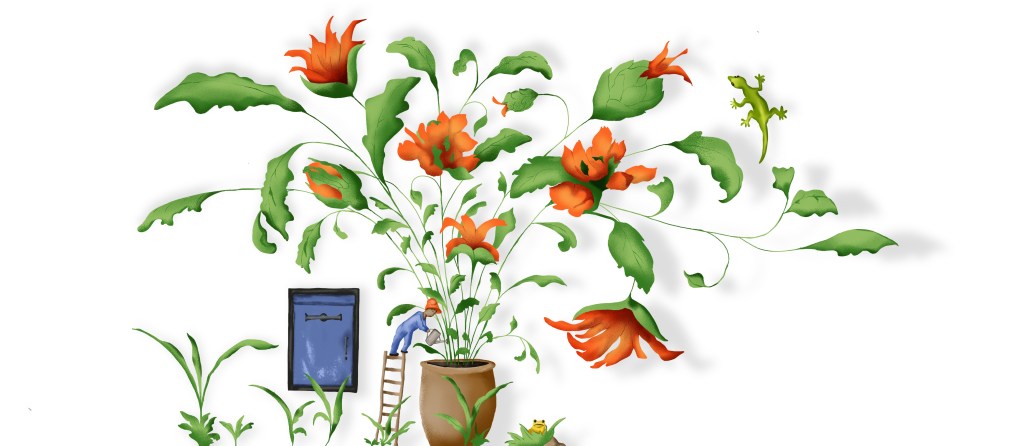
I then added some highlights and shadows in Photoshop.
I checked the idea by creating a mock up.
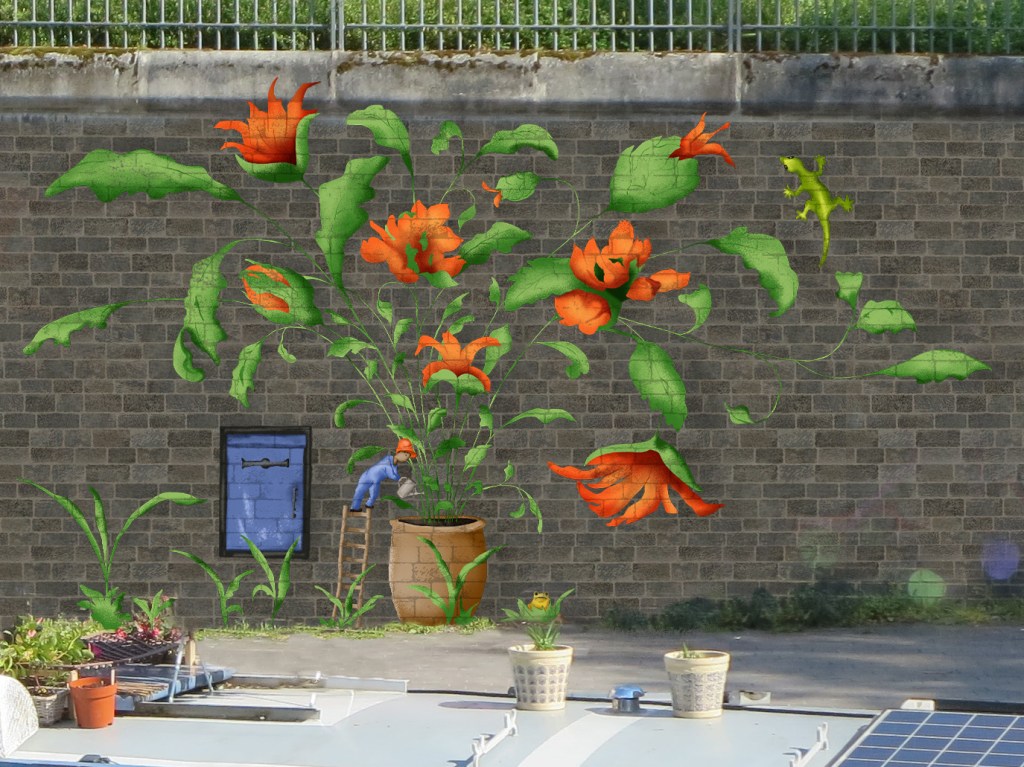
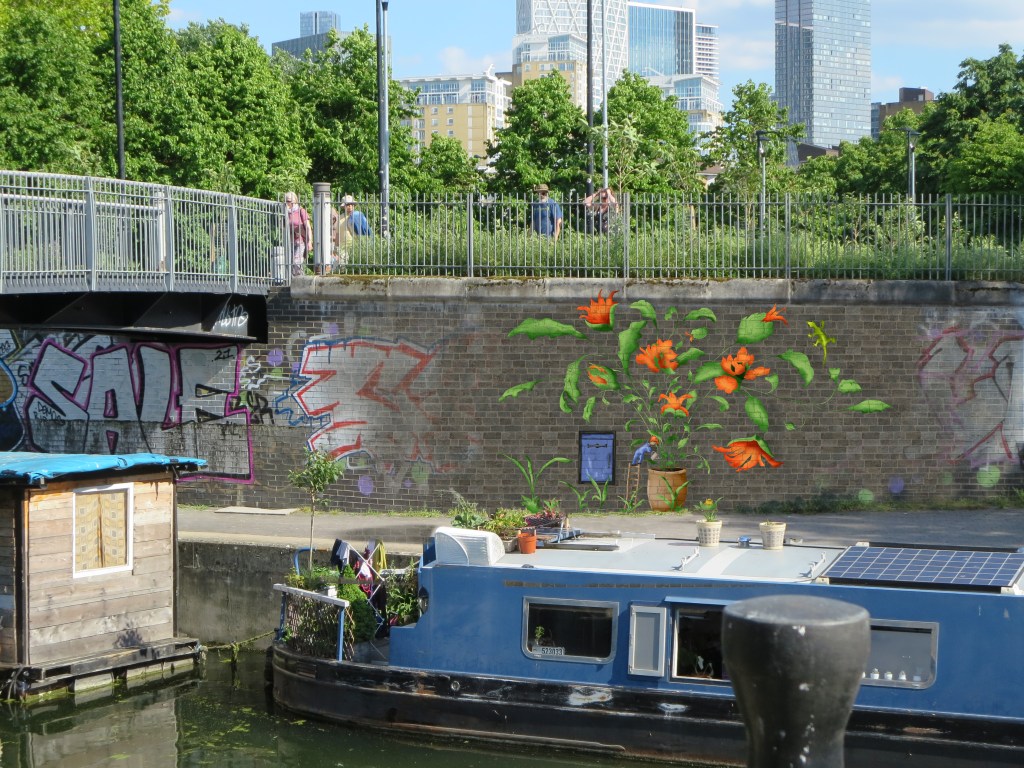
The wall would add some natural texture to the illustration.
The support chosen for the illustration influences the outcome in many ways. I took into account not only the size of the wall but who would see the illustration. On the other side of the canal, a passer-by would see the piece all at once with a mixed background of buildings and trees. On the other hand, someone who would walk along that wall might notice smaller details as they walk past, such as the little frog.
What went well
I like the general concept of the illustration and the mystery added with a door in the middle of the wall. I was inspired by a door I saw once that was high on a wall like this and at the time, I wondered who would use that door.
I also like the contrast between the smaller character watering the plant, the frog and this plant growing so big.
Challenges
I am not so sure about the brushes I used in Photoshop to replicate the impression of paint being sprayed on the wall. I wondered if it would have been better to paint more defined shadows and highlights, a bit like in cartoons, as this is a style that can often be seen in street art and graffitis and I like it.
I struggled with the composition of flowers and leaves and had to rearrange my compositions a few times.
It was interesting to consider the surroundings to create the illustration. It was also an opportunity to learn more about how street art is created, especially how the artists use stencils or paint on a larger scale.
 Catherine Roux Degree in Illustration