The brief:
- Create a sequential illustration that re-tells the story of girl/boy meets girl/boy
- Make the story entertaining
- The sequential illustration should be no more than one page but can be as short as a three-panel cartoon.
I used my sketchbook to develop some ideas. I thought the brief offered a lot of options such as the intended audience, the type of narrative (it could be a drama or a comedy) or the place and time of the story.
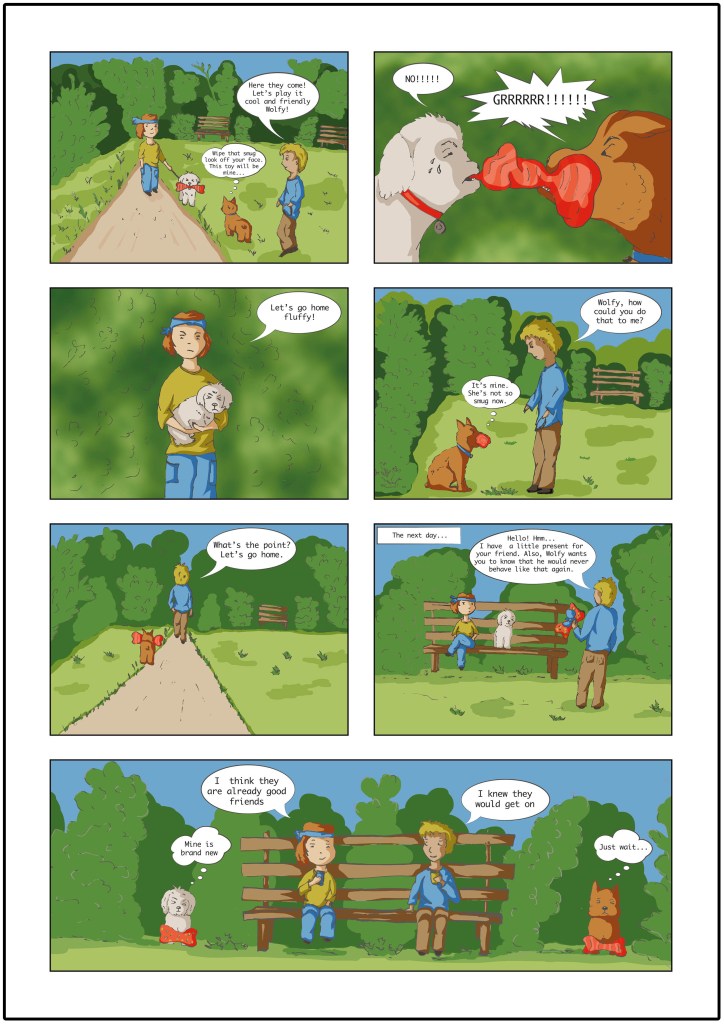
In the end, I opted for a cartoon that would be light-hearted. Seeing people walking their dogs in the park probably influenced me and I decided on a story of two people whose relationship would be impacted by the interaction of their pets with each other.
The narrative would be:
- Boy notices girl in the park. He waits for her with his dog hoping to start a conversation (status quo).
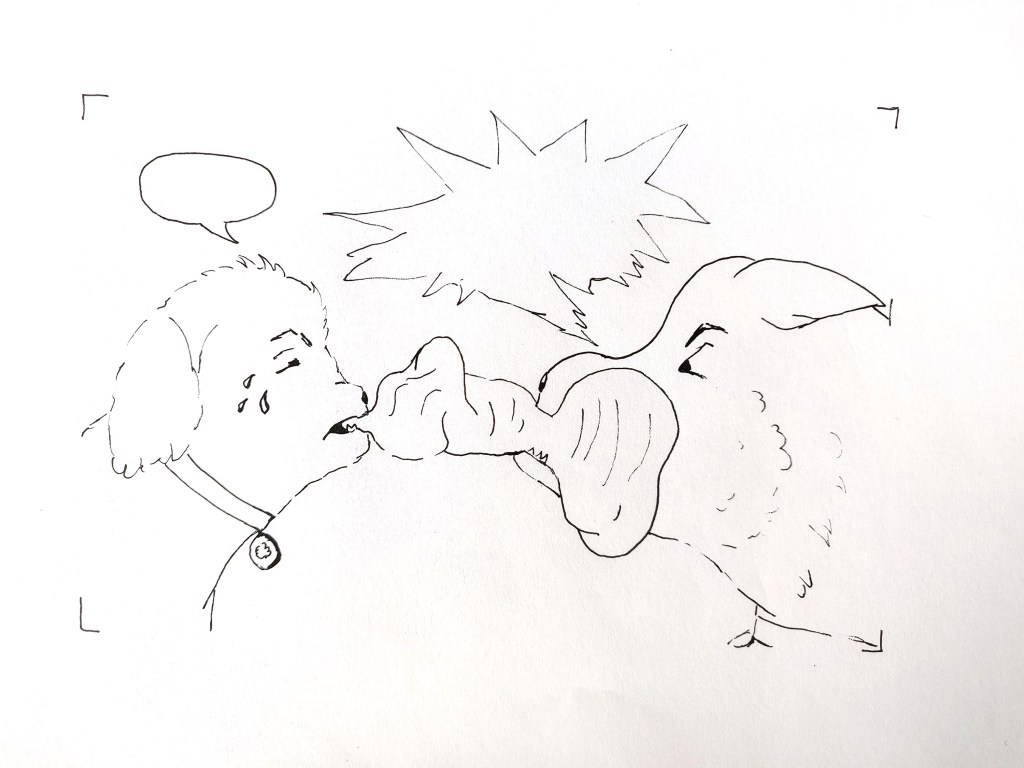
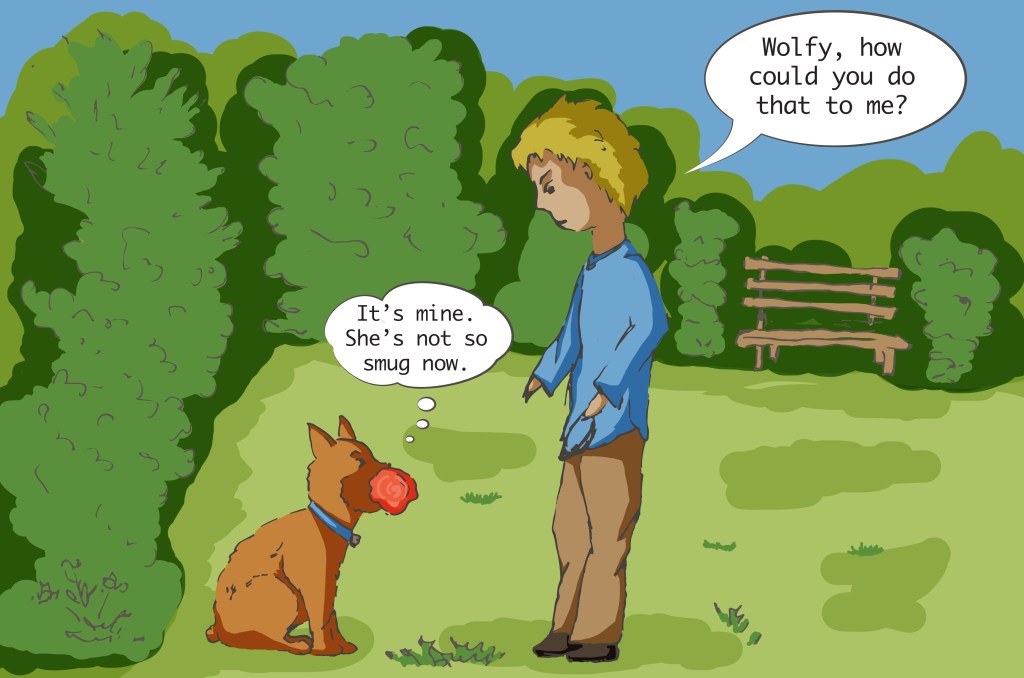
- Boy’s dog attacks girl’s dog to take her toy (trigger).
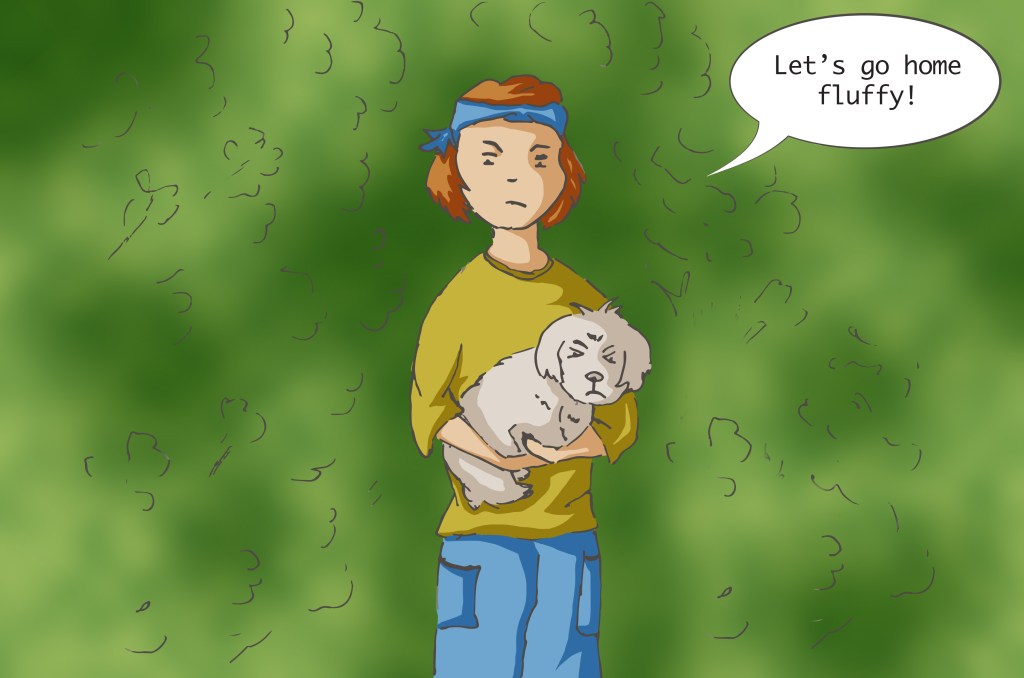
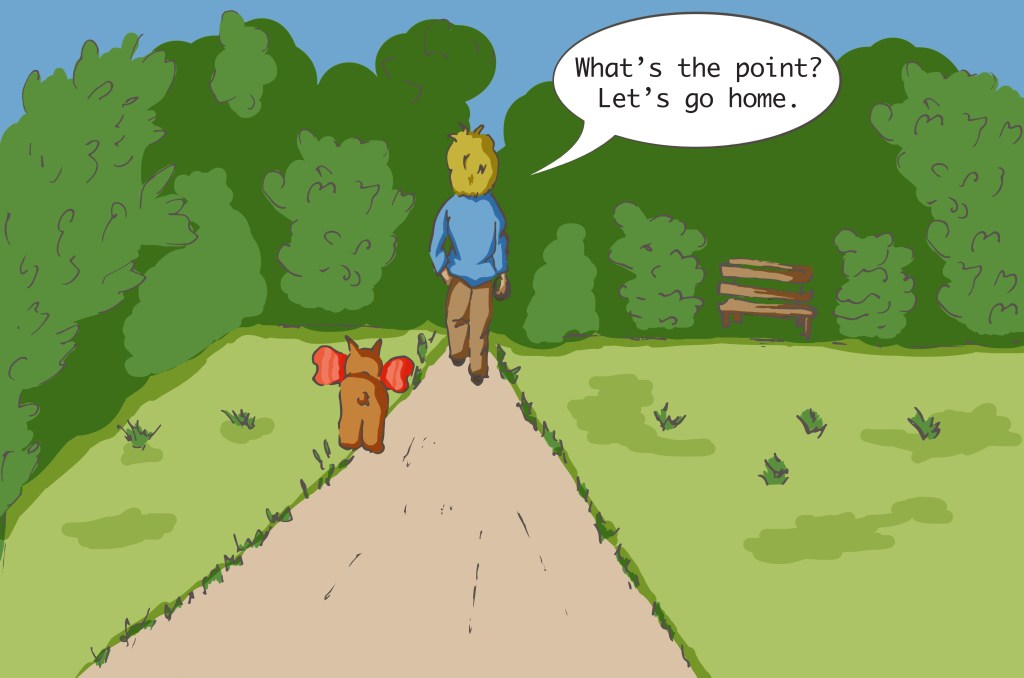
- Boy reprimands his dog and decides to go home (all seems to be lost).
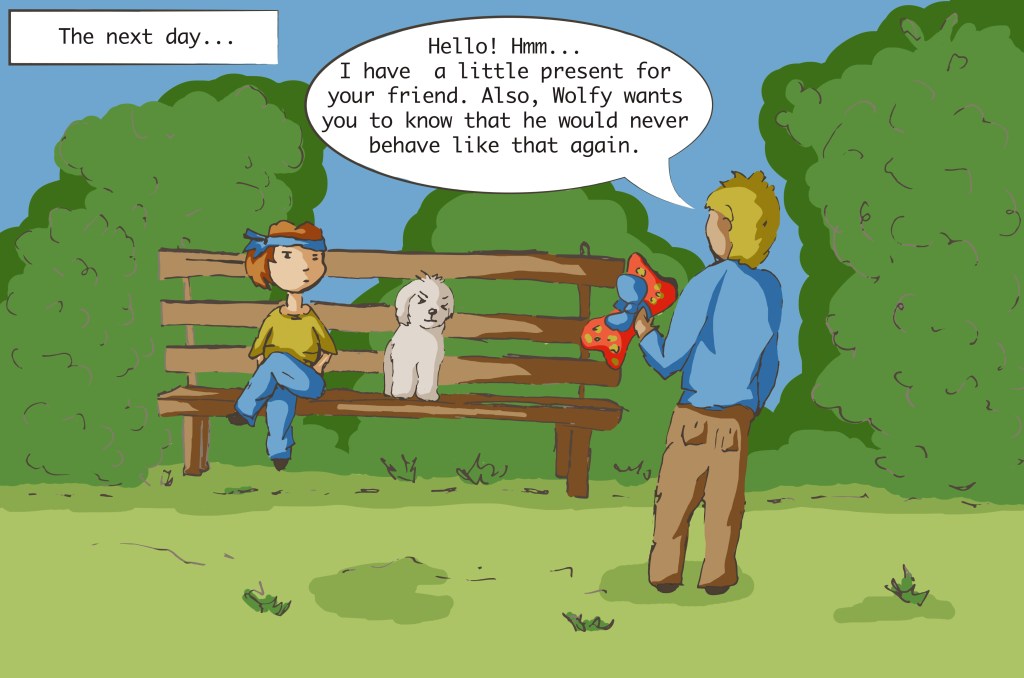
- Boy brings a new toy to girl’s dog and starts a conversation.
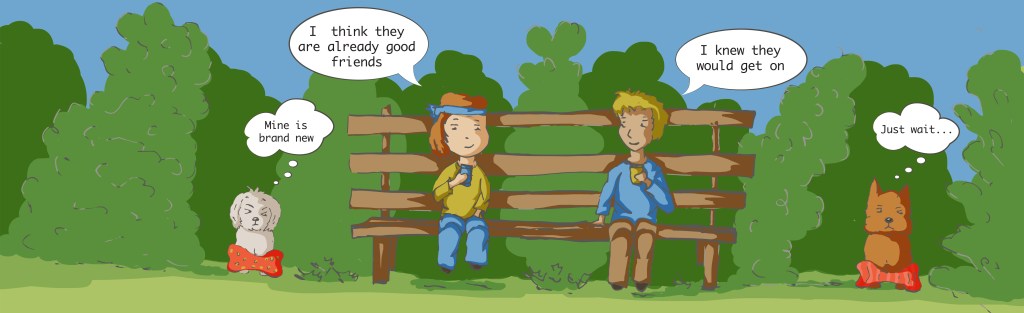
- Boy and girl sits together with a drink looking happy (resolution). However dogs’ attitudes let us understand that the story could repeat itself.
As the brief mentioned that the story should be on one page, I opted for an A4 page.
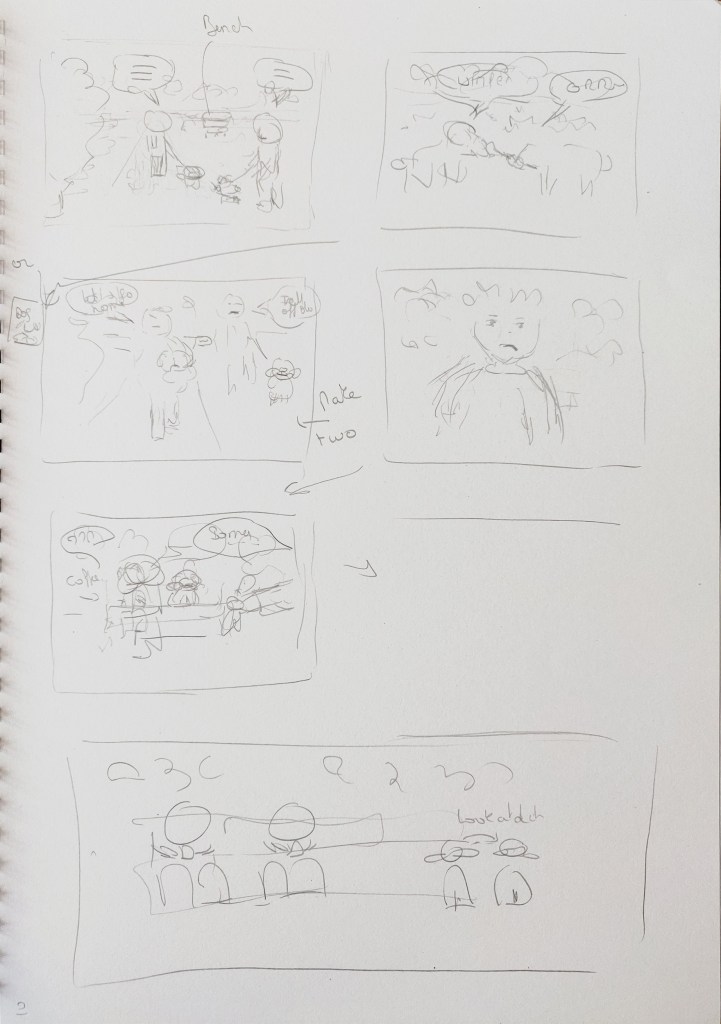
Below are the thoughts and thumbnails I developed in my sketchbook.
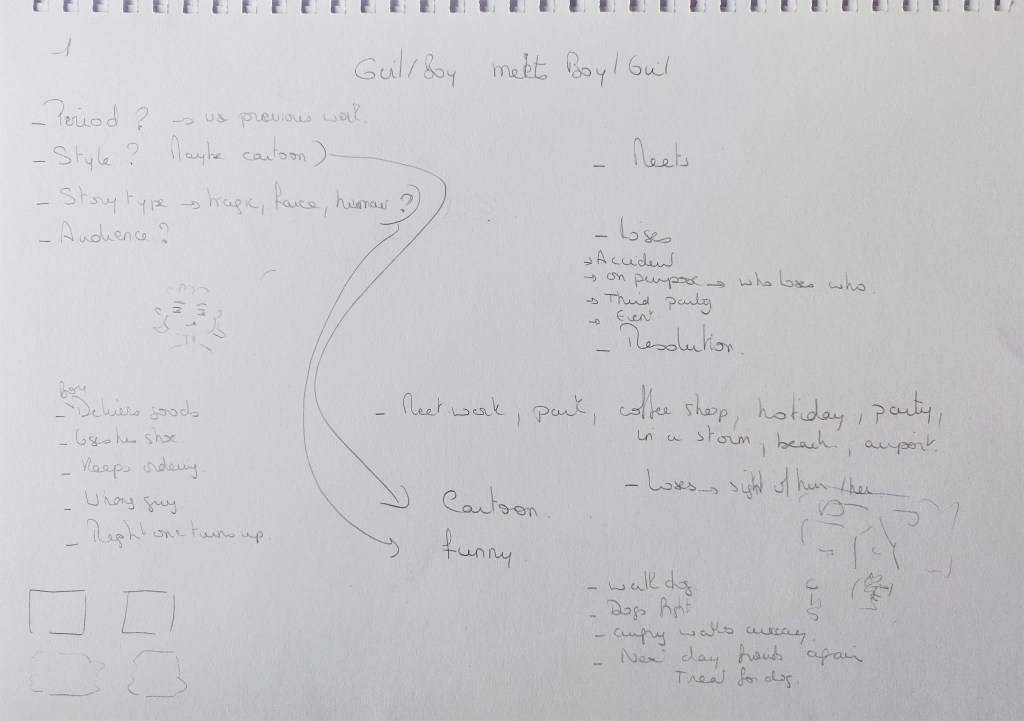
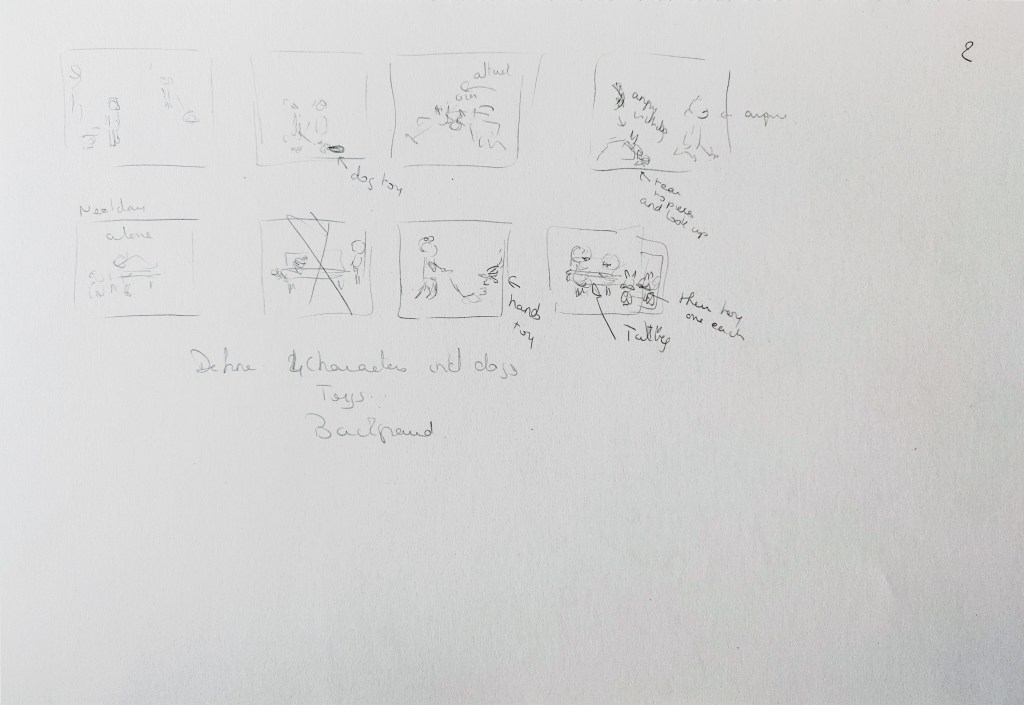
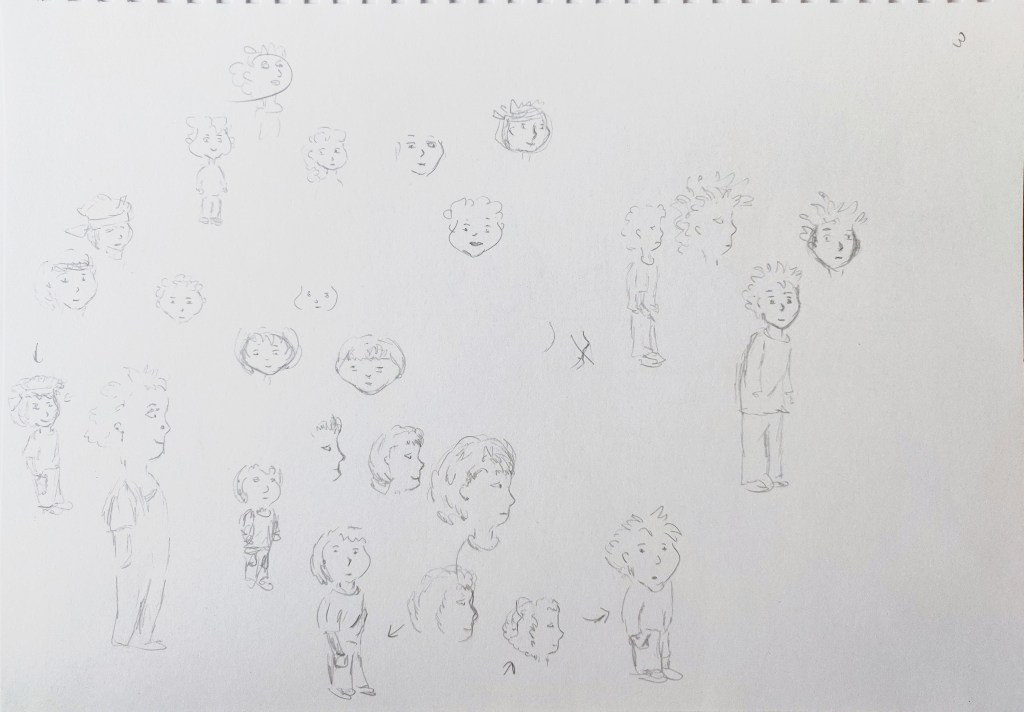
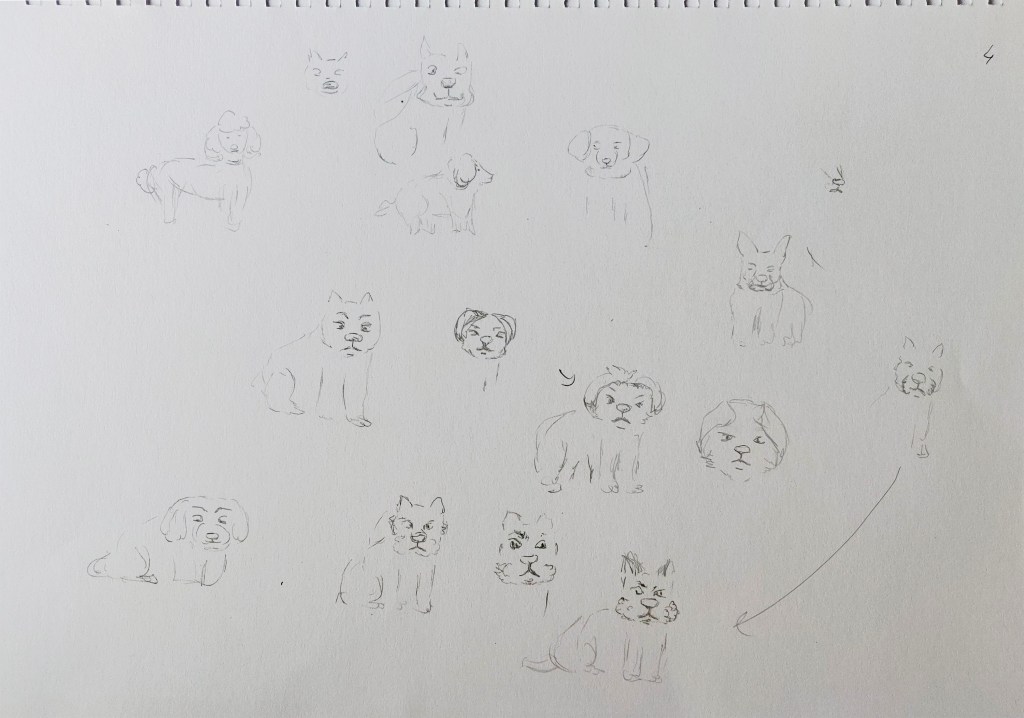
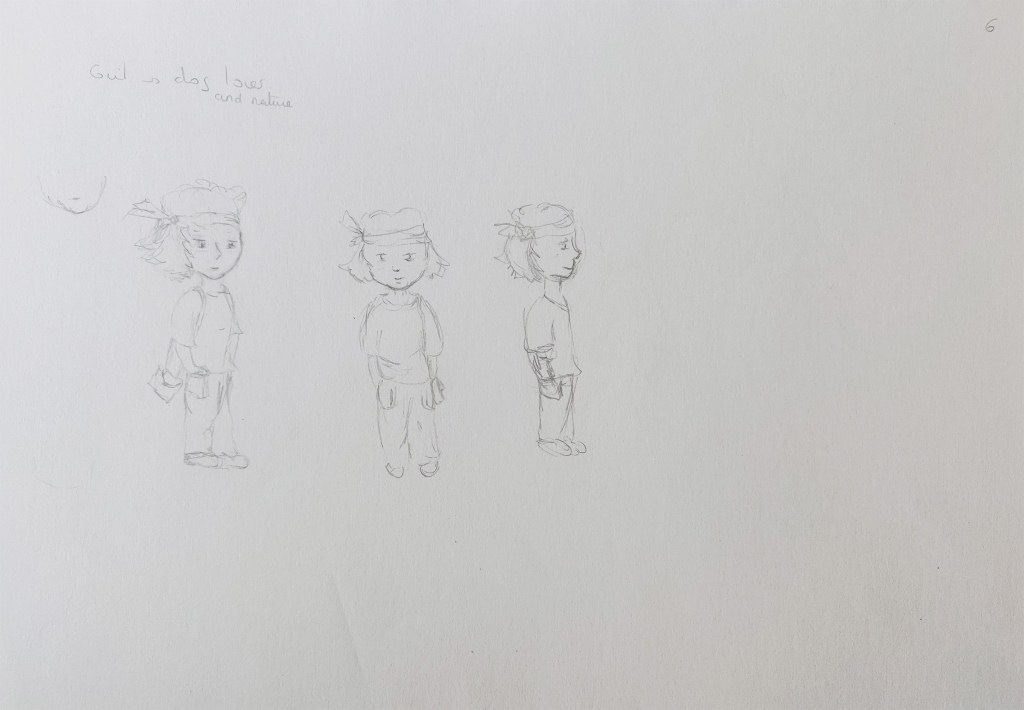
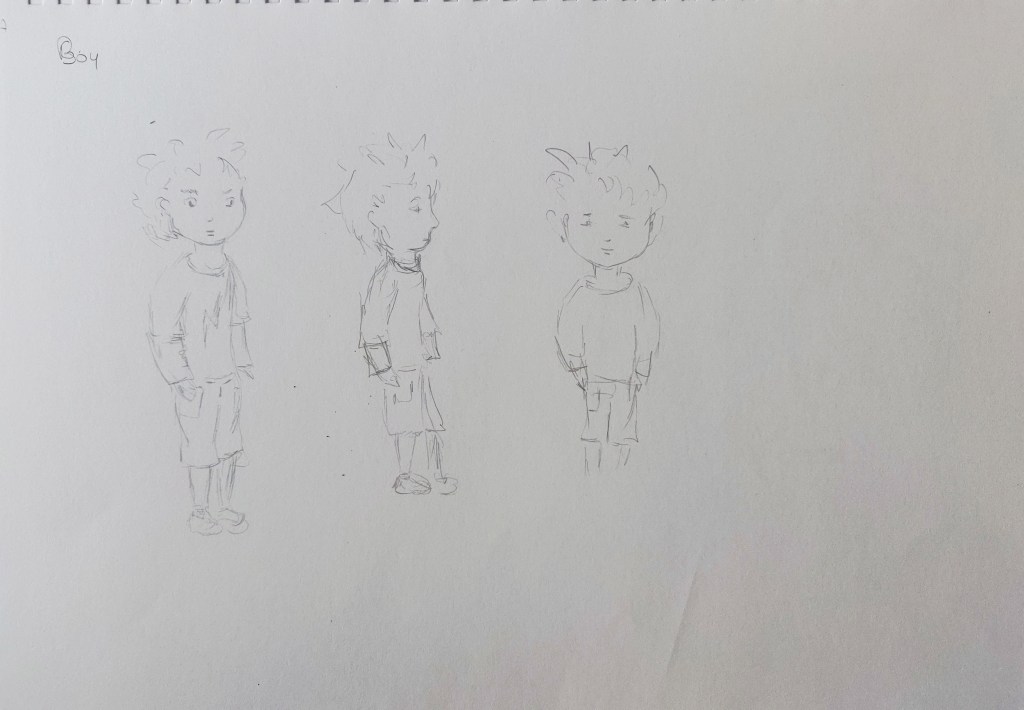
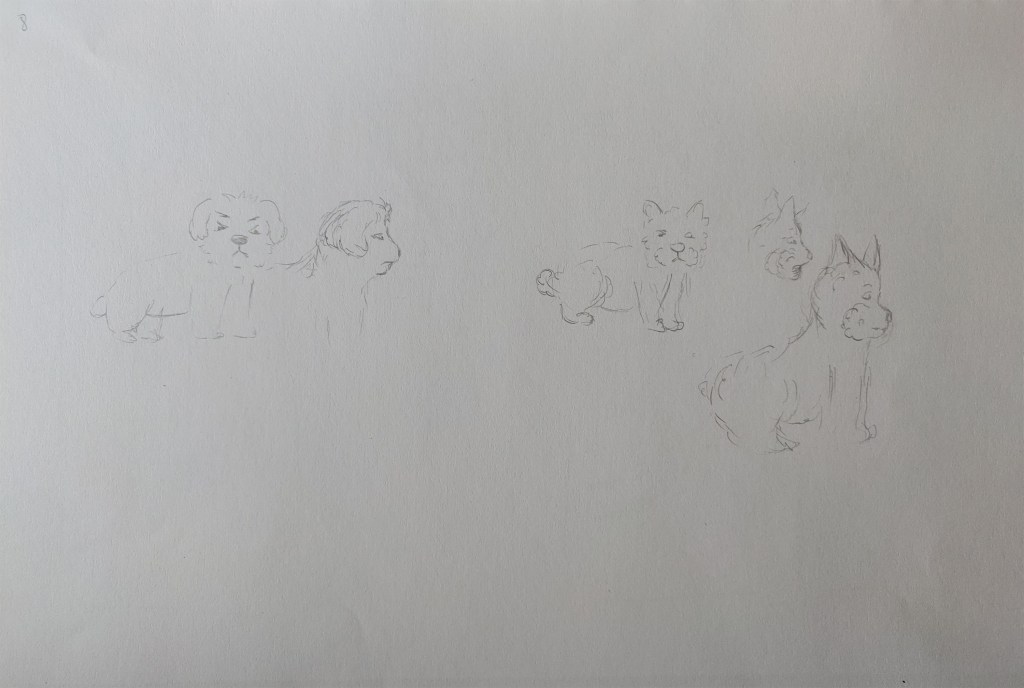
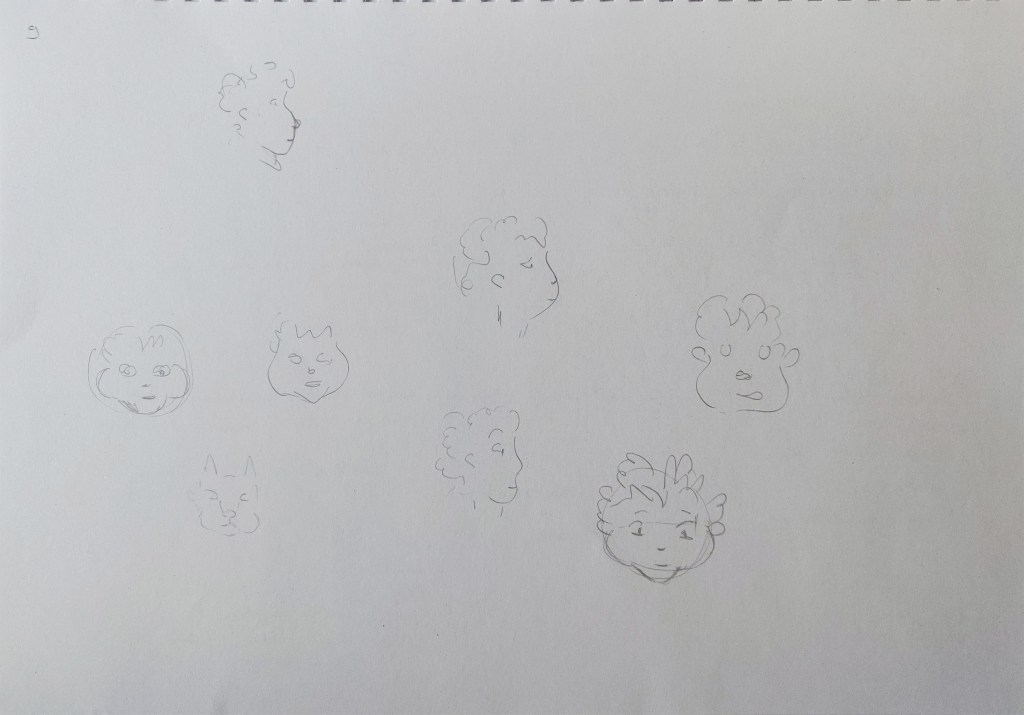
Once I had a better idea of the structure and the characters, I created some thumbnails. I liked the idea of an odd number of illustrations. I thought the last one could be bigger to put the emphasis on the conclusion.
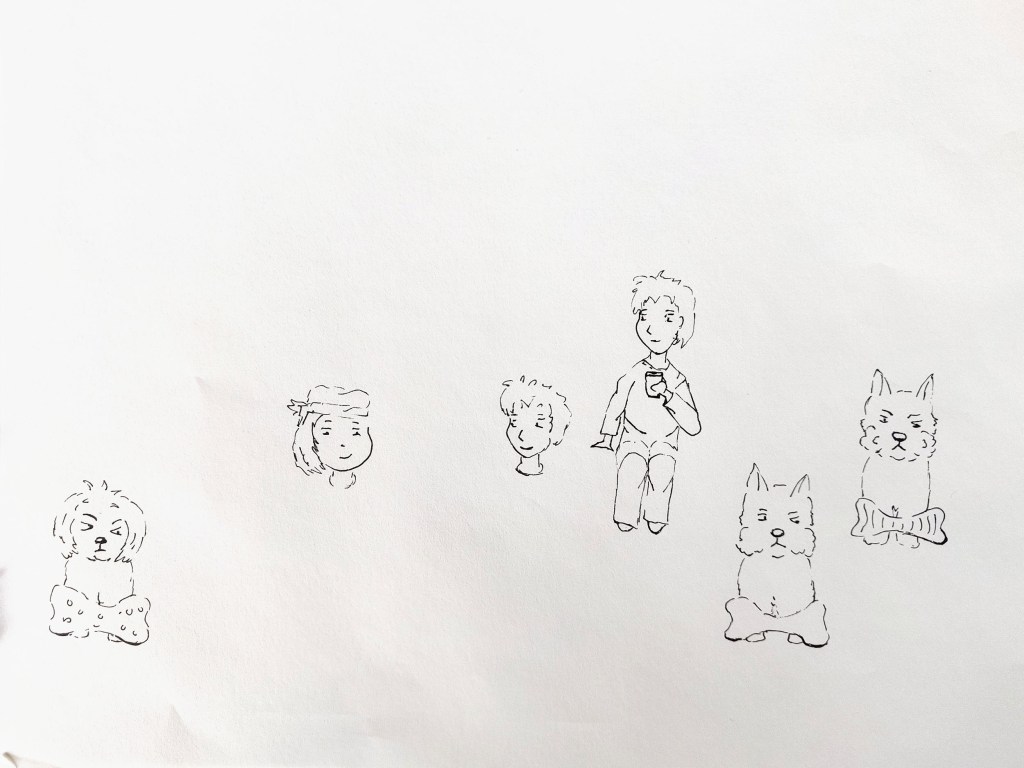
I then drew the different illustrations (I kept the same ratio but decided to draw the illustrations in a bigger size (about twice the size they would be on an A4 page).

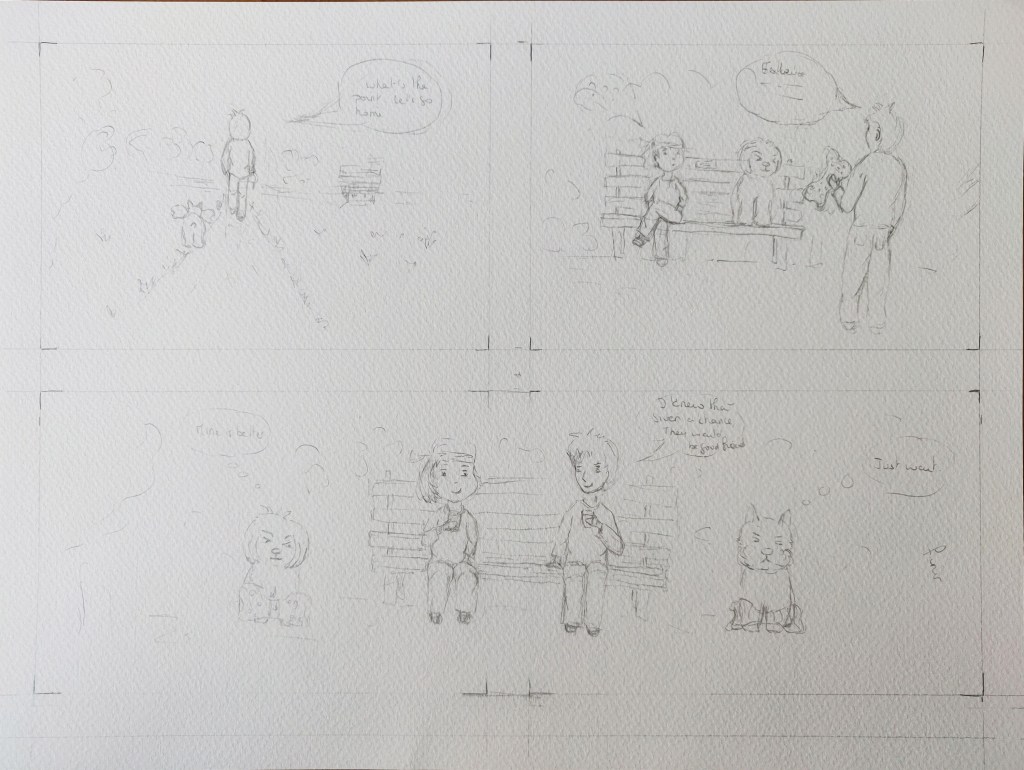
I hesitated between several options regarding the lines and colours:
- Drawing the lines digitally or manually;
- Adding solid colours (digitally) or having more of a watercolour effect.
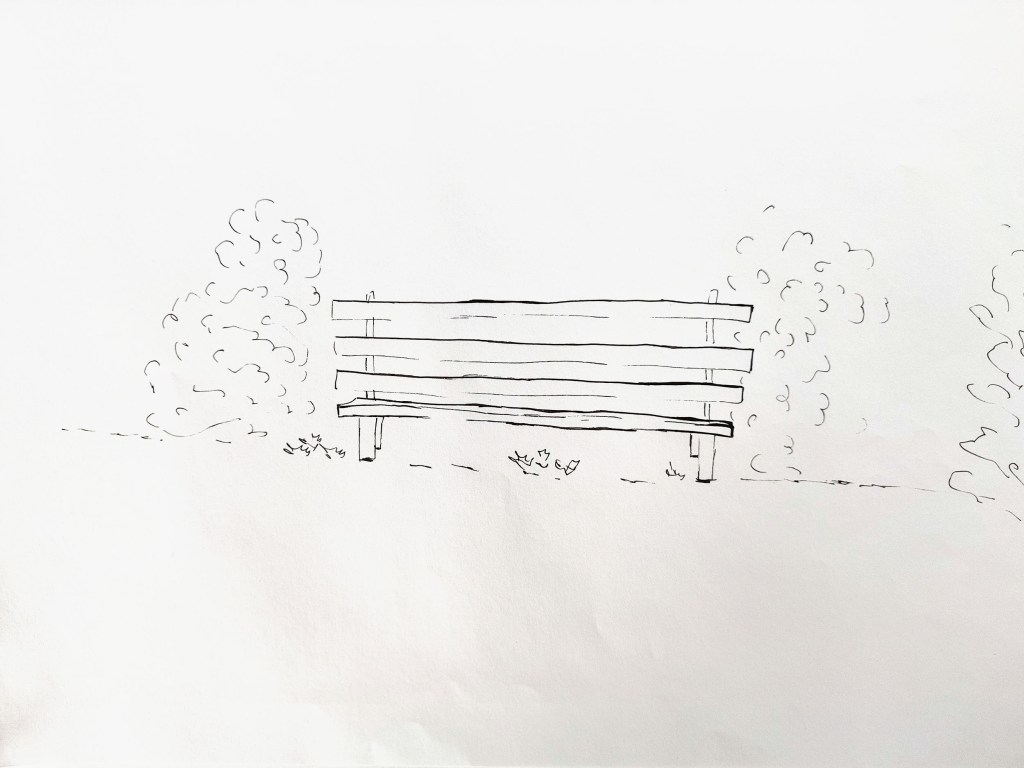
In the end, I opted for drawing the lines manually and adding the colours in Photoshop. I used a thin paper to trace/draw the lines. I sometimes drew the lines of the background separate from the characters as I could see that I might need a bit of rescaling. I also redrew some elements if I was not too happy with the result.
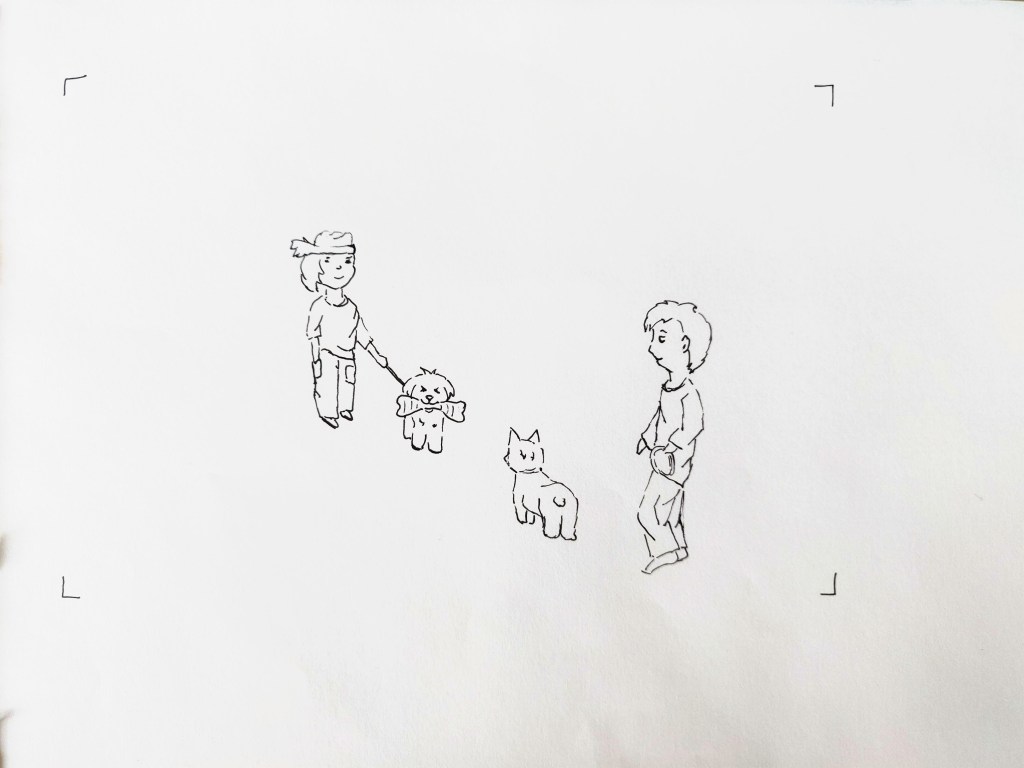

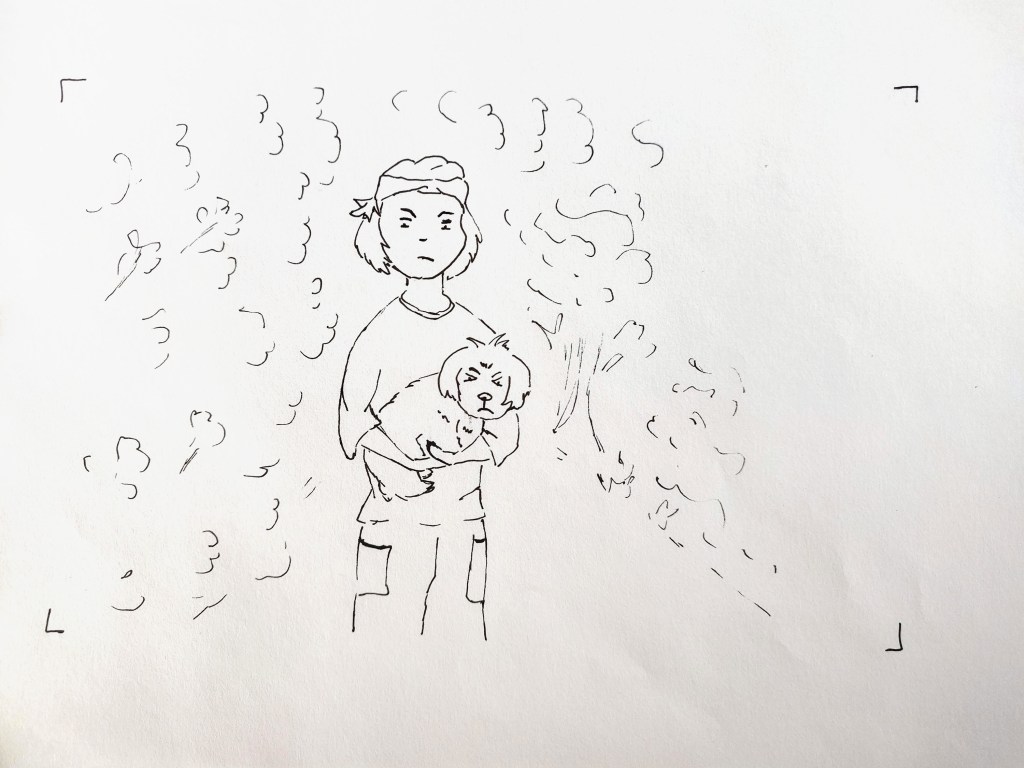
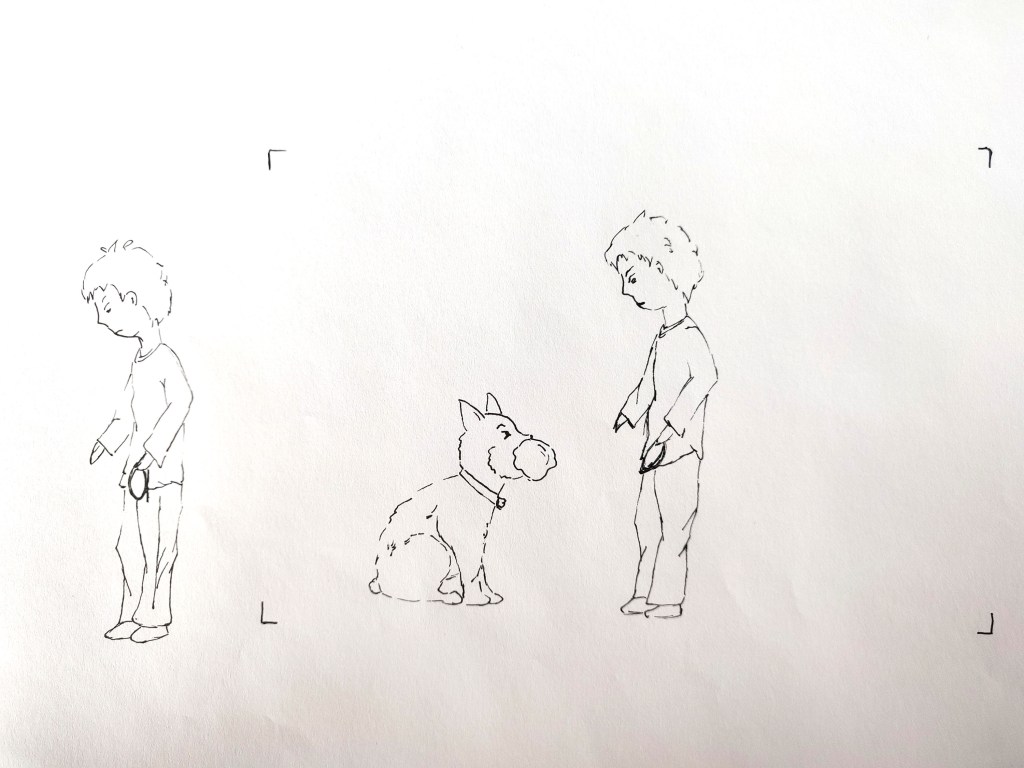
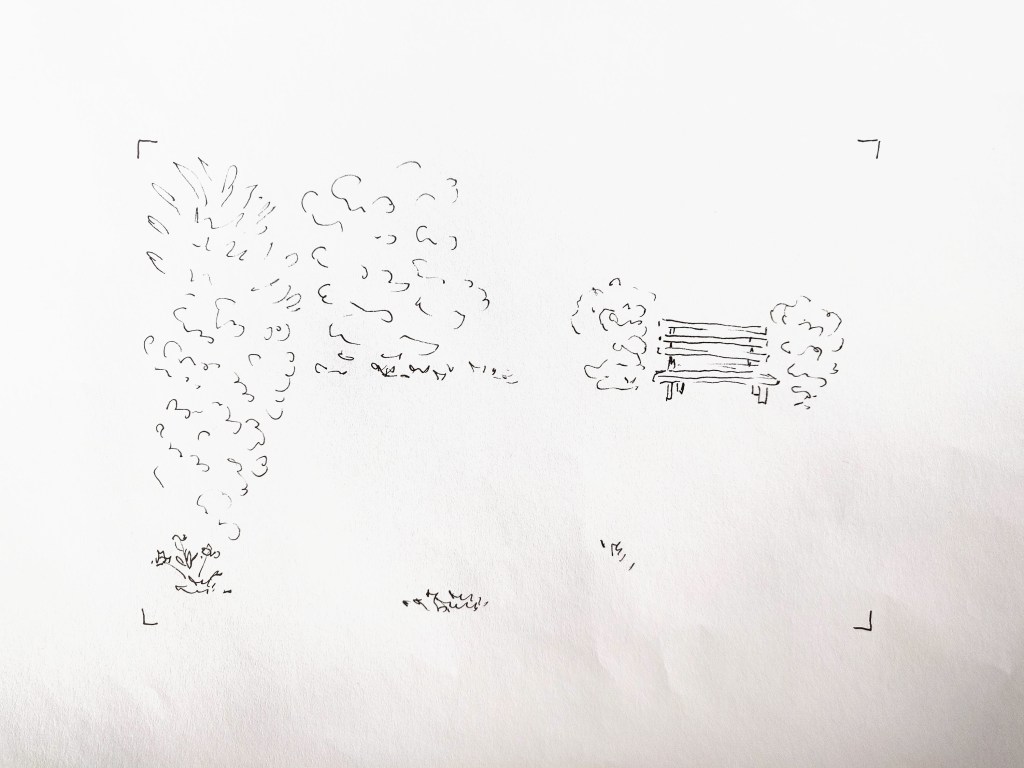
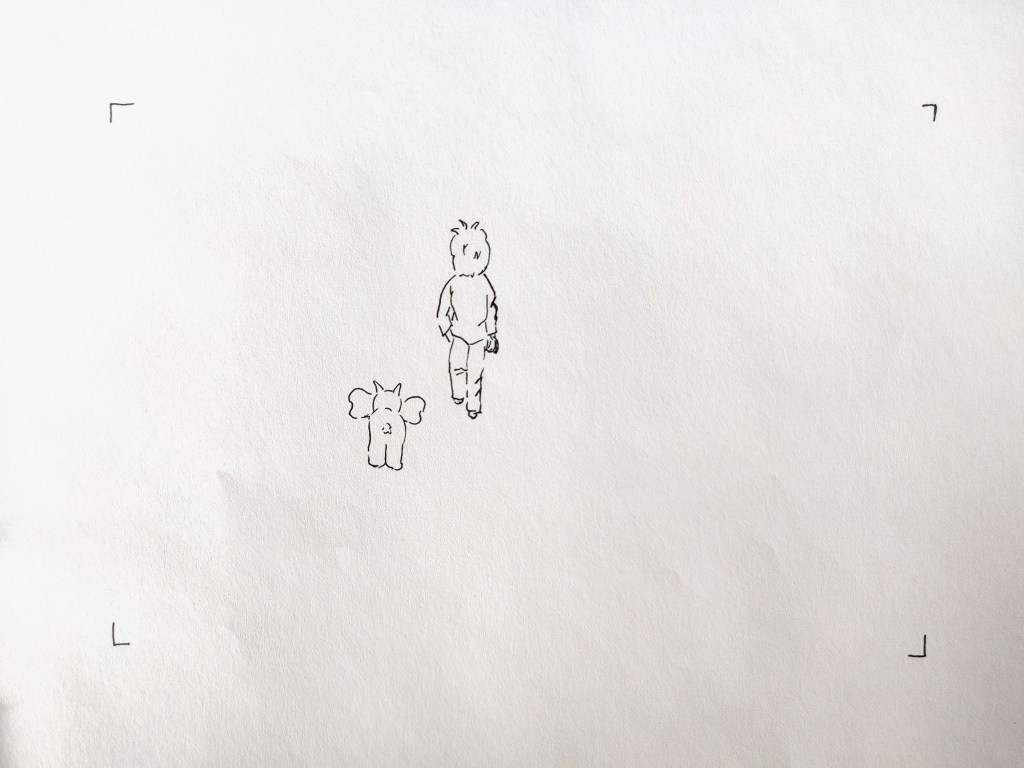
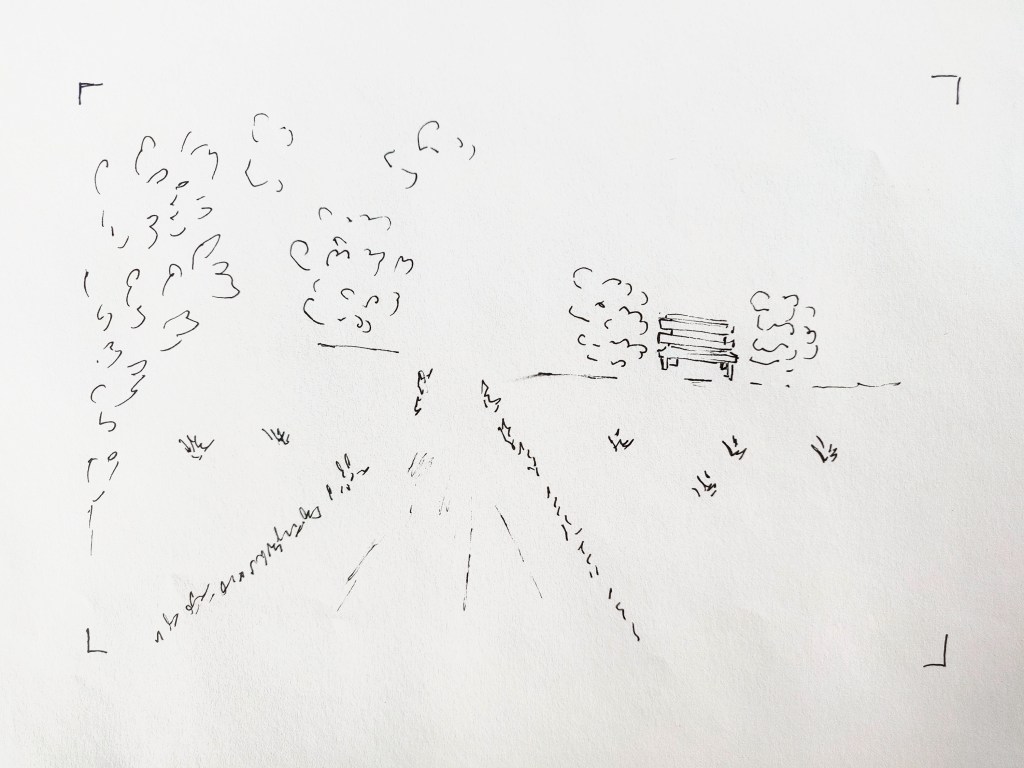
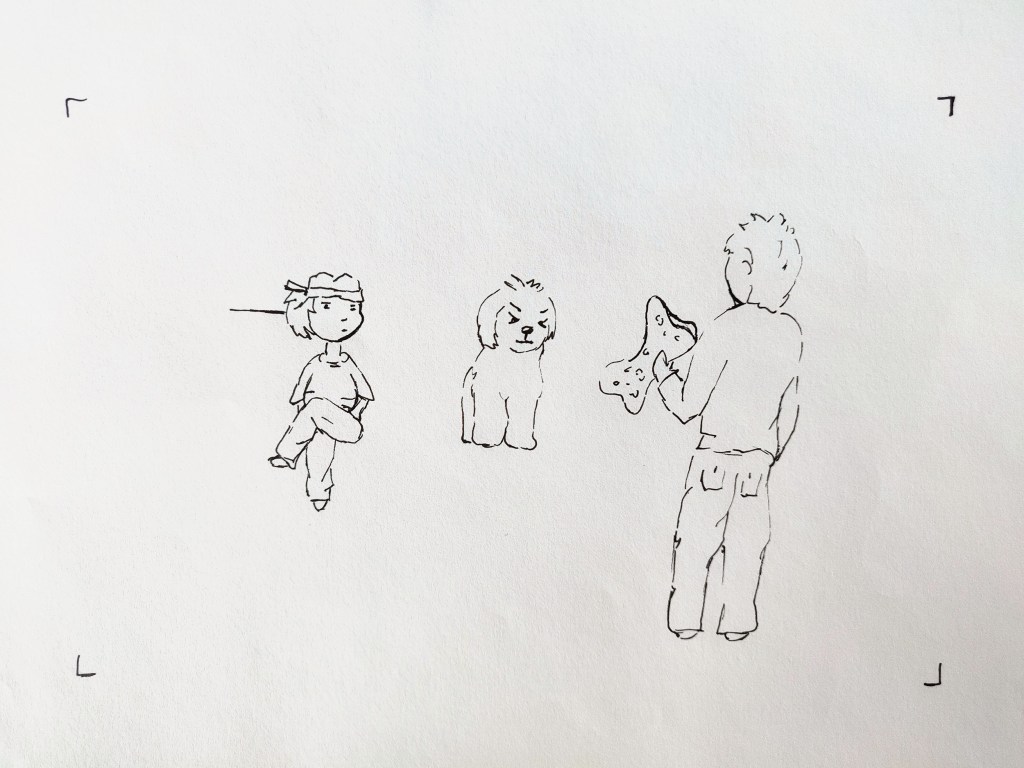
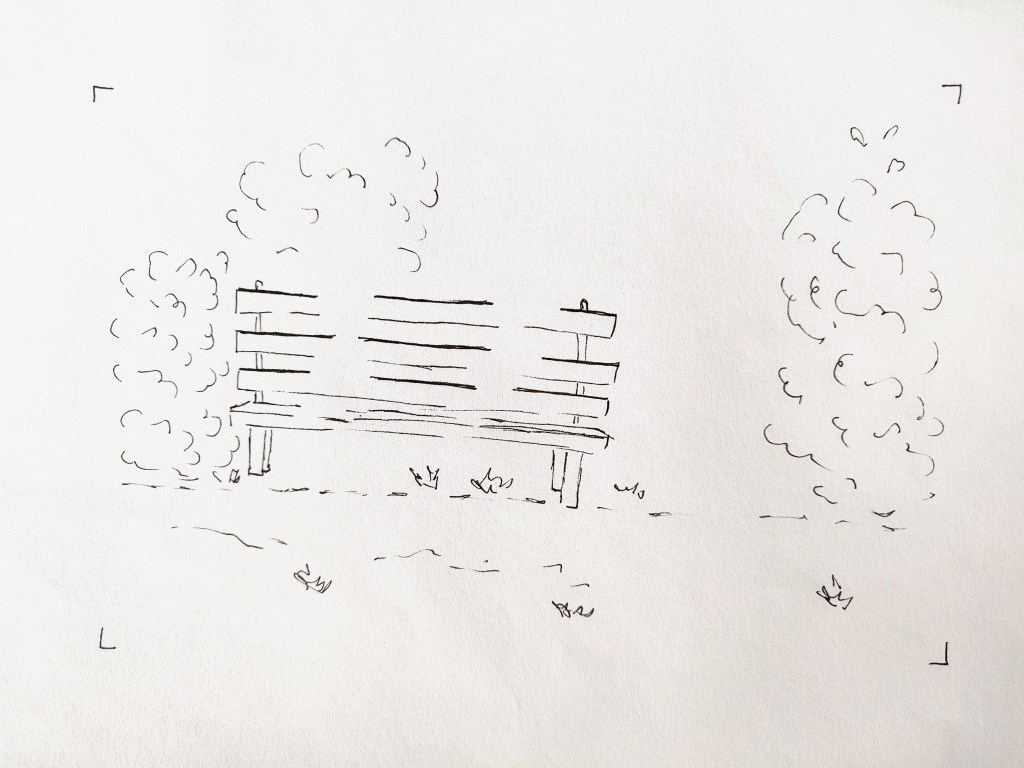
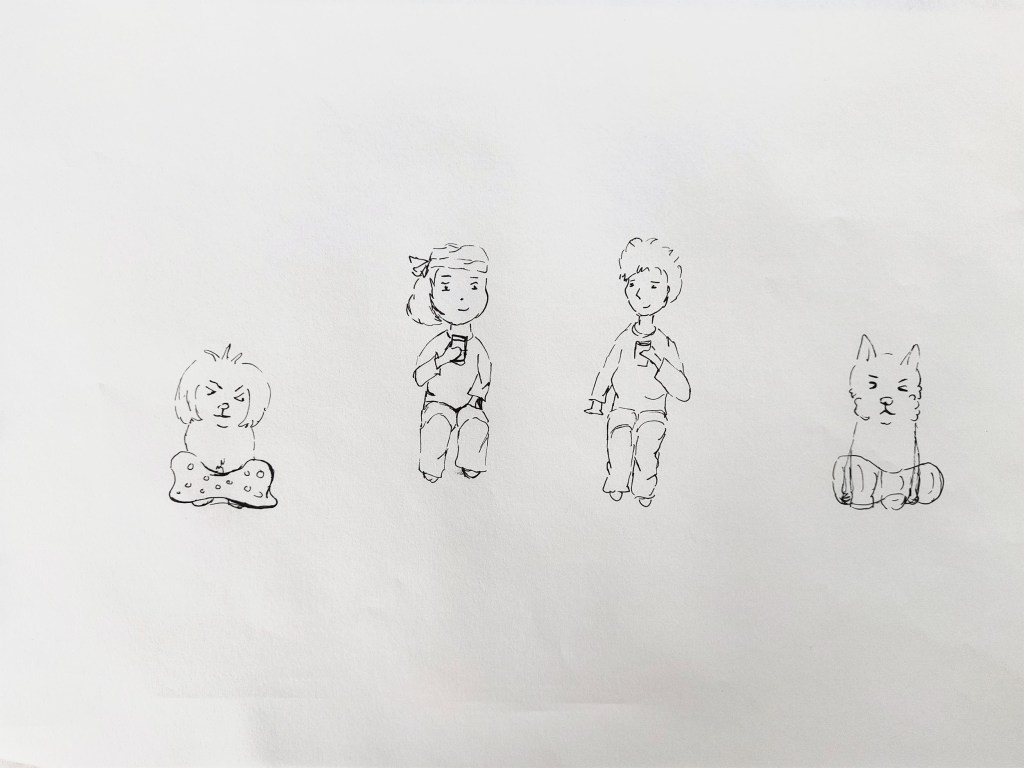
I created a colour palette. I wanted bright colours to reflect the mood of the story . At the same time, I tried to keep a limited number of colours.

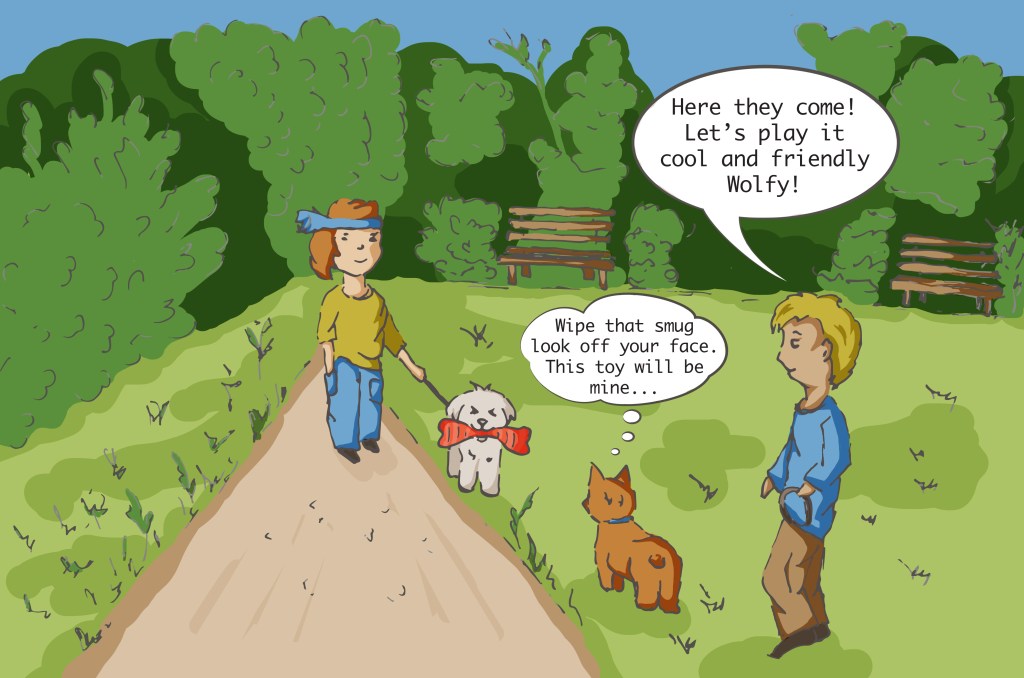
I then coloured the images in Photoshop. I liked how solid colours were used in Tintin and opted for solid colours for the illustrations. I added some solid shadows to add some depth. The illustrations would be quite small in the end and I thought that clear defined shadows would be better than gradients.

Once I was happy with the outcome, I created a mock up of the page in InDesign:
What went well
Once the illustrations were positioned side by side, I could appreciate how a limited colour palette helps to bring harmony to the whole and acts as colour-coding. We can immediately identify the different characters across the story.
I tried to play with the composition to add drama. This includes zooming on the dogs when they fight or on the contrary, seeing the silhouette of the boy walking away in the distance.
Challenges I met
I still need to improve my lines as there is some hesitancy, even when I drew the same elements several times.
When the same character is drawn again and again, it can be challenging to keep some consistency throughout and make sure that the features,… are consistent.
Conclusion
It was challenging to create consistent illustrations but I enjoyed telling a story. The previous research into the structure of narratives and the study of cartoons and graphic novels helped me to choose a style that I thought would work well with the story.
 Catherine Roux Degree in Illustration