The brief:
- Develop an animal character capable of showing a range of emotions, movements and reactions
- Think about the consequences of these emotions on the posture of the character
- Develop a range of drawings showing the character from different angles, with different expressions and taking different poses.
I first did some research on cartoons with animals as their main characters and was particularly interested in the level of anthropomorphism.
I created a gallery and tried to classify the characters depending on the degree of anthropomorphism. On the right, characters such as Mickey Mouse or Pink Panther have the same body structure as a human being whereas Snowy in Tintin looks and behaves like a dog.
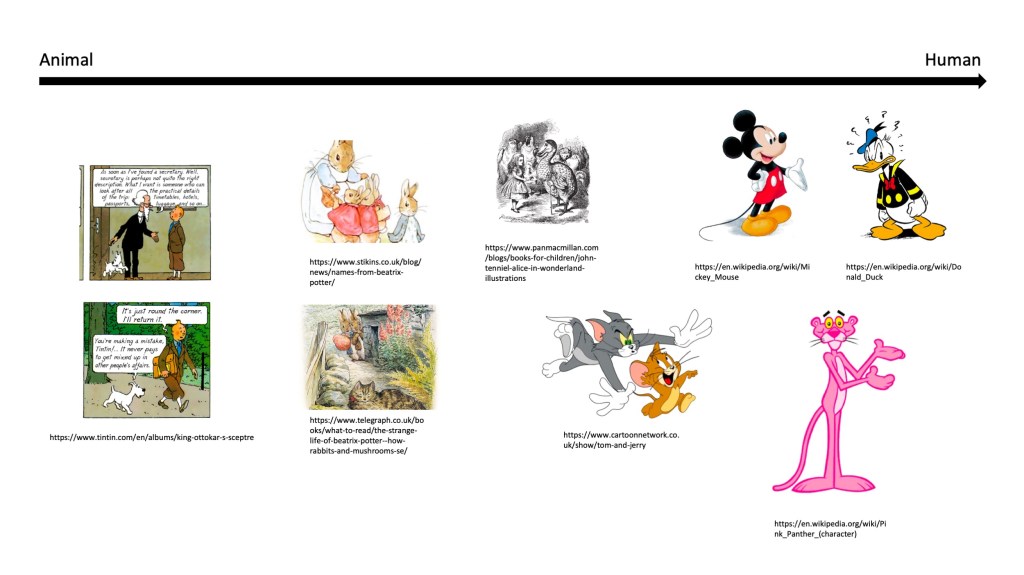
I tried to understand the different techniques used such as changes in the body shapes, use of clothing and accessories, language,…
I also wanted to check how to illustrate expressions in cartoons and revisited a few tutorials around that theme:
How to create movement: https://design.tutsplus.com/tutorials/cartoon-fundamentals-how-to-create-movement-and-action–vector-19904?_ga=2.22712379.1695572001.1667390388-1912212366.1654293564. This tutorial explains some very useful techniques frequently used in cartoons such as squashing or stretching the character, exaggerating traits or concentrating on the dynamic line of action.
Secrets in drawing animals: https://design.tutsplus.com/articles/cartoon-fundamentals-the-secrets-in-drawing-animals–vector-17361?_ga=2.47749159.1695572001.1667390388-1912212366.1654293564
Create emotions from simple changes in the face: https://design.tutsplus.com/articles/cartoon-fundamentals-create-emotions-from-simple-changes-in-the-face–vector-16278?_ga=2.17464121.1695572001.1667390388-1912212366.1654293564
I then focussed on selecting one animal. Some animals can be easier to illustrate in this context. A squirrel for instance has hands that reminds us of the human body. On the other hand, a goat has an anatomy that has less in common with the human shape.
In the end, I chose a rabbit as they can stretch and squeeze and their body has a certain fluidity.
I created a moodboard where I explored the representation of rabbits in cartoons:
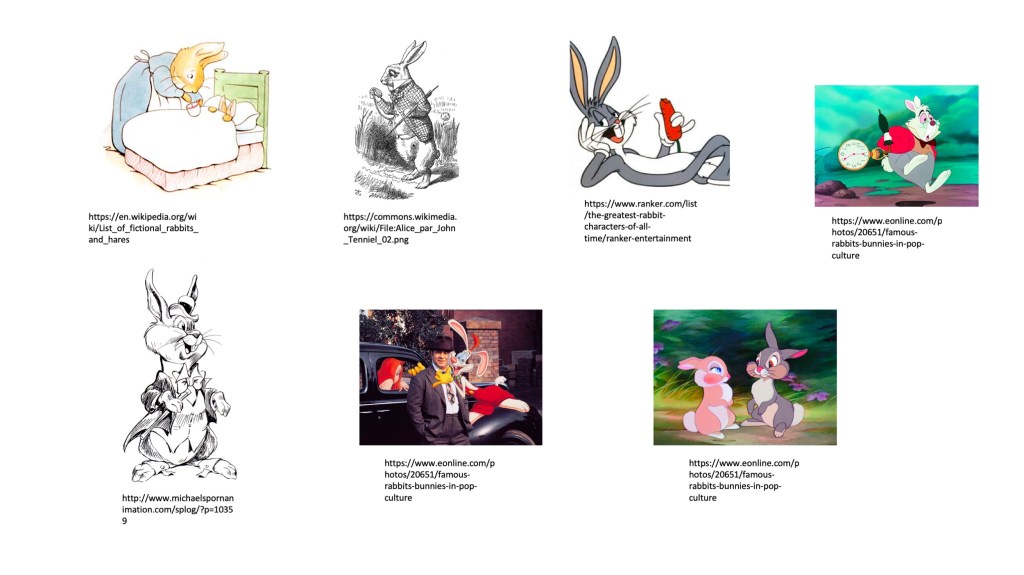
These are only a few examples as rabbits are often used in cartoons.
I then googled images of rabbit and checked a tutorial about their anatomy (https://design.tutsplus.com/tutorials/how-to-draw-animals-hares-and-rabbits–cms-21262).
I used my sketchbook to explore further how to illustrate my character. I identified the main features of rabbits that enable us to recognise the animal even when traits are distorted and exaggerated: The ears, the front teeth, the strong back legs, the tail,…
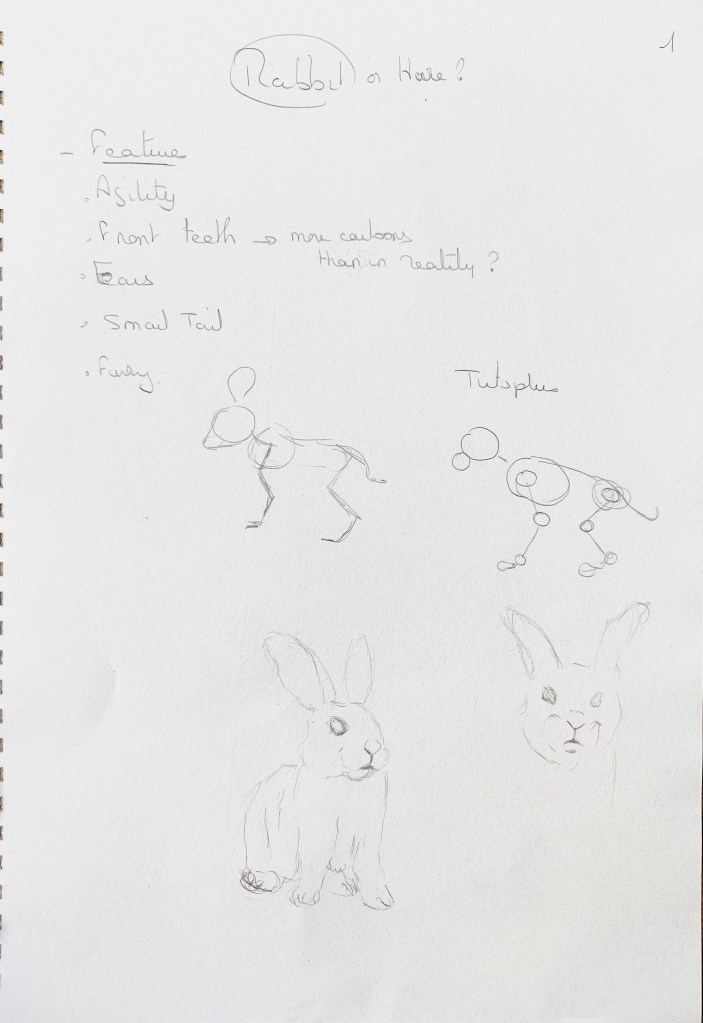
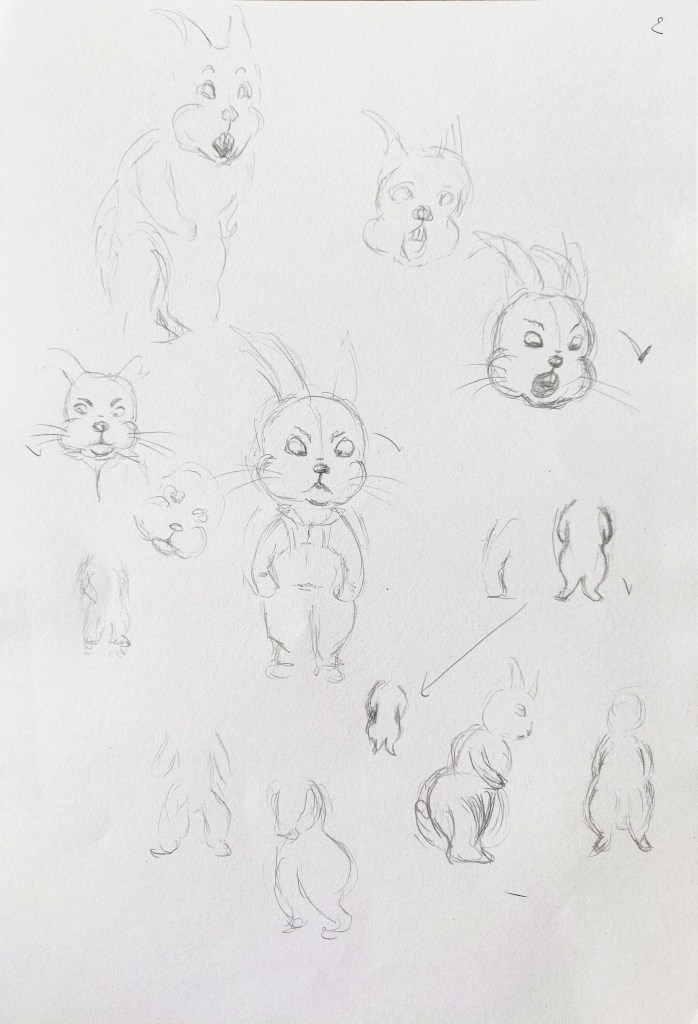
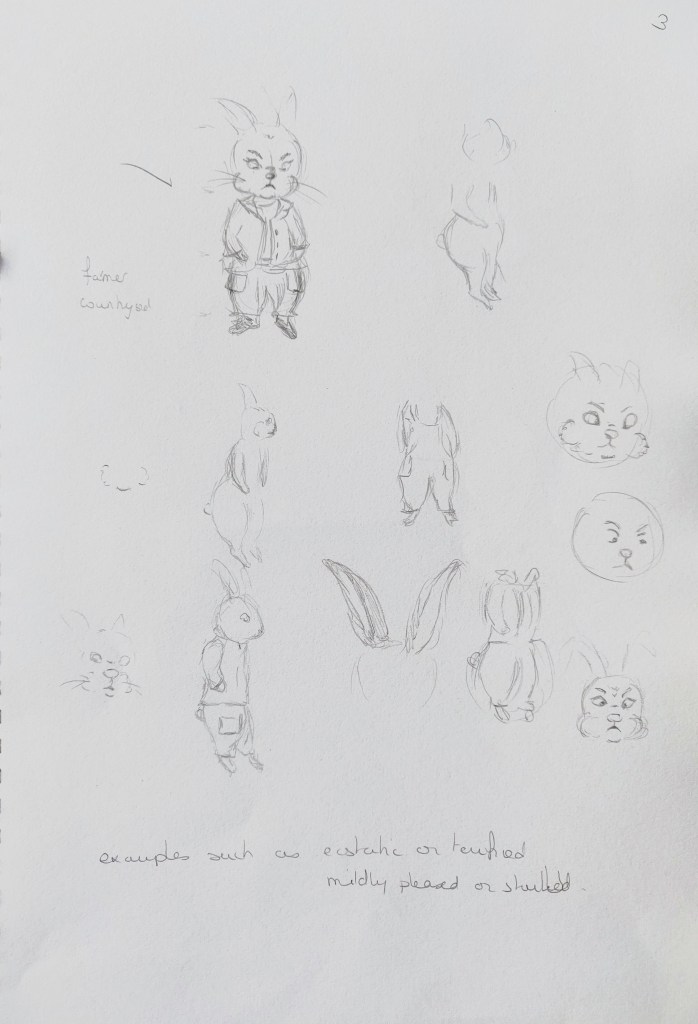
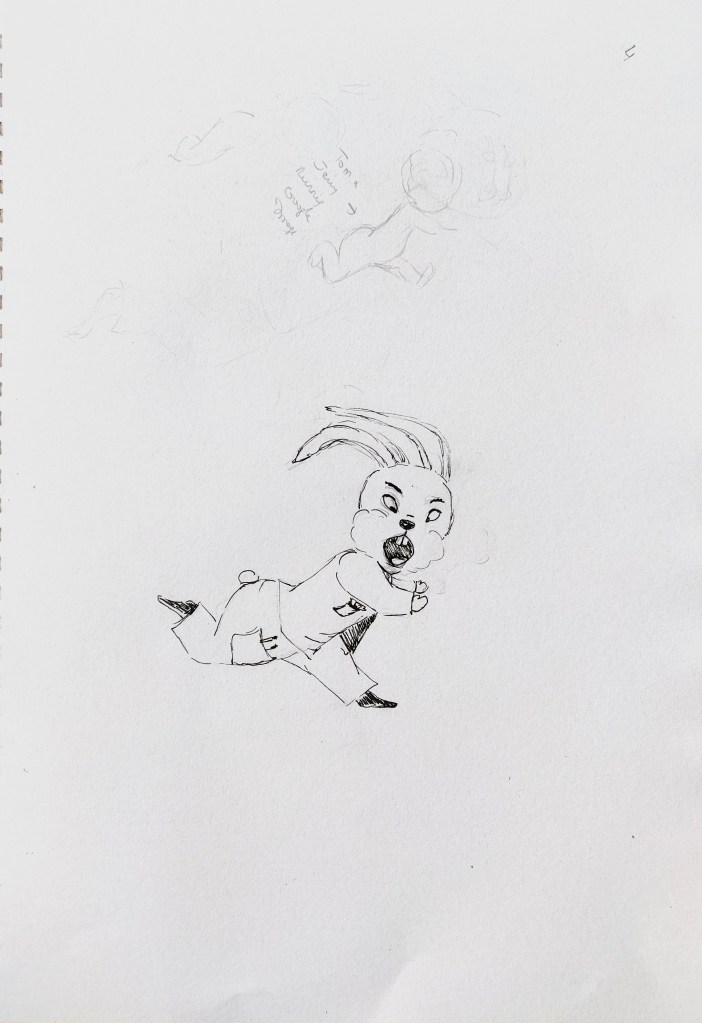
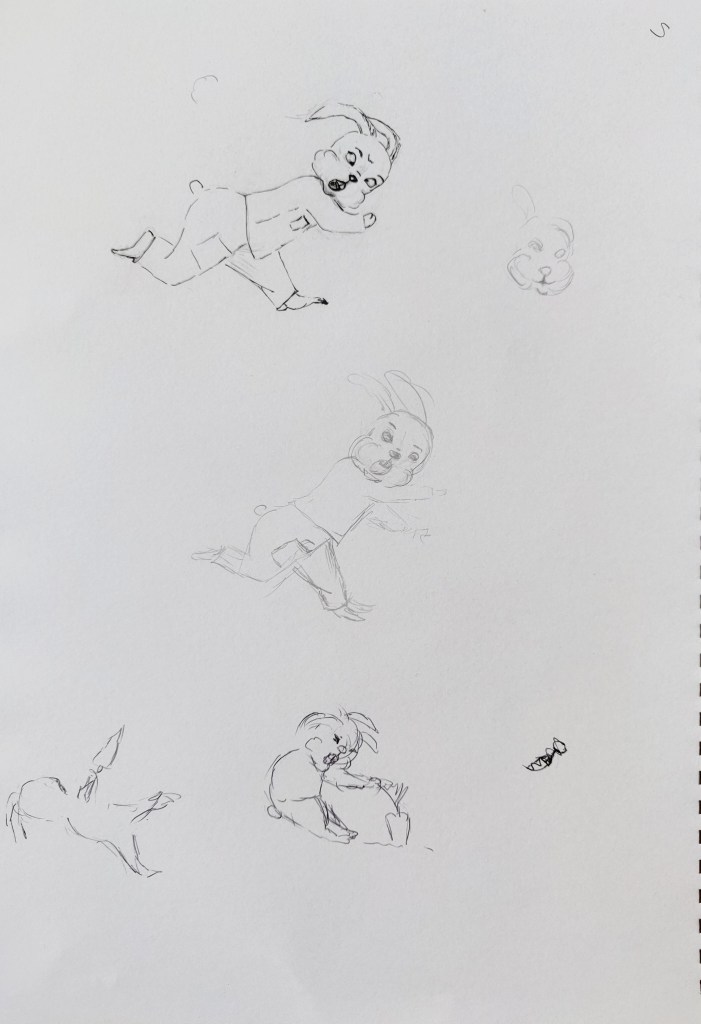
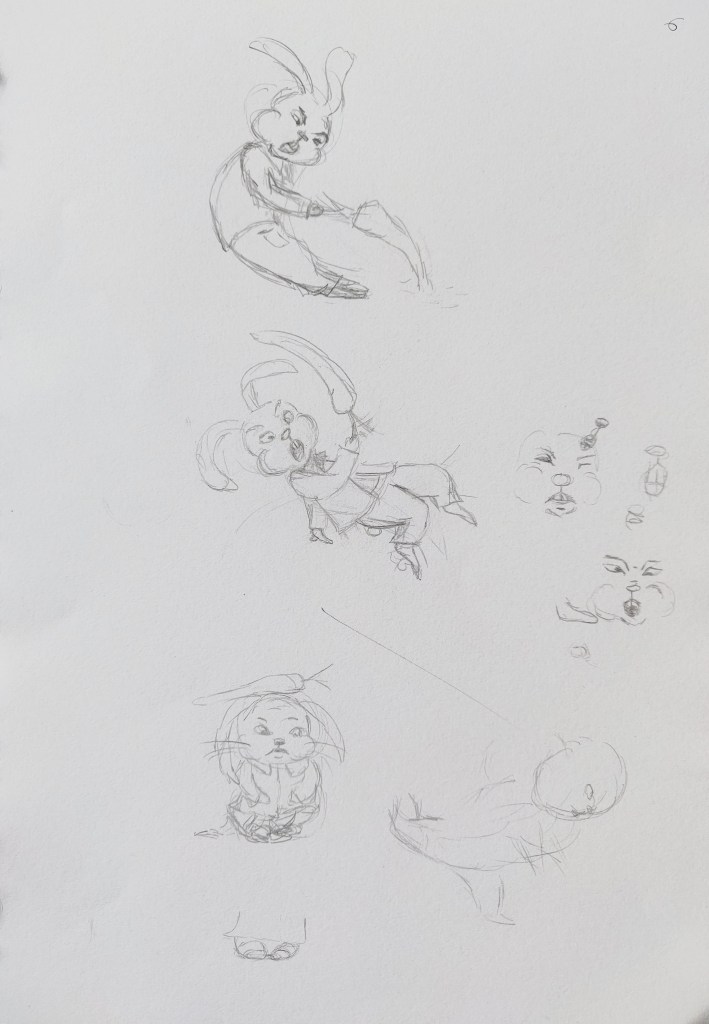
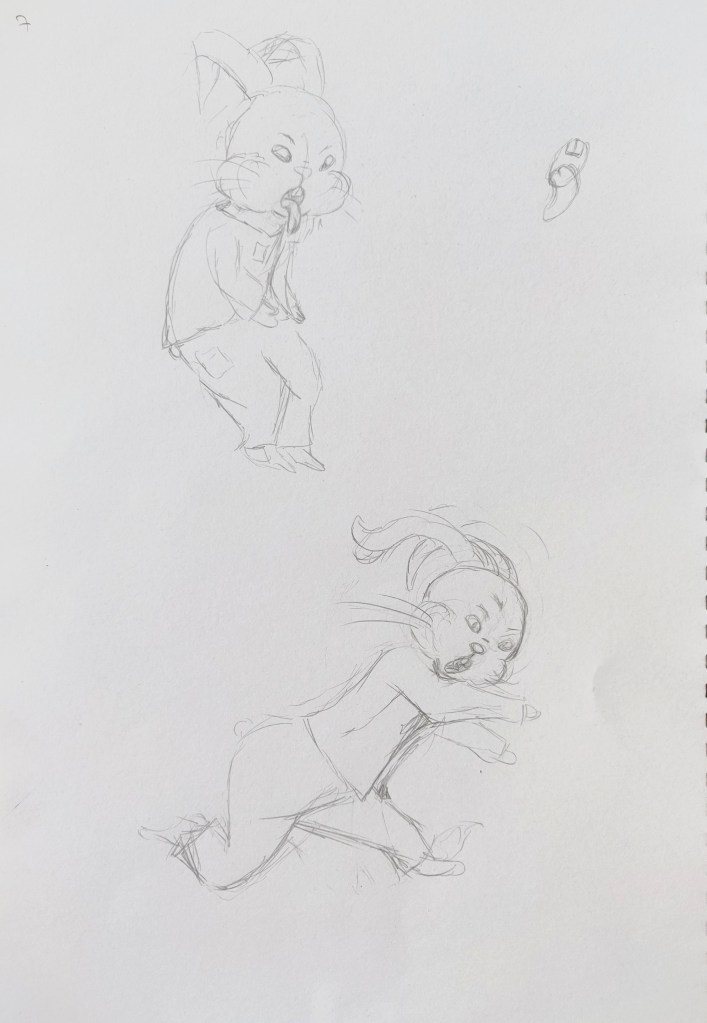
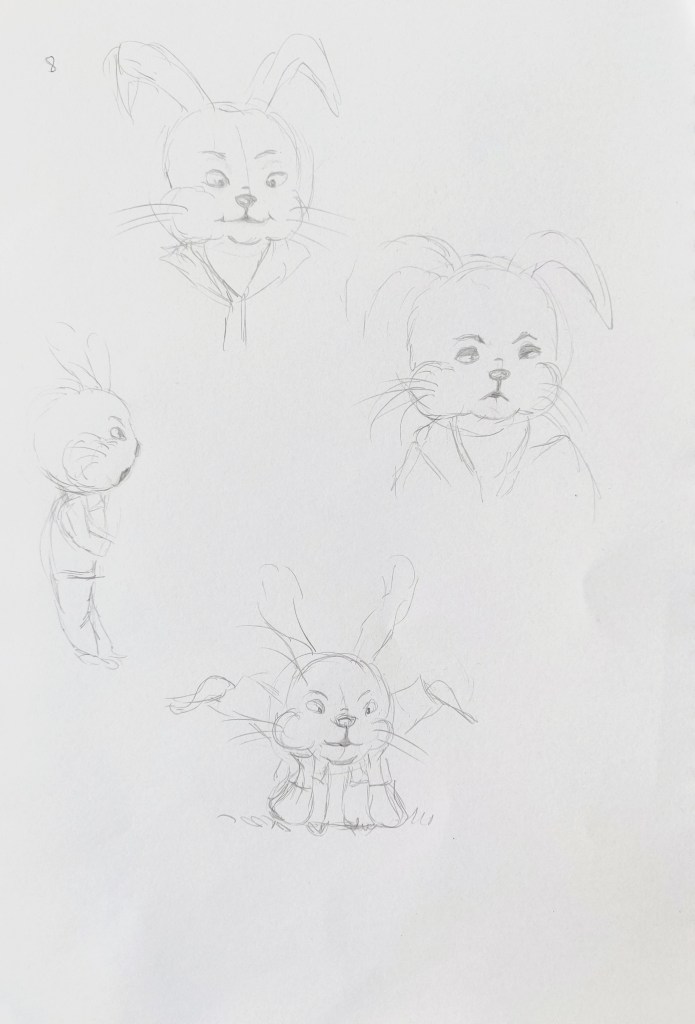
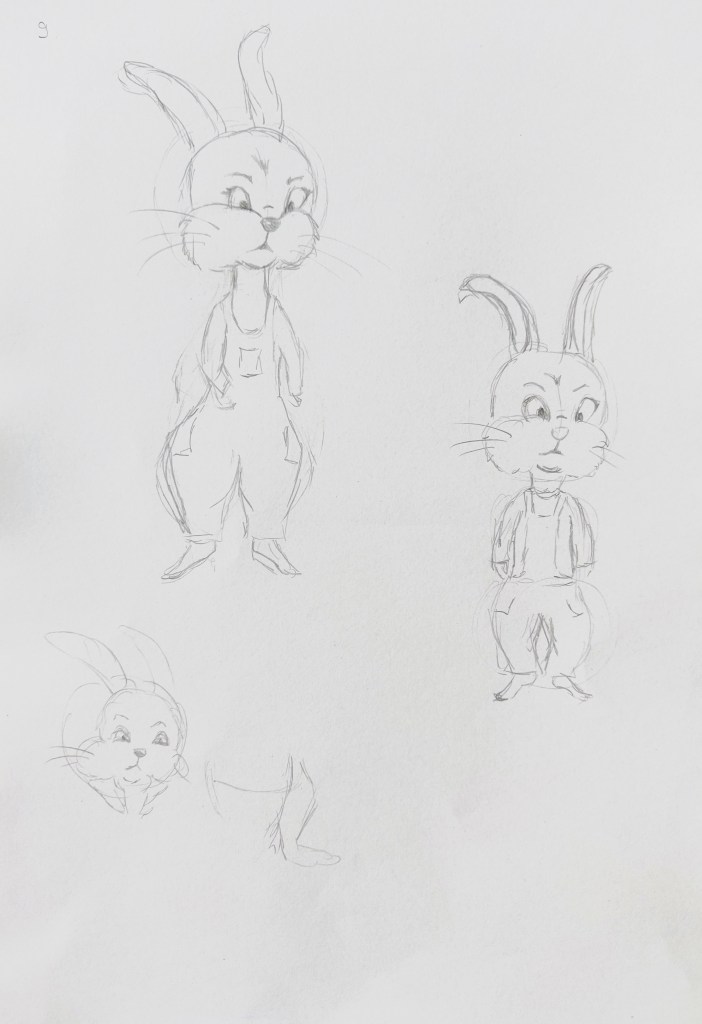
I have just started using an Ipad Pro and decided to use Procreate to create some illustrations of my character.
This is the process:
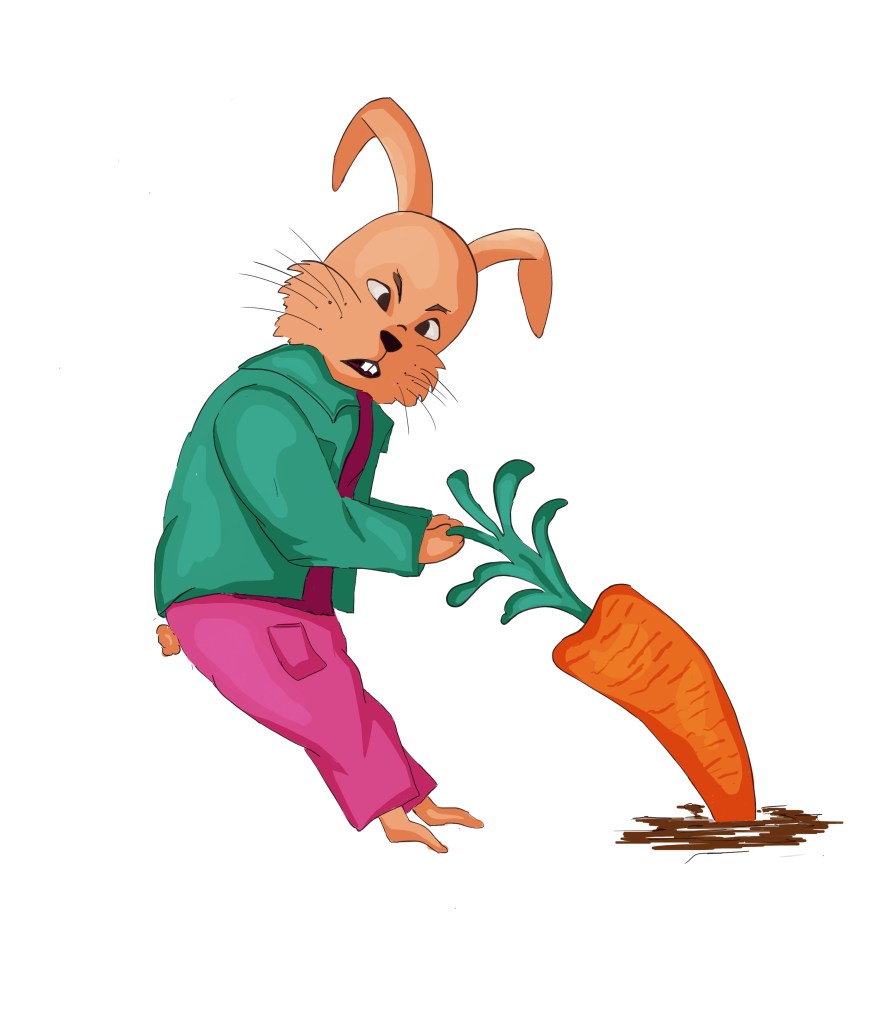
Here are the four final illustrations:
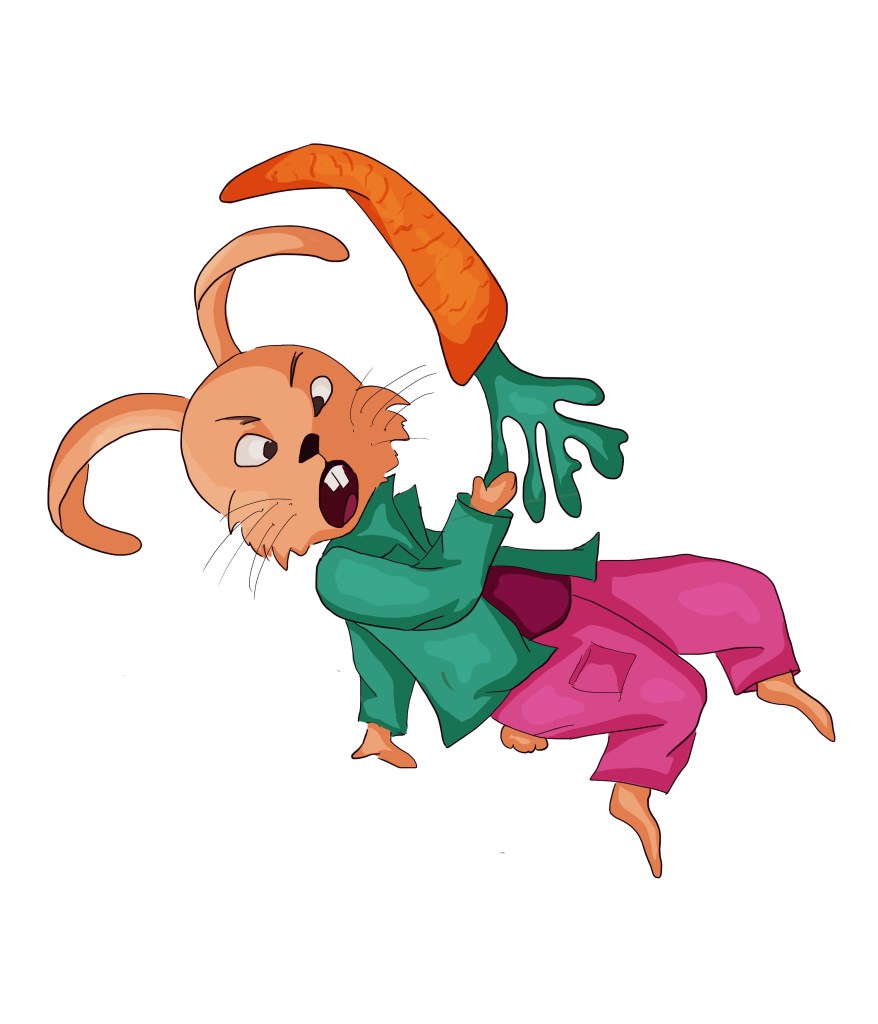
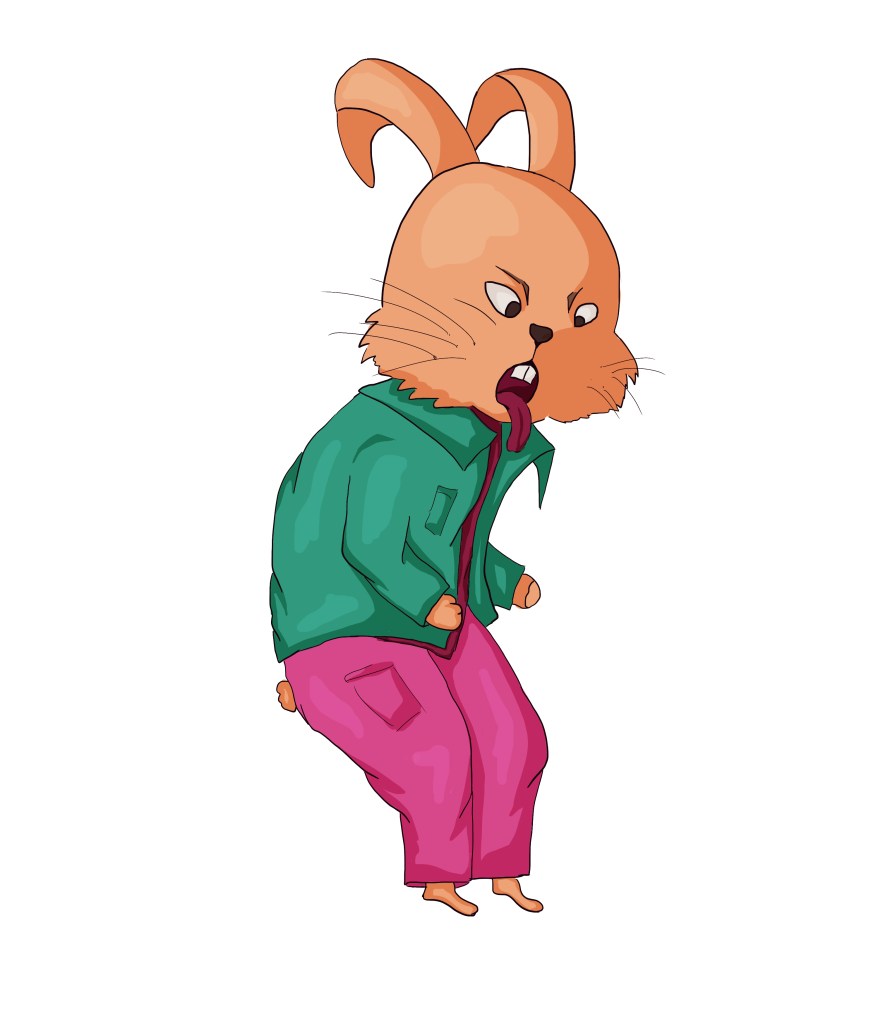
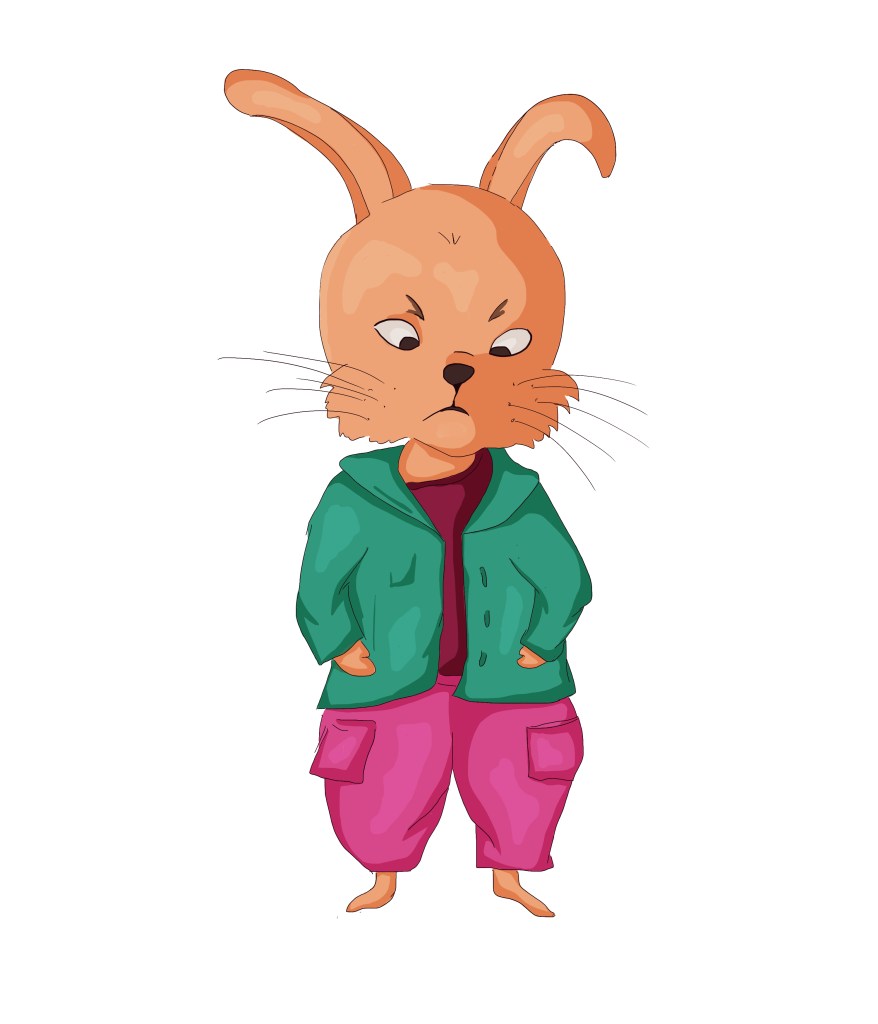
What went well
Again, I worked with a limited colour palette and I think it works well.
I also tried not to complicate the sketches too much as it would be difficult to keep the character consistent across different poses. Going back to references and looking at famous characters such as Tintin or Pink Panther helped me a lot.
I enjoyed illustrating animals and it was interesting to reflect on how “human” I wanted the character to be. In the end, I decided that my character would wear some clothes and could be a farmer.
Challenges
I tried to focus on the dynamic of the lines. It was a challenge as I found that as soon as I concentrated on the accuracy of proportions, I tended to lose some of the dynamic.
However, drawing with the Ipad Pro was helpful as I could keep drawing over the previous sketch by using a new layer.
Other sources: Hultgren, K. (1993). The art of animal drawing : construction, action analysis, caricature. New York: Dover.
 Catherine Roux Degree in Illustration