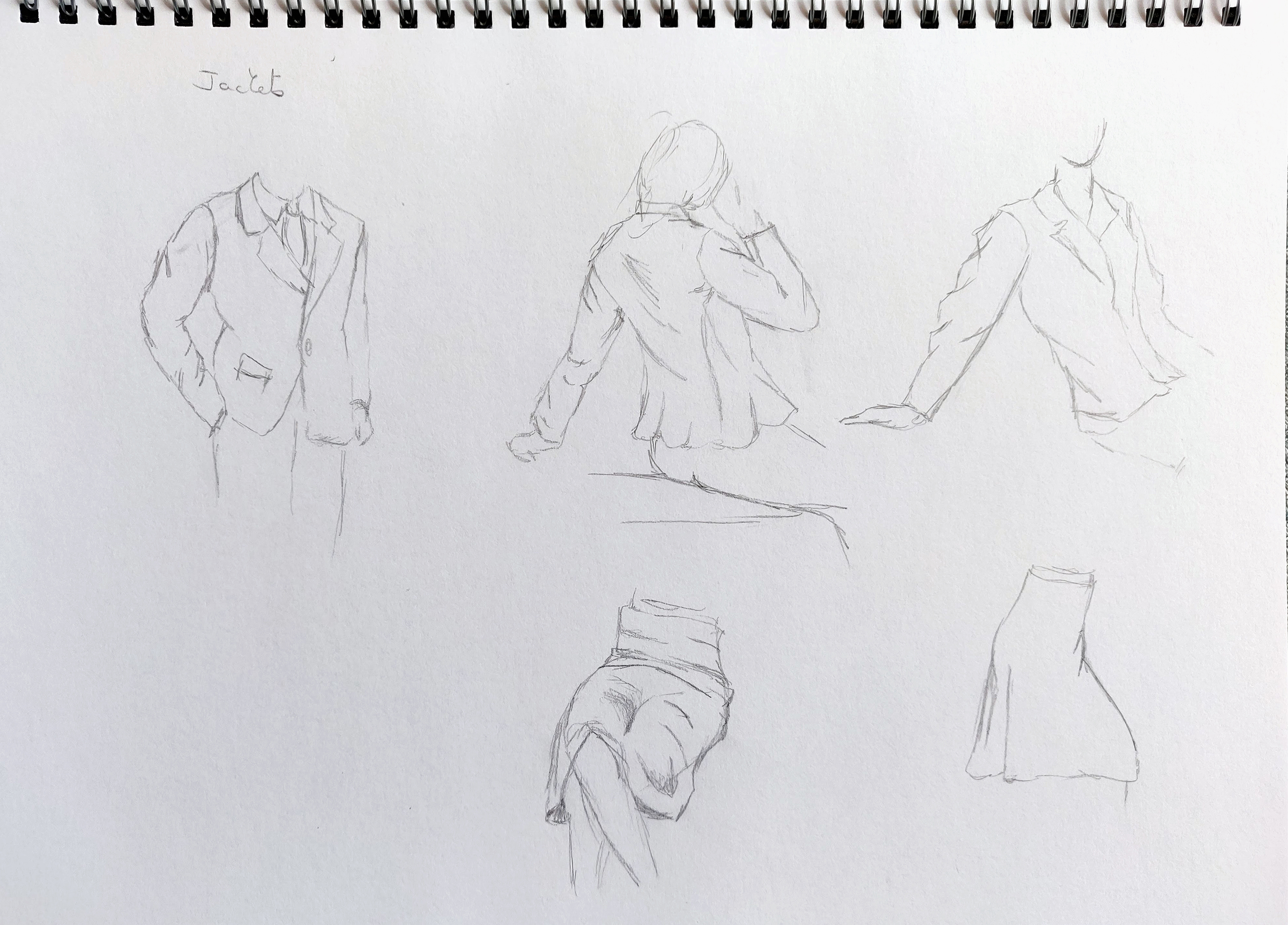
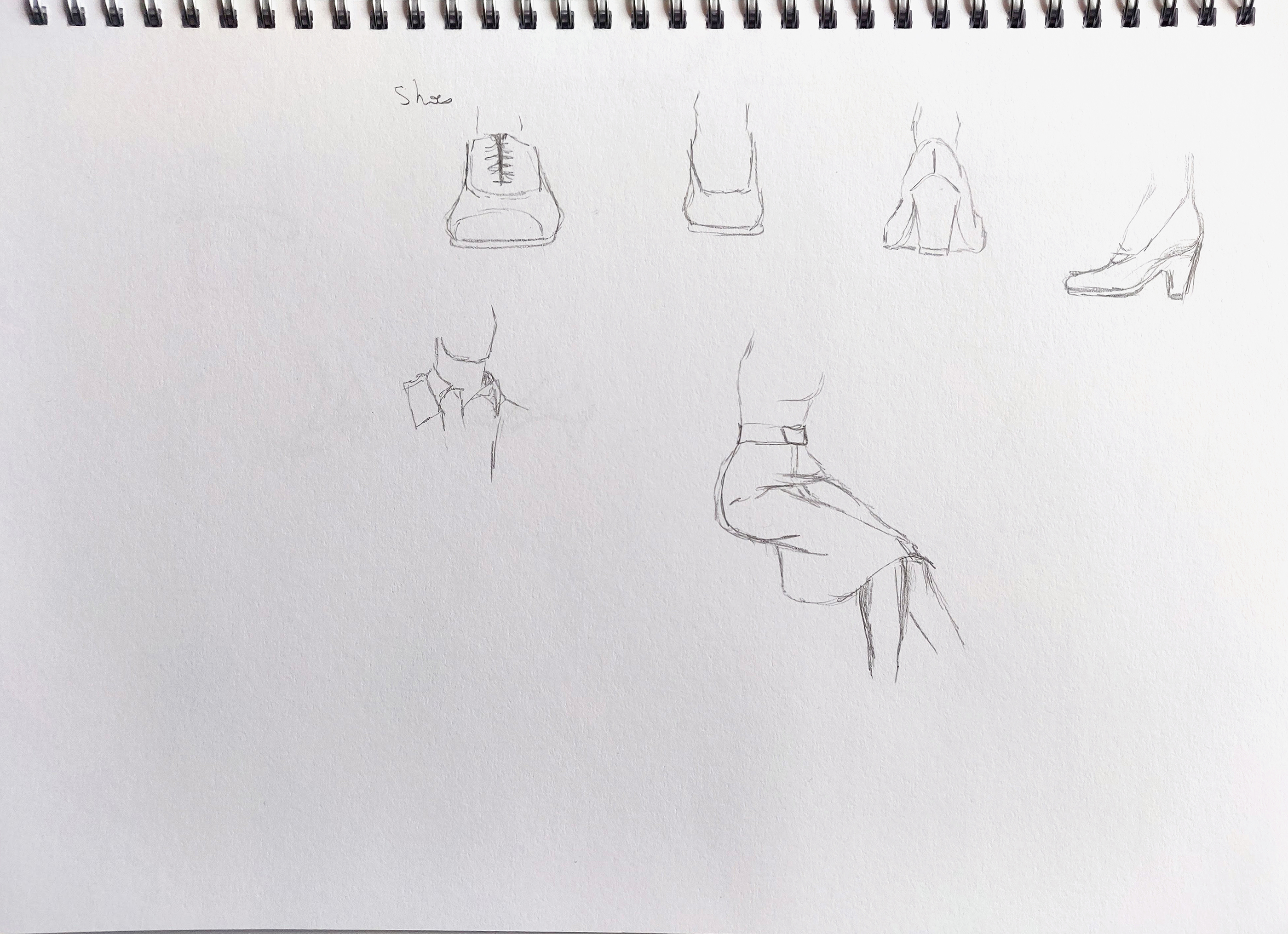
I first revisited two books that I found useful in the past: One is “Character Costume Figure Drawing” (Tan Huaixang (2013). Character costume figure drawing : step-by-step drawing methods for theatre costume designers. New York Focal Press). It contains many tips about drawing people in a dynamic way to enhance what they wear.
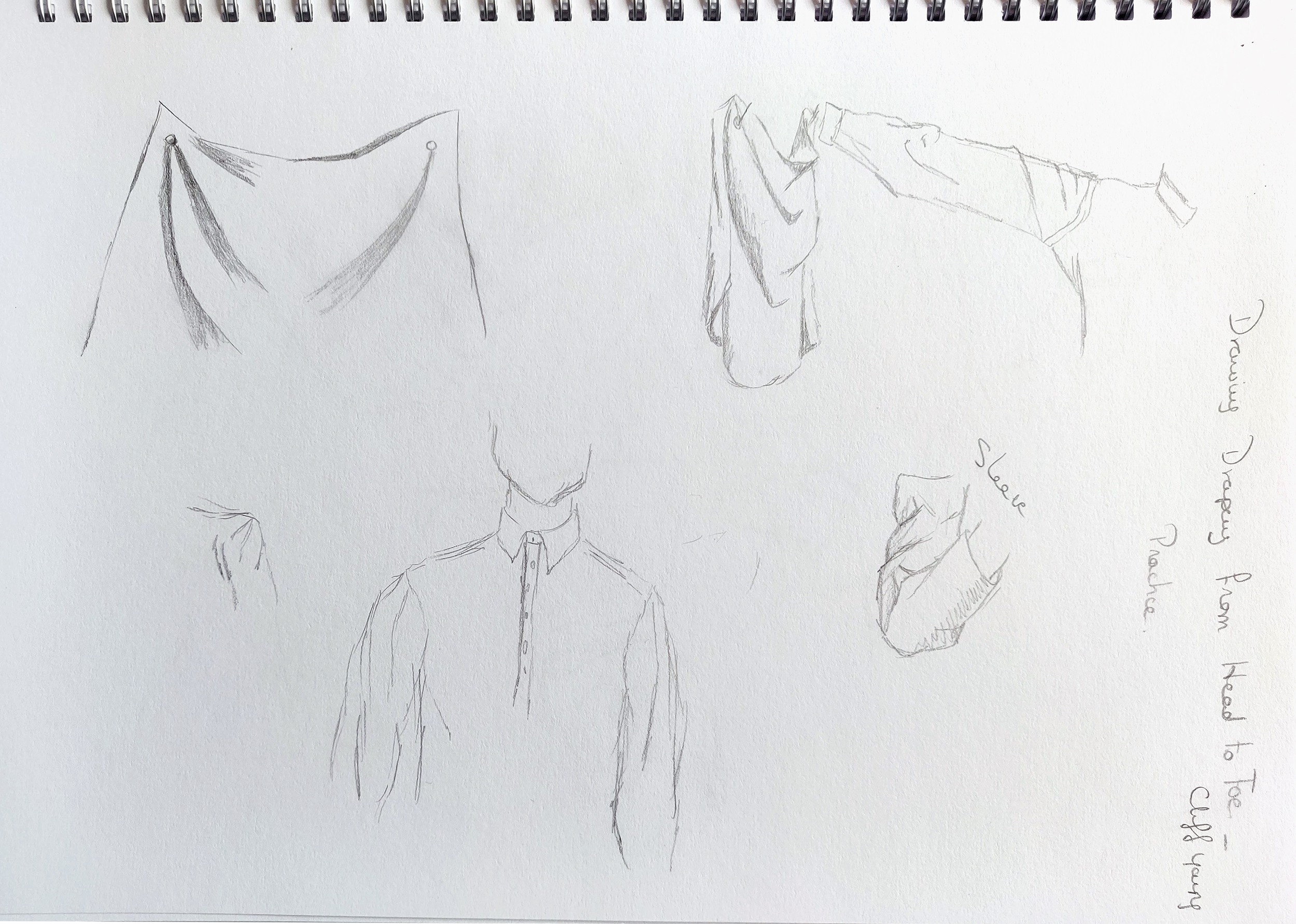
The other book is “Drawing Drapery from Head to Toe” (Young, C. (2007). Drawing drapery from head to toe. Mineola, N.Y.: Dover Publications). Although not so recent, this book includes a lot of information about the way fabrics behave (how they crease depending on the material,…)
I copied a few sketches I found in the books to practice certain aspects.

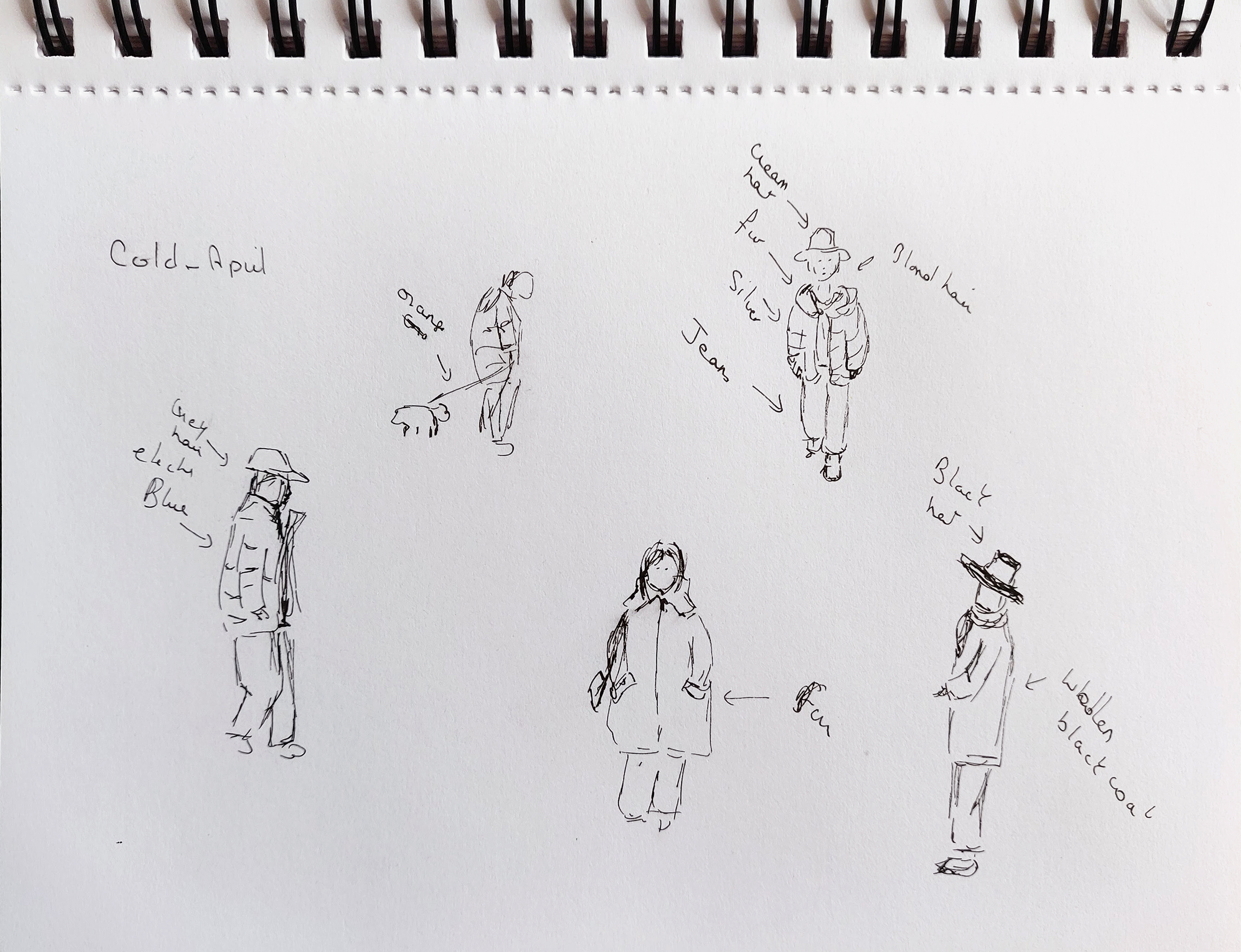
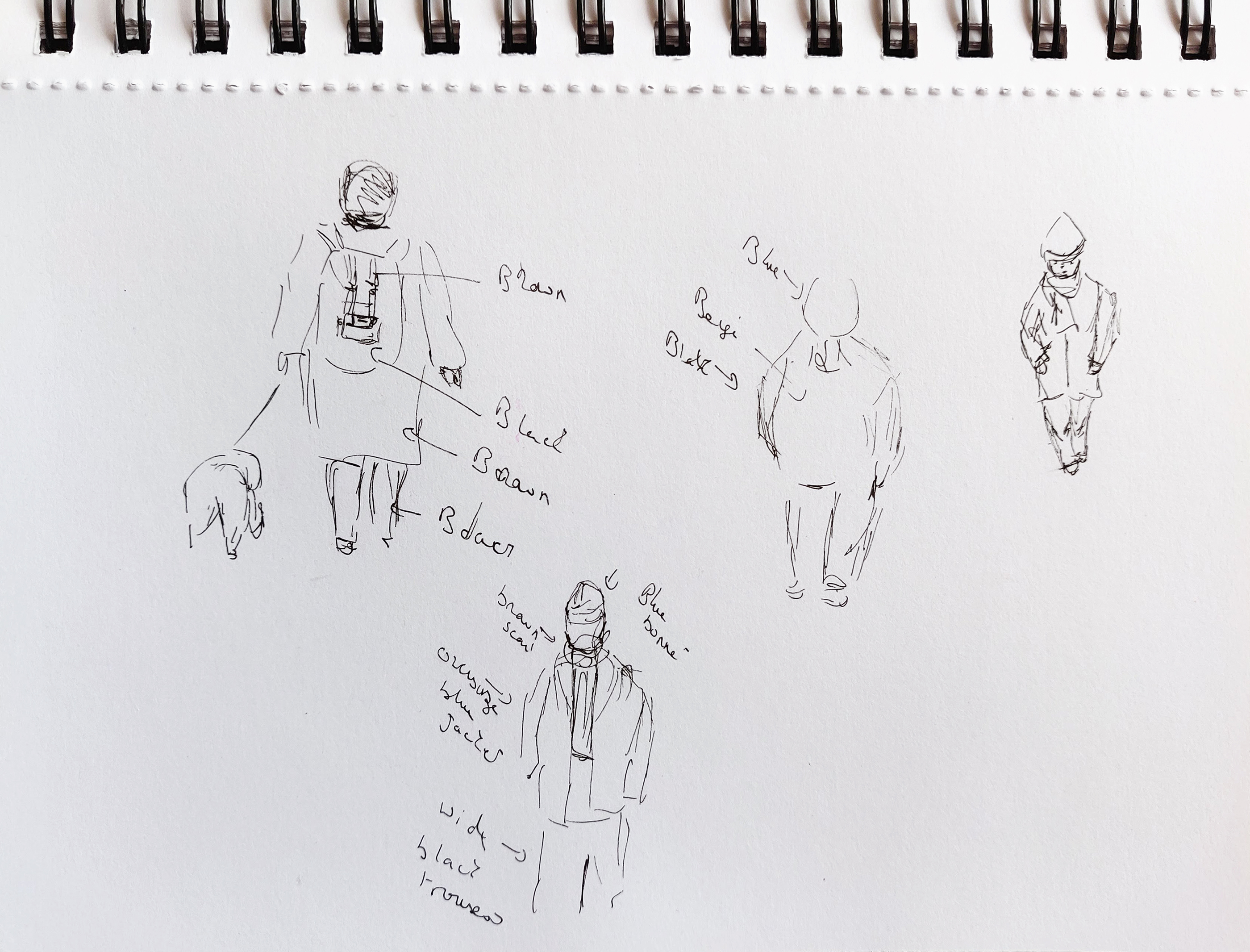
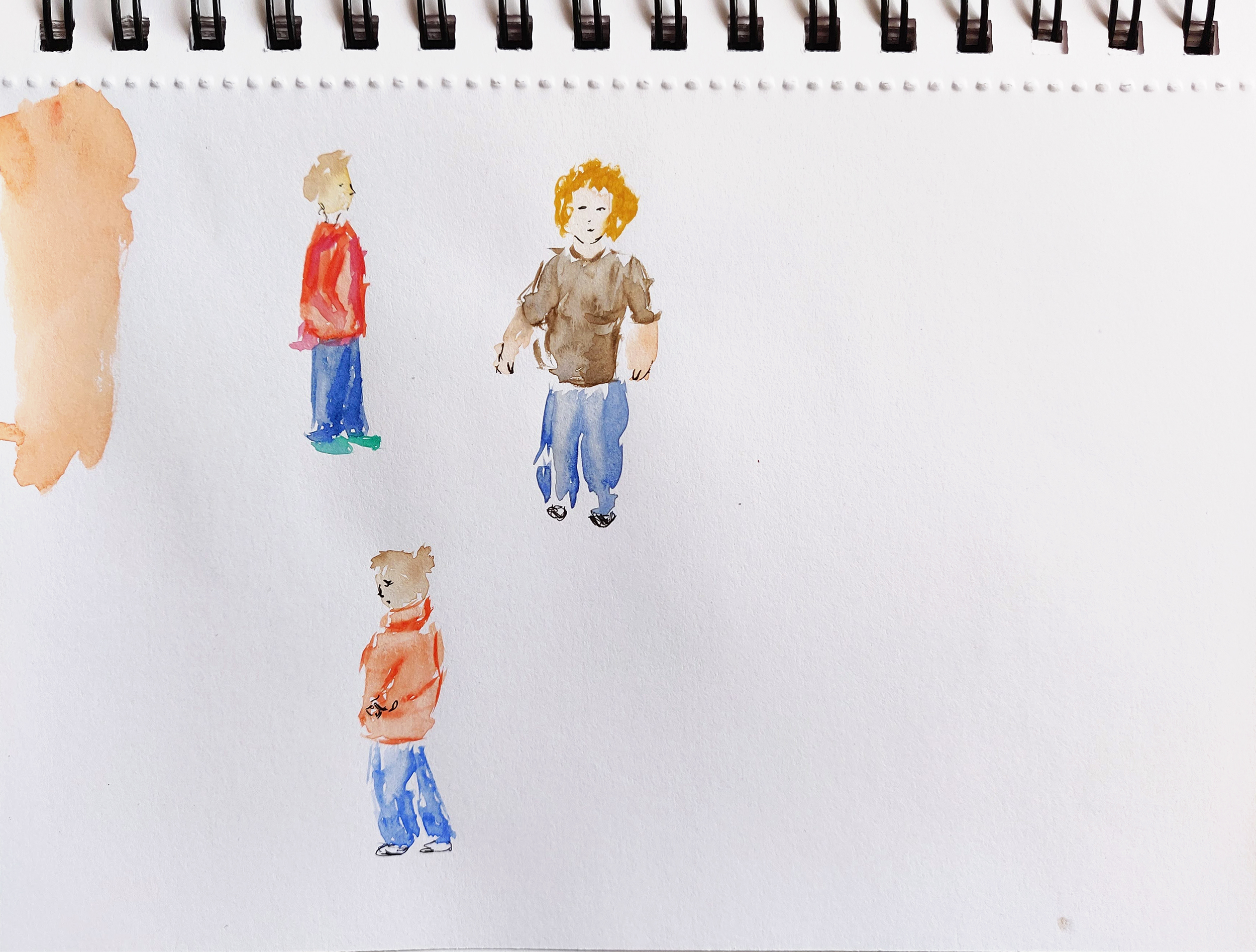
I then went out and sketched people in the street. I had to be very fast as it was a bit cold that day and people kept moving. I found it useful to take notes regarding the texture and colours of the clothes.

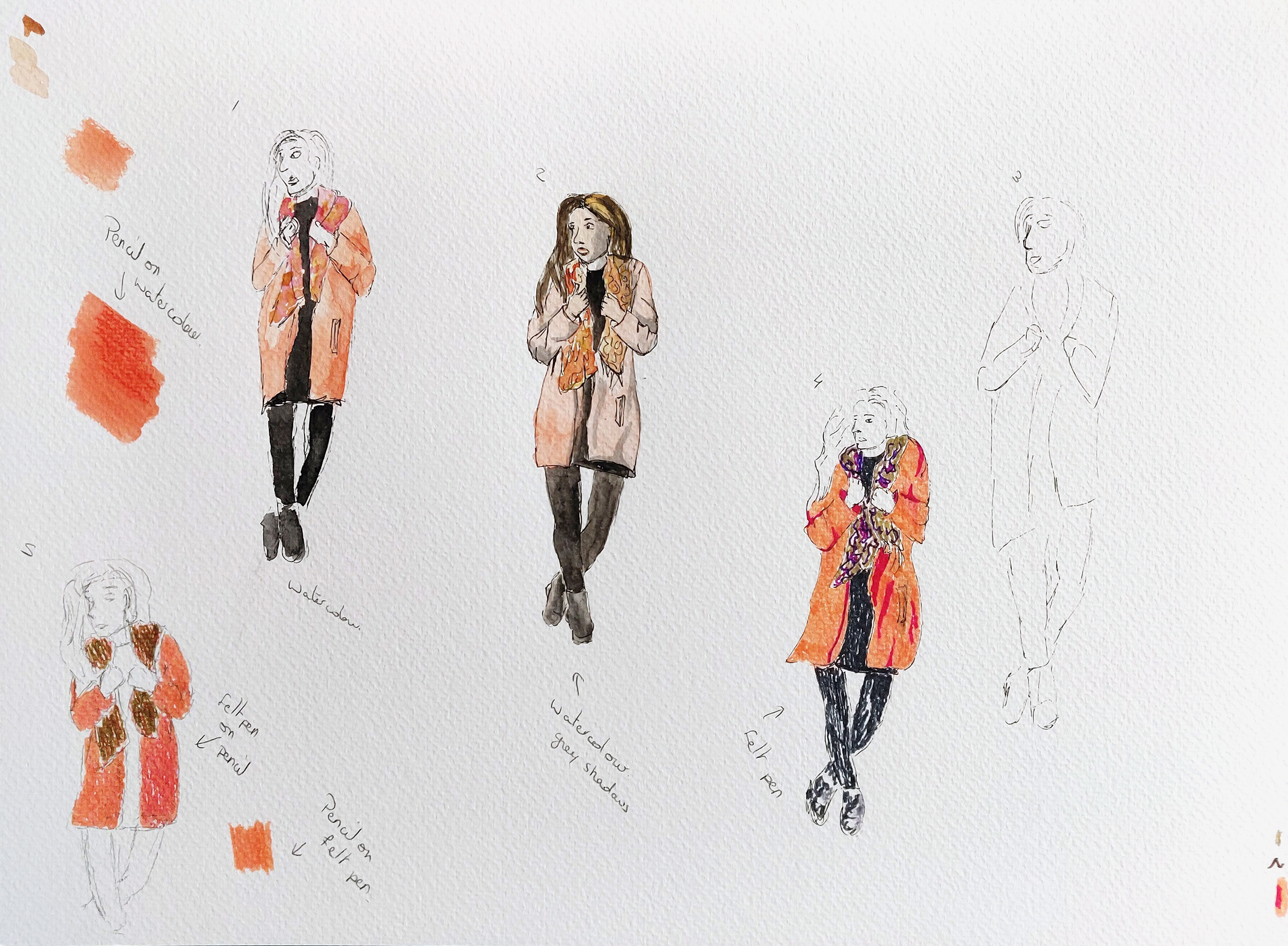
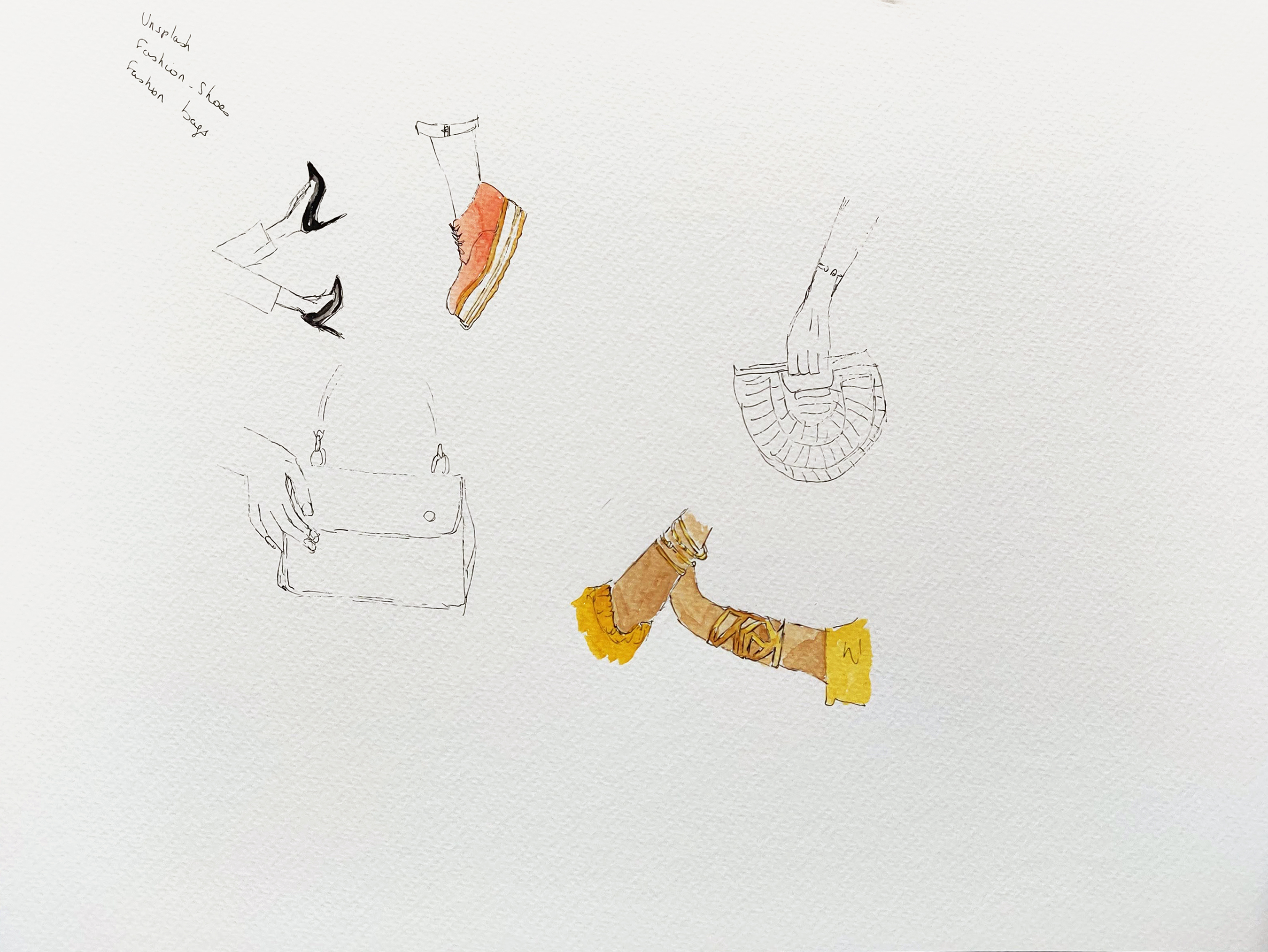
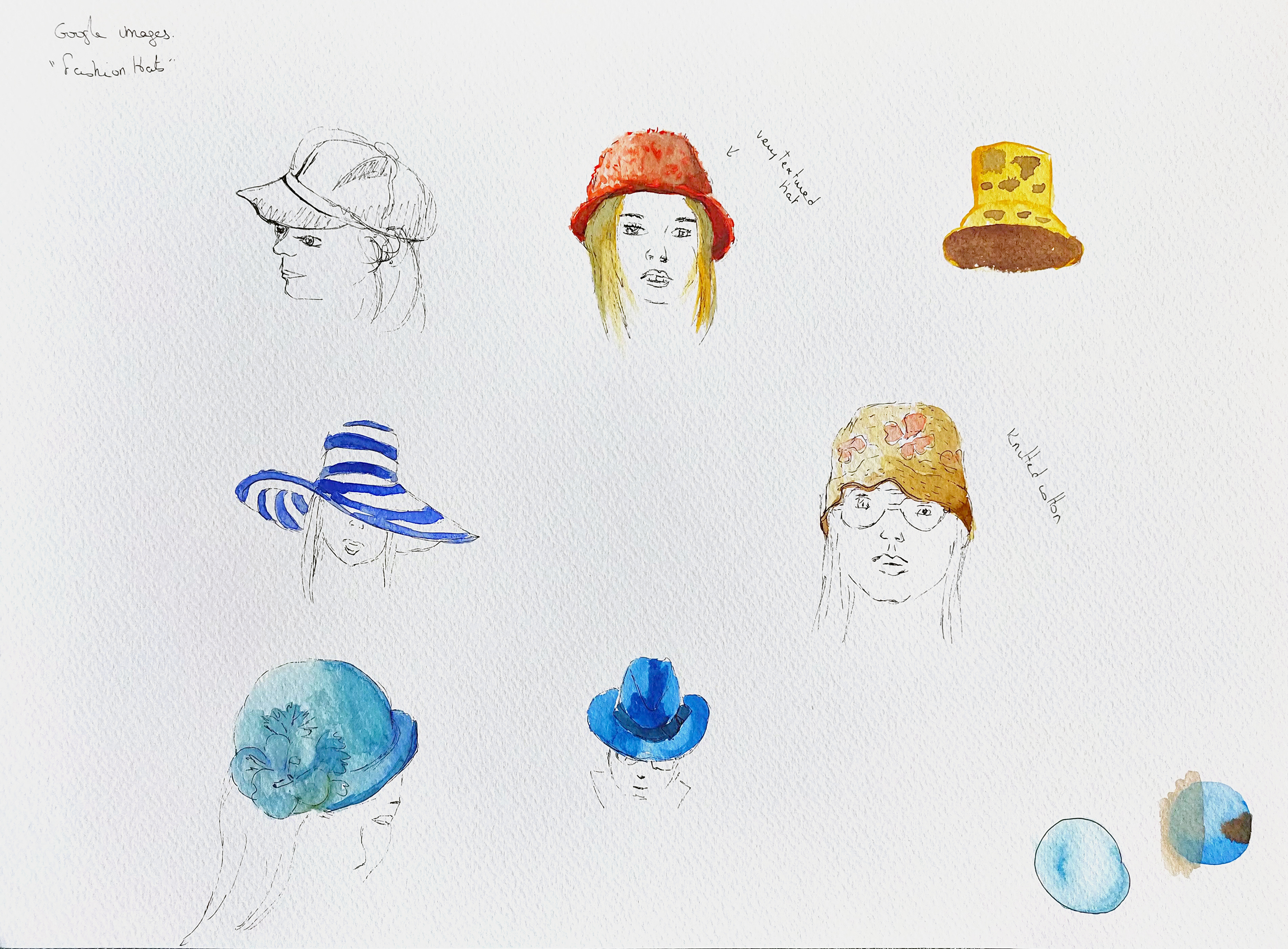
Later at home, I selected a picture and drew it several times using different methods to compare the results. I used a picture from the website http://www.unsplash.com for inspiration. I then used the same website to draw some accessories such as hats, shoes and jewellery. I enjoyed trying to create some texture when I added colours to the hats.
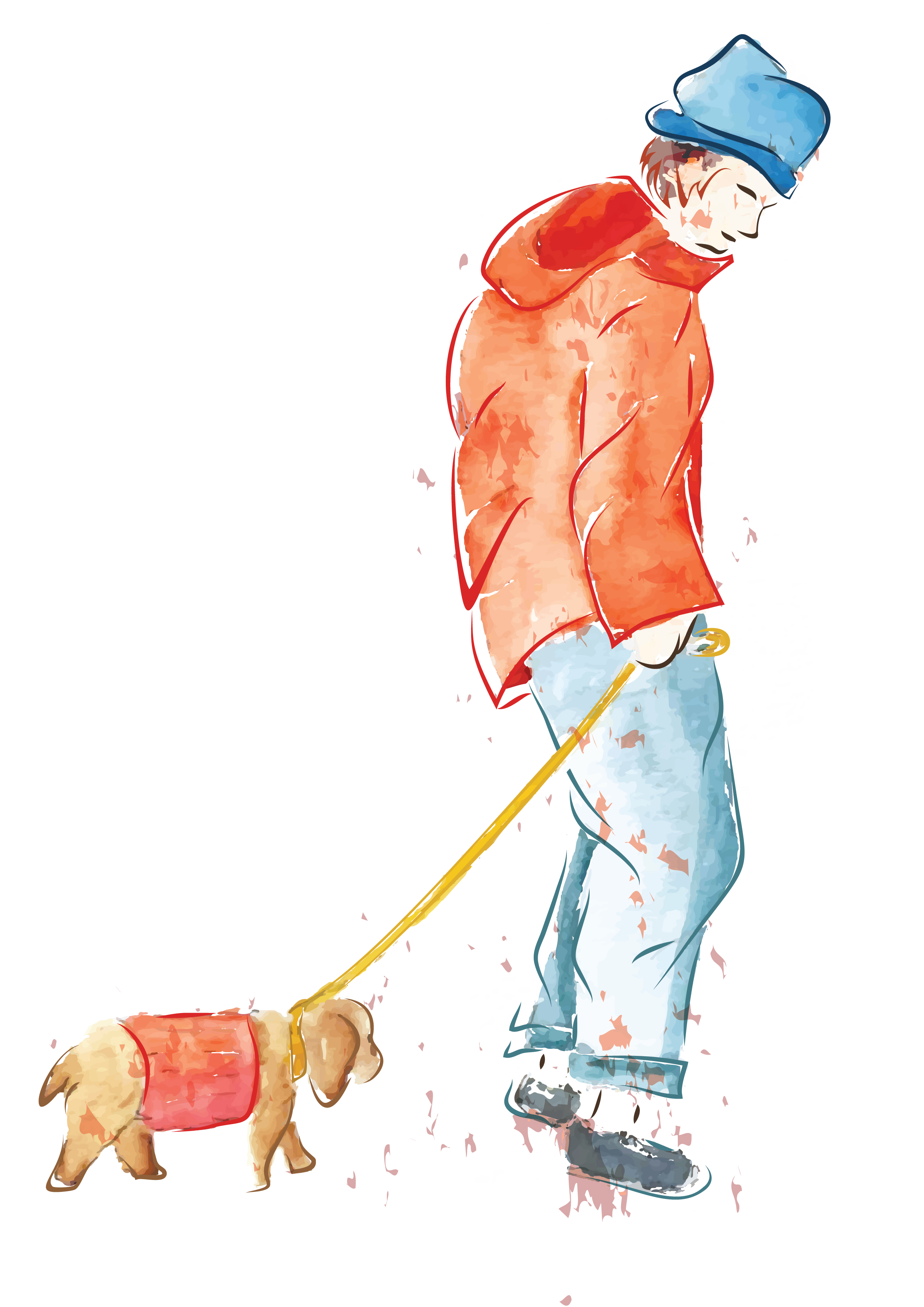
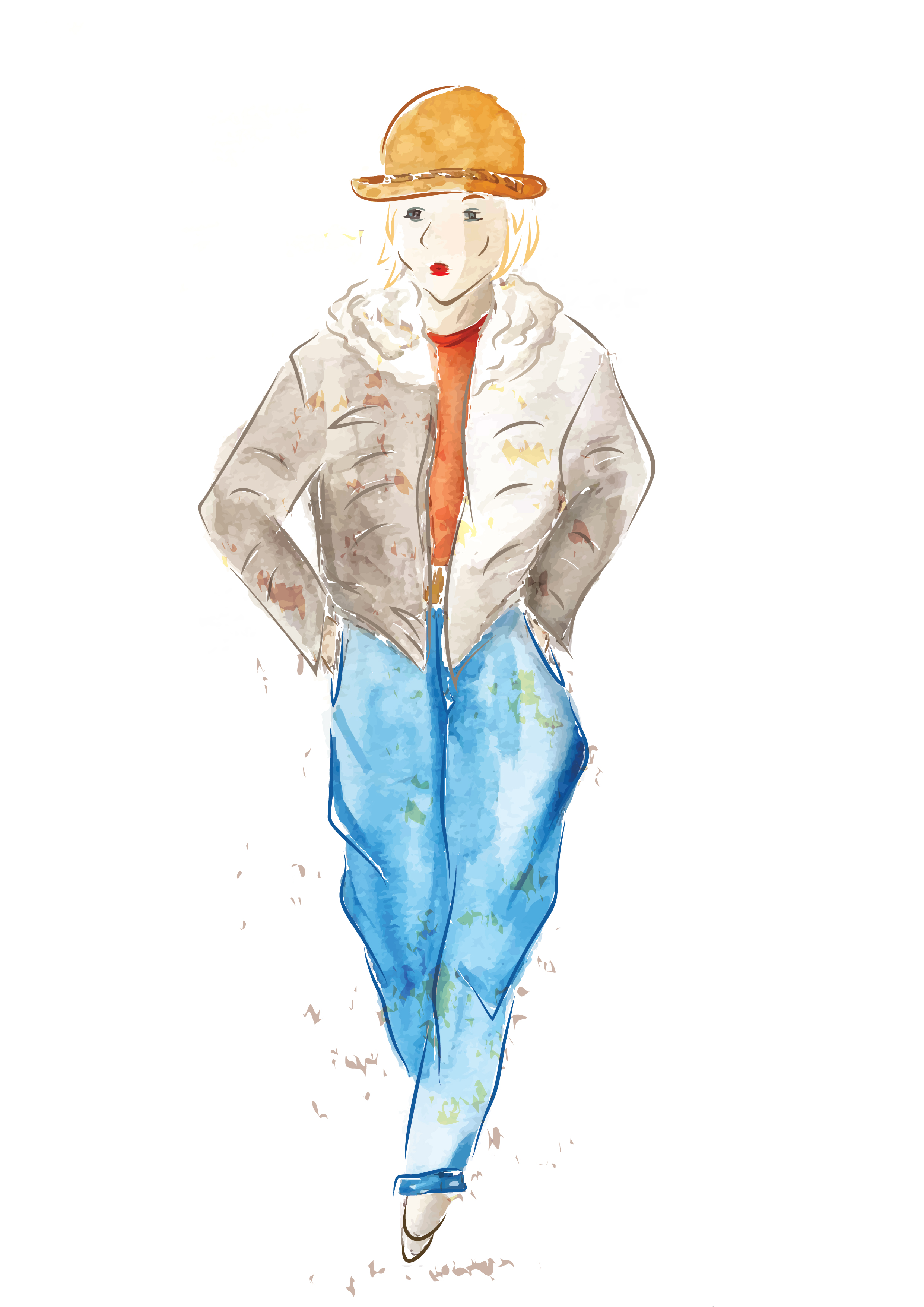
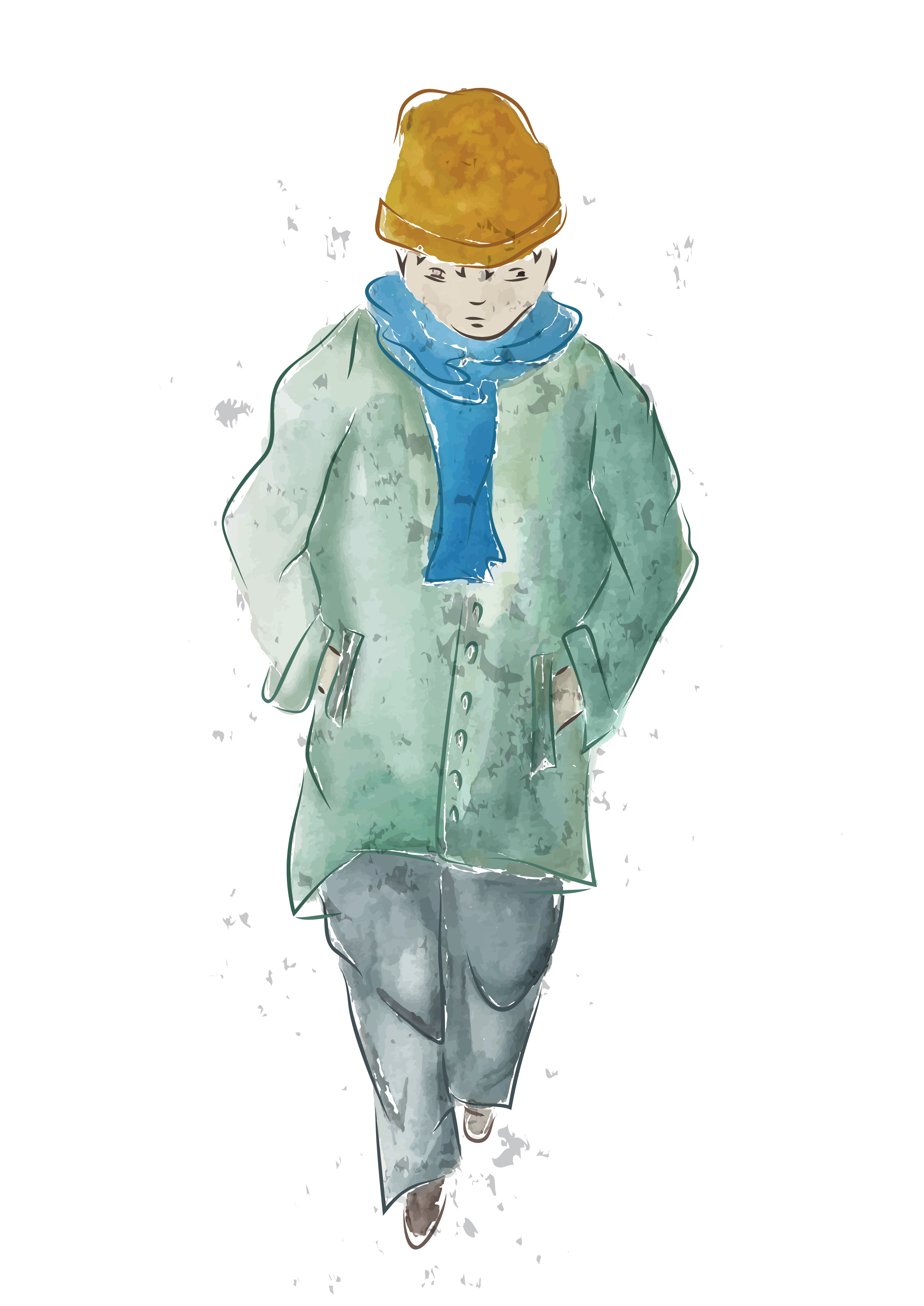
Finally I created three illustrations based on the first sketches that I had drawn on location. I used the notes about the colours and fabrics and tried to emphasise the postures of the people to suit their clothes. The first man is a bit nonchalant in his attitude with loose trousers and a big jacket, the lady in the middle walks a bit as if on a catwalk, with her silhouette more defined and wearing her hat proudly. In the third illustration, the man walks head down, going quickly somewhere to emphasize the fact that it is cold, hence the big coat, the hat and the scarf.
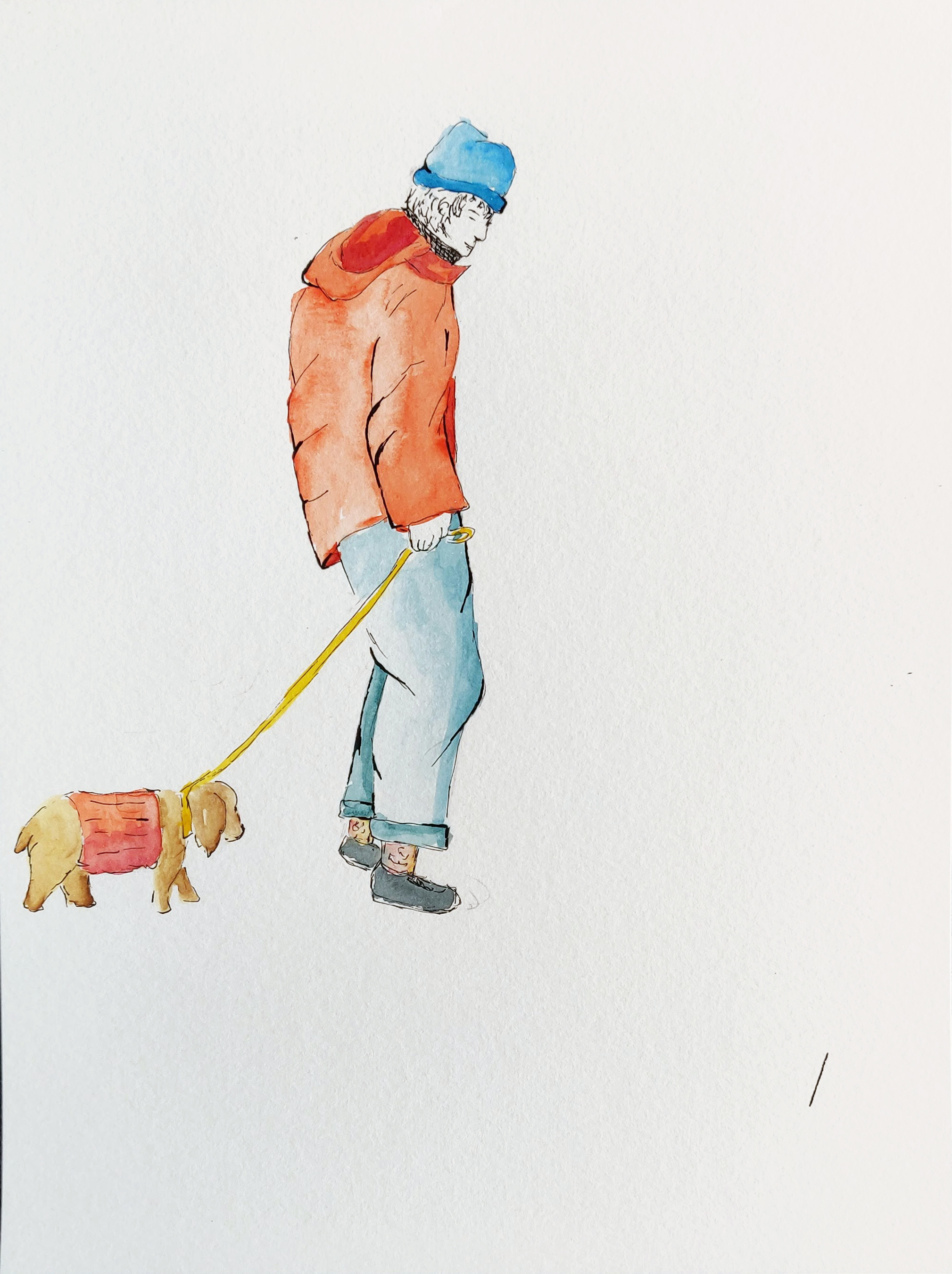
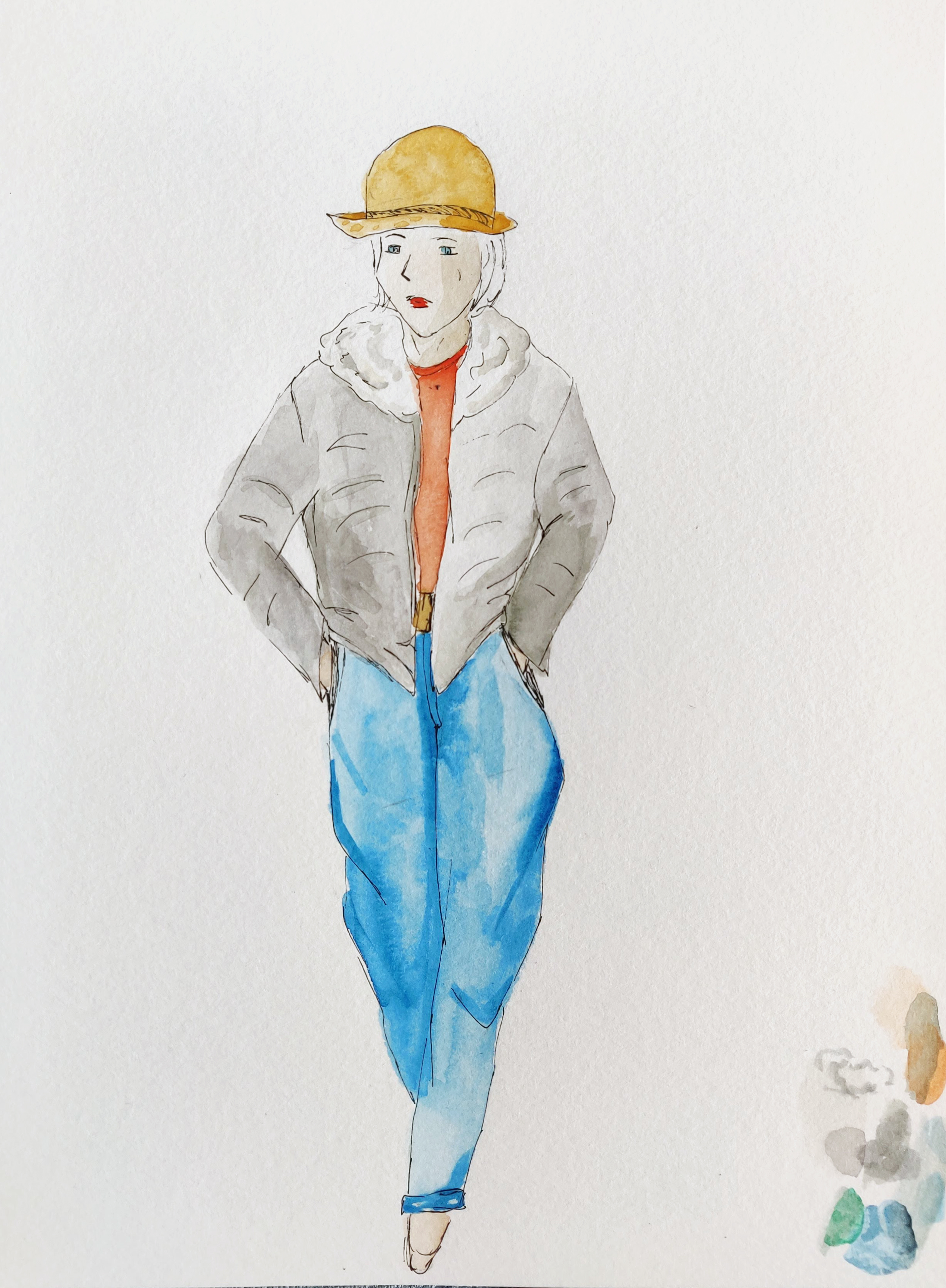
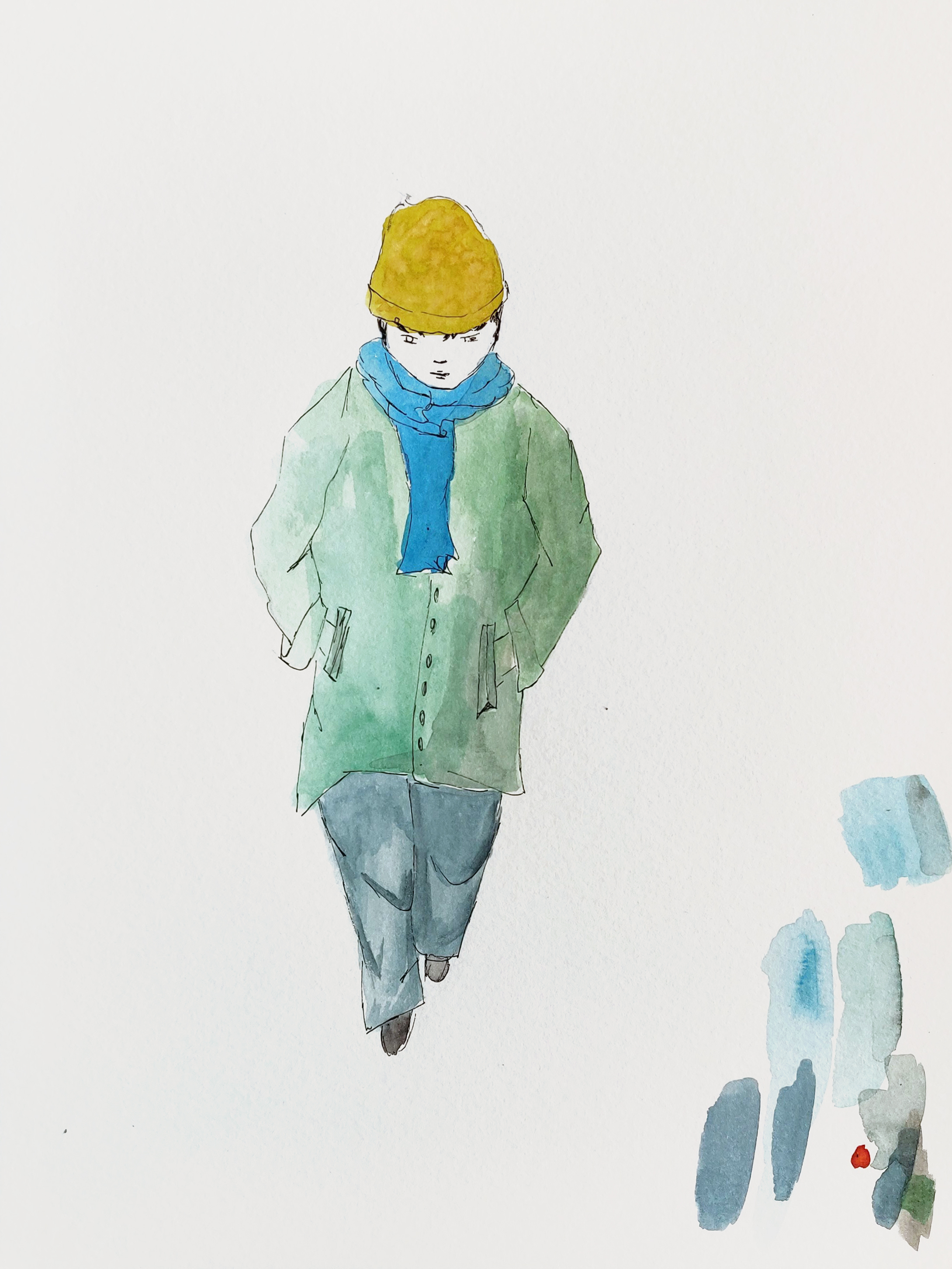
I then took these sketches into Illustrator. I did not really know what I was going to do. I was thinking of creating fluid lines and therefore recreating the illustrations in Illustrator but I liked the watercolour effect, so I just experimented. I removed all the black lines, improved the colours in some parts. I then drew the Illustrations loosely with a brush I created on top of the sketches. The idea was not to have an exact contour but nearly two illustrations superimposed (the watercolour one and the digital outline) but not too accurately so as to create a sense of movement.
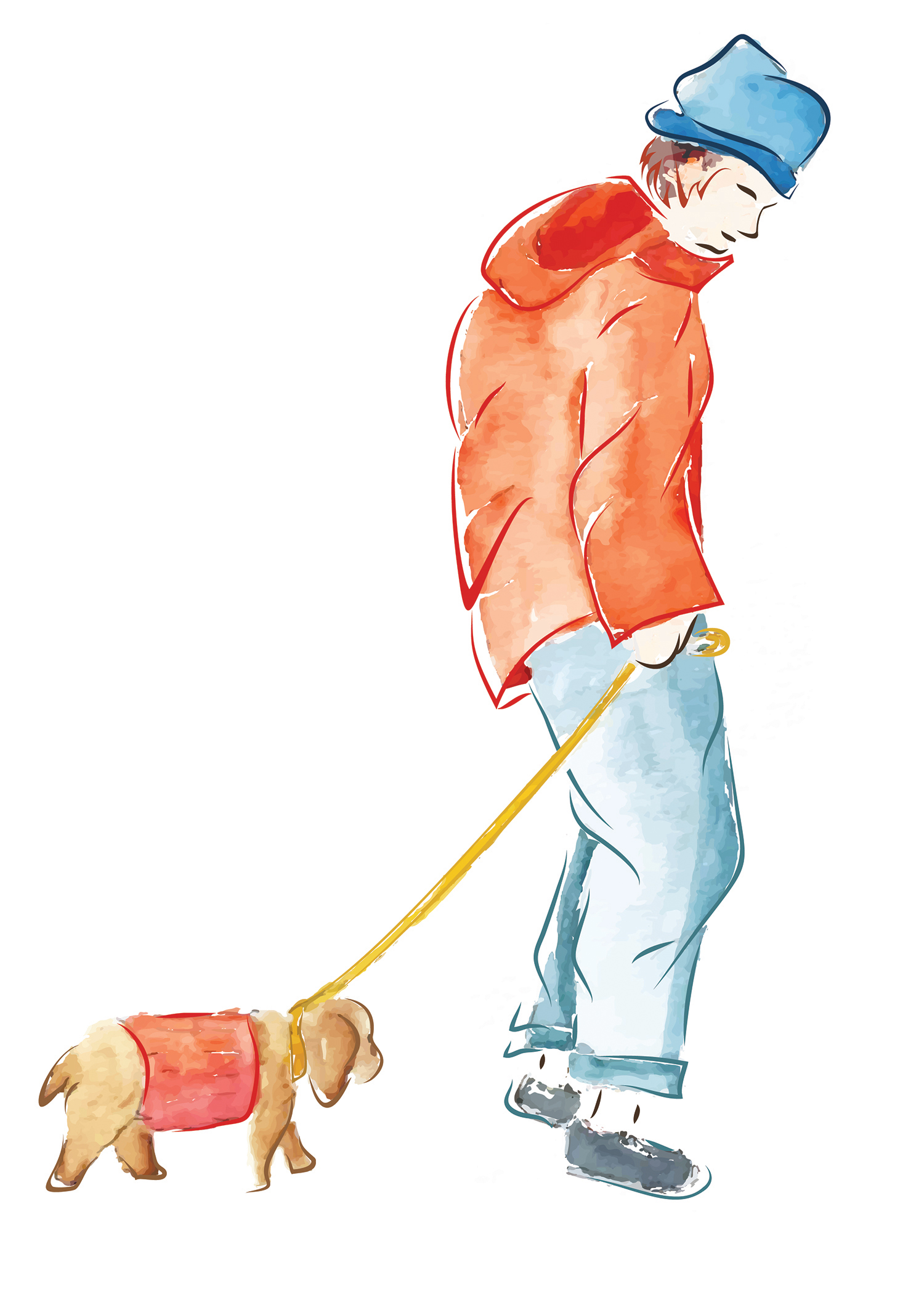

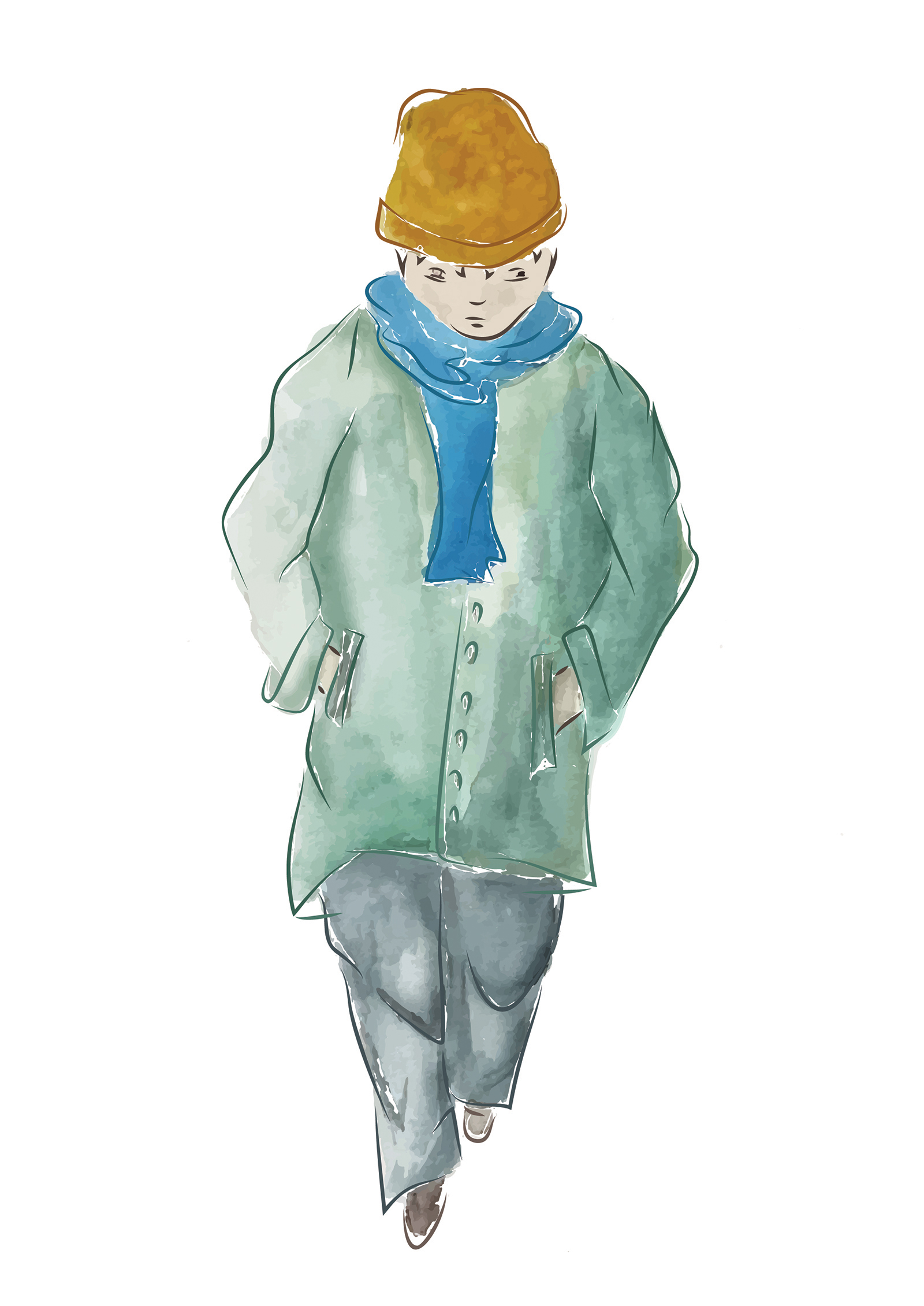
I liked the result but wondered if I could add some noise to represent the urban busyness around them. I added some splashes of colour on top and around them.
What went well
I enjoyed mixing a traditional medium with a digital one and it is something that I will keep exploring further.
I tried to draw people fast in the past and I am getting more confident as I keep practicing.
Beyond fashion trends, it is interesting to observe how people wear their clothes (with nonchalance, pride or other) and each illustration is different depending on how the illustrator interprets this.
Challenges
It is hard to capture the subtleties of a garment in a very short time (the texture, the details such as a collar or a pattern for instance). Taking pictures for reference helps.
The weather was rather cold and dreary on that day, so most people were wearing large coats and dark colours. However, once I started observing people around me, I noticed more details.
What to take forward
This exercise has enabled me to be more aware of the importance of clothing and how we wear them when illustrating people. It is a useful tool to give some personality to a character.
I need to keep sketching people fast to be more confident. It also helps at time to study certain aspects of the anatomy separately to understand better how to capture things such as the expression, the movement of the body, the shapes of shoes in movement,…
 Catherine Roux Degree in Illustration